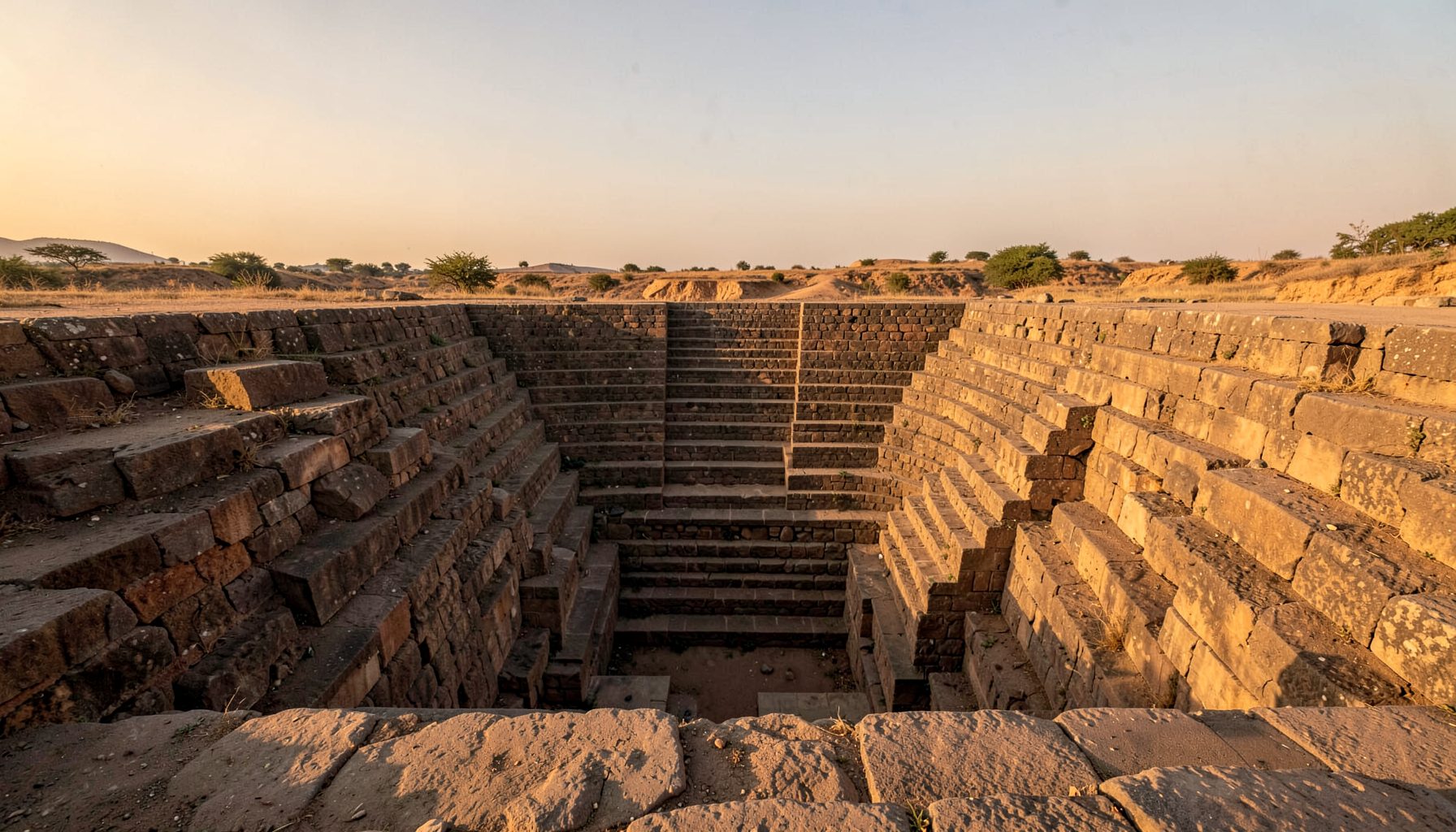
A wide-angle view of an ancient stone stepwell in warm golden light, with symmetrical staircases descending in geometric patterns into shadow, set against a muted earth-tone landscape under a soft sky.

Documenting the architectural marvels of water conservation — Bawdi, Baoli, Baori, Kund, Vav, Barav, and more — across the subcontinent.

Explore Maharashtra

Blog

An illustrated glossary of stepwell architectural elements
Stepwells, known across India by regional names like vav, baoli, bawdi, kund, and barav, are subterranean water-harvesting monuments whose architecture evolved…
Stepwells of Madhya Pradesh and the Paramara Legacy
Deep within the Malwa plateau, a network of subterranean stone galleries still waits beneath modern towns and fields, holding the cool of centuries. These are…
How Ancient Stepwells Withstood Earth Movement
Stepwells were designed as working infrastructure, not simply as monumental architecture. Their stairs, landings, retaining walls, galleries and shafts had to…
The Stepwell That Became a School: Adaptive Reuse in Rajasthan
Deep in the Aravalli foothills, a centuries-old stepwell that once quenched the thirst of caravans and cattle now echoes with the chatter of children. The…
A closer look at Goospin’s mega jackpot casino experience
Stepwells were built around a simple idea: thoughtful design can turn a limited resource into something useful, accessible, and enduring. That same attention…
A Practical Guide for Top Rated Casino AU Players
Australian online casino players have plenty of choice, but a polished design or a large game lobby does not automatically make a platform suitable. Game…
Reading India’s Stepwells Through Form, Place, and Water
Across India, a stepped water structure can be called a baoli, vav, kund, or barav, yet these names do not describe four rigid architectural categories. They…
The Stepwells of Hampi: A Forgotten Water System
Hampi, the ruined capital of the Vijayanagara Empire, draws visitors who come to marvel at its temples and bouldered skyline along the Tungabhadra River in…
Why Stepwells Were Built Outside City Walls
Across western and central India, stepwells were positioned where people, animals and travellers could reach water without entering a settlement. Their…
Field Notes: Documenting a Rare Stepwell in Satara District
The road into rural Satara District narrows after the last busy market town, passing sugar-cane fields, basalt outcrops and clusters of houses shaded by neem…

Get in Touch

Have information about a stepwell that is not yet on our map? We would be glad to document it and give you full credit. Whether it is a Barav, Kund, Vihir, or any other form of stepwell, every contribution helps preserve India's water heritage.

Call or message us with details about the location, and we will follow up.

#9372496819

Send a Message

What People Say