 Explore Maharashtra
The Stepwell That Became a School: Adaptive Reuse in Rajasthan
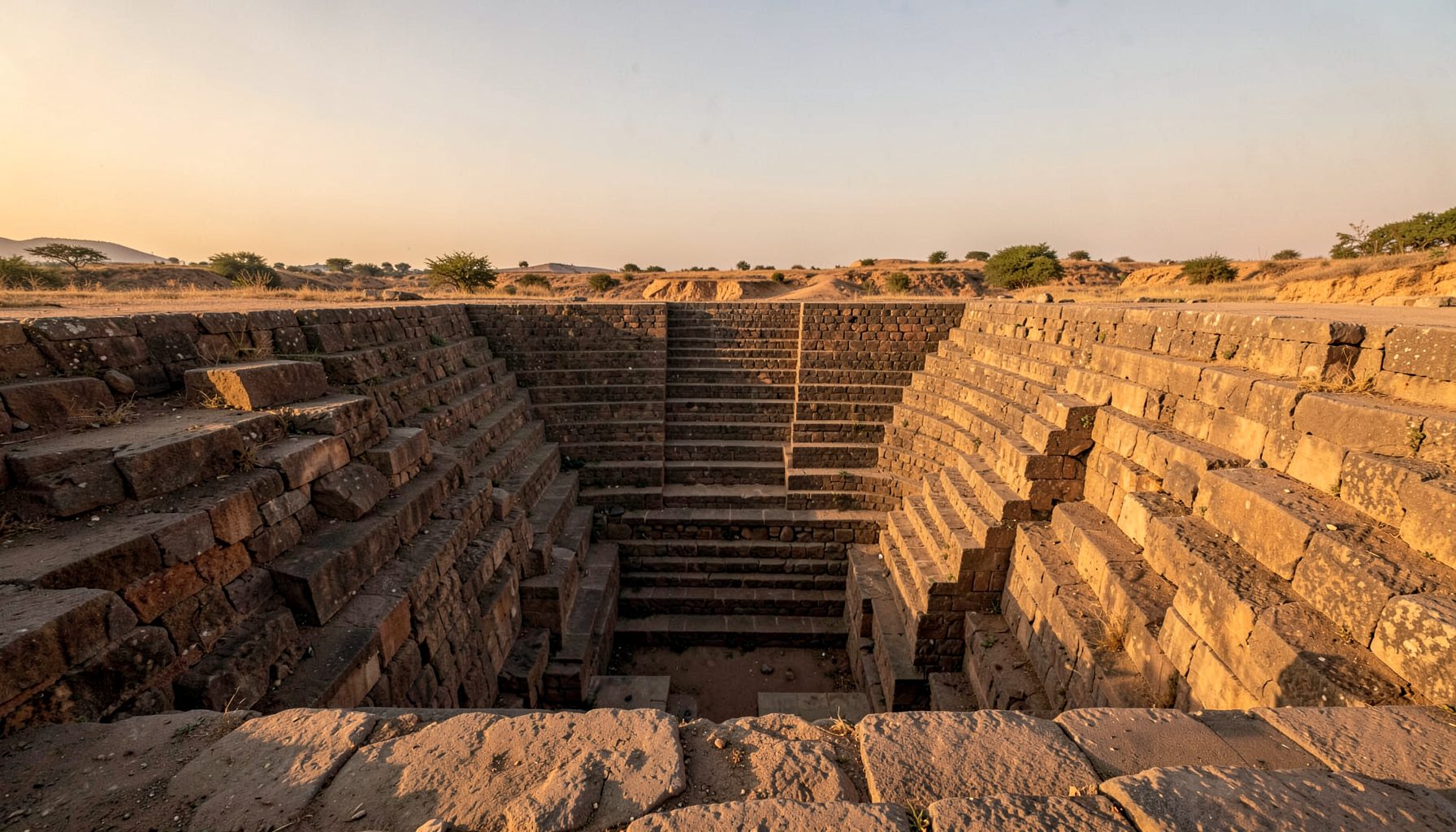
Deep in the Aravalli foothills, a centuries-old stepwell that once quenched the thirst of caravans and cattle now echoes with the chatter of children. The structure, located in a small Rajasthani village, was gradually filled with sand and debris over generations, but rather than being demolished or left to crumble, it was reimagined as a primary school. This kind of adaptive reuse, where historic water infrastructure is given a contemporary civic function, sits at the heart of a growing conversation about heritage conservation in arid India.
The story of this particular stepwell is one of pragmatism meeting preservation. With classroom shortages plaguing rural Rajasthan and groundwater levels falling sharply, the community and local authorities looked to existing stone structures rather than poured concrete. The result is a living classroom where the original pillars frame blackboards and the ancient steps double as seating. Similar transformations are being studied and documented across the subcontinent, including Maharashtra's forgotten baravs, which face comparable pressures and opportunities.
A well built for centuries
The stepwell in question was constructed during the late medieval period, likely between the fourteenth and sixteenth centuries, when the region was ruled by local chieftains and merchant guilds who invested heavily in community waterworks. Carved into sandstone bedrock, it descends through several storeys of geometric steps, with sheltered platforms at each level that once allowed travellers to rest, women to draw water in privacy, and animals to drink without conflict. The structure follows the classic subcontinental pattern, related to the vavs of Gujarat and the baravs of Maharashtra, though its ornamentation reflects distinctly Rajput sensibilities.
What makes this stepwell particularly suited to repurposing is the width of its upper platform and the presence of large pillared halls that flank the descent. These pavilions, originally used by traders and pilgrims, offered shaded, enclosed spaces with thick walls that moderate temperature. The site had long served as a gathering place, and oral histories speak of community meetings, weddings, and festival rituals held around its edge. When the local panchayat proposed converting the disused upper chambers into classrooms, the choice was less radical than it might appear. The well had always been a civic space; the only change was the nature of the activity it hosted.
From water source to classroom
The conversion began in the early two-thousands, funded through a state education grant and supported by a non-government organisation focused on rural literacy. Engineers reinforced the upper floors without disturbing the lower water chambers, which remain sealed for safety. Timber beams were inserted to support roofing where original slabs had collapsed, and doorways were widened to allow natural light. Today, more than 150 students attend lessons in the converted pavilions, learning mathematics and Hindi in the very chambers where their grandparents would have queued for water during the long dry months.
Teachers report that the thick sandstone walls keep the interior several degrees cooler than conventional rural schoolrooms, particularly during the pre-monsoon heat of May and June. The acoustic properties of the pillared halls also mean that a single teacher can be heard clearly without amplification, reducing the need for electrical infrastructure. These accidental advantages have made the school a quiet case study among architects interested in passive cooling and vernacular design, drawing visitors from universities in Europe and Japan, and increasingly from Australia, where the Indian diaspora in Melbourne and Sydney maintains strong academic and cultural ties to the subcontinent.
Designing for a new purpose
Architects who have studied the conversion note several features that made the stepwell unusually adaptable. The structural integrity of the masonry, built to last centuries, meant that load-bearing walls did not need replacement. The terraced layout allowed segregation of spaces by age group, with younger children using the upper platform and older students occupying the deeper chambers. The orientation of the original structure also provided natural light wells that align with the sun's path, reducing glare while admitting warmth in winter.
Surveyors working across the arid belt, including the team behind the ongoing Maharashtra documentation campaign, have identified dozens of similar structures whose proportions would lend themselves to civic reuse. The challenge is rarely architectural; it is administrative and financial. The village school succeeded largely because the community, the panchayat, and outside funders shared a clear vision from the outset.
- Pillar spacing that accommodates desks and chalkboards without structural modification
- Multi-level platforms allowing separation of classes by grade
- Thick masonry walls providing thermal mass for passive cooling
- Existing drainage channels repurposed for rainwater harvesting around the site
- Sheltered courtyards that double as assembly areas and playgrounds
Water in a thirsty land
Rajasthan remains one of the most water-stressed regions in India, with many districts drawing down aquifers faster than the monsoon can replenish them. The decline of traditional stepwells began in the colonial period, when piped supply and tube wells marginalised communal water sources. Many were filled in, used as dumping grounds, or simply forgotten as their catchment areas were built over. The school conversion represents a small but symbolic reversal of that trend, recognising that the original builders had understood water harvesting in ways that modern engineering is only beginning to relearn.
Australia offers a parallel in some respects. Rural communities in South Australia and western Victoria once relied on stone-lined catchment tanks and deep wells, many of which are now heritage-listed under state legislation such as the South Australian Heritage Places Act. The management of these sites, balancing public access with structural safety, mirrors debates happening in Rajasthani villages. The same tension between conservation and utility plays out in the Barossa Valley, where nineteenth-century stone cellars have been converted into restaurants and galleries without losing their essential character.
Heritage conversion beyond the classroom
The stepwell-as-school is not an isolated phenomenon. Across India, disused wells have been turned into museums, meditation centres, amphitheatres, and boutique guesthouses. In some cases the conversion is so successful that the original function becomes secondary; in others, signage and interpretation ensure that the water history remains central. The key is usually community ownership. Where a panchayat or local trust drives the project, the result tends to reflect local needs rather than external tourism priorities.
Irish heritage practice offers a useful comparison. Sites such as Strokestown's tenantry tomb have been preserved not as monuments to past landowners but as records of the communities who worked the land, and their interpretation is increasingly shaped by descendants and local historians. The same approach, centring lived experience rather than architectural grandeur, is beginning to influence how stepwells are documented and reused. The aim is not to freeze these structures in time, but to keep them functional, legible, and loved.
Lessons from across the ocean
Australian heritage professionals have begun to take a closer interest in Indian vernacular architecture, partly through university partnerships and partly through informal networks of the diaspora. Architecture schools in Sydney and Adelaide have hosted visiting lecturers from Rajasthan, and student fieldwork increasingly includes documentation of South Asian water systems as a counterpoint to local nineteenth-century tanks. The exchange is two-way: Indian conservationists have studied the adaptive reuse of historic woolstores in Fremantle and sandstone police barracks in country New South Wales, where budgets and community engagement strategies are similarly constrained.
A common thread in these conversations is the recognition that historic water infrastructure, whether a stepwell, a tank, or a cellar, carries cultural meaning beyond its utility. Closing a well is rarely a neutral act; it severs a relationship between a community and its landscape. When a structure is given a new civic role, such as a school, that relationship is preserved in altered form, and the building continues to define the rhythm of village life in ways that a brand-new concrete block could never replicate.
Challenges and the road ahead
Preservationists warn that not every stepwell can be a school. Some are too fragile, too deep, or located on land that has changed hands multiple times. Legal status varies: some structures are protected by the Archaeological Survey of India, others by state departments, and many by no authority at all. The lack of a unified database makes it difficult to prioritise interventions or share lessons between regions. Climate change adds another layer of uncertainty, as shifting rainfall patterns may render some sites structurally vulnerable even as their water-harvesting logic becomes more relevant than ever.
- Securing clear ownership and custodial responsibility for each site
- Developing standardised structural assessments for subterranean masonry
- Training local masons in conservation techniques that respect original methods
- Integrating stepwells into broader water-security planning at district level
- Creating accessible interpretation for visitors without compromising community use
Documentation is only the first step. The real work lies in connecting surveyors, engineers, educators, and residents so that each adaptation serves both heritage and contemporary need. Readers interested in supporting this kind of fieldwork can learn more about the project's aims and how to contribute by visiting the site's background page, which outlines current research priorities and partnership opportunities across India.
Get in Touch
Have information about a stepwell that is not yet on our map? We would be glad to document it and give you full credit. Whether it is a Barav, Kund, Vihir, or any other form of stepwell, every contribution helps preserve India's water heritage.
Call or message us with details about the location, and we will follow up.
#9372496819
Send a Message
What People Say
"The Maharashtra Stepwells campaign has brought attention to structures that were nearly forgotten. The architectural documentation and drone photography are invaluable resources for researchers and students alike."
"Collaborating with the Indian Stepwells team gave our architecture students hands-on exposure to traditional water-harvesting structures. The presentations were insightful and inspiring."
"I shared details of a stepwell near my village that was not on any map. The team visited, documented it beautifully, and credited me. It felt wonderful to contribute."