 Explore Maharashtra
The Stepwells of Orissa: A Lesser-Known Heritage
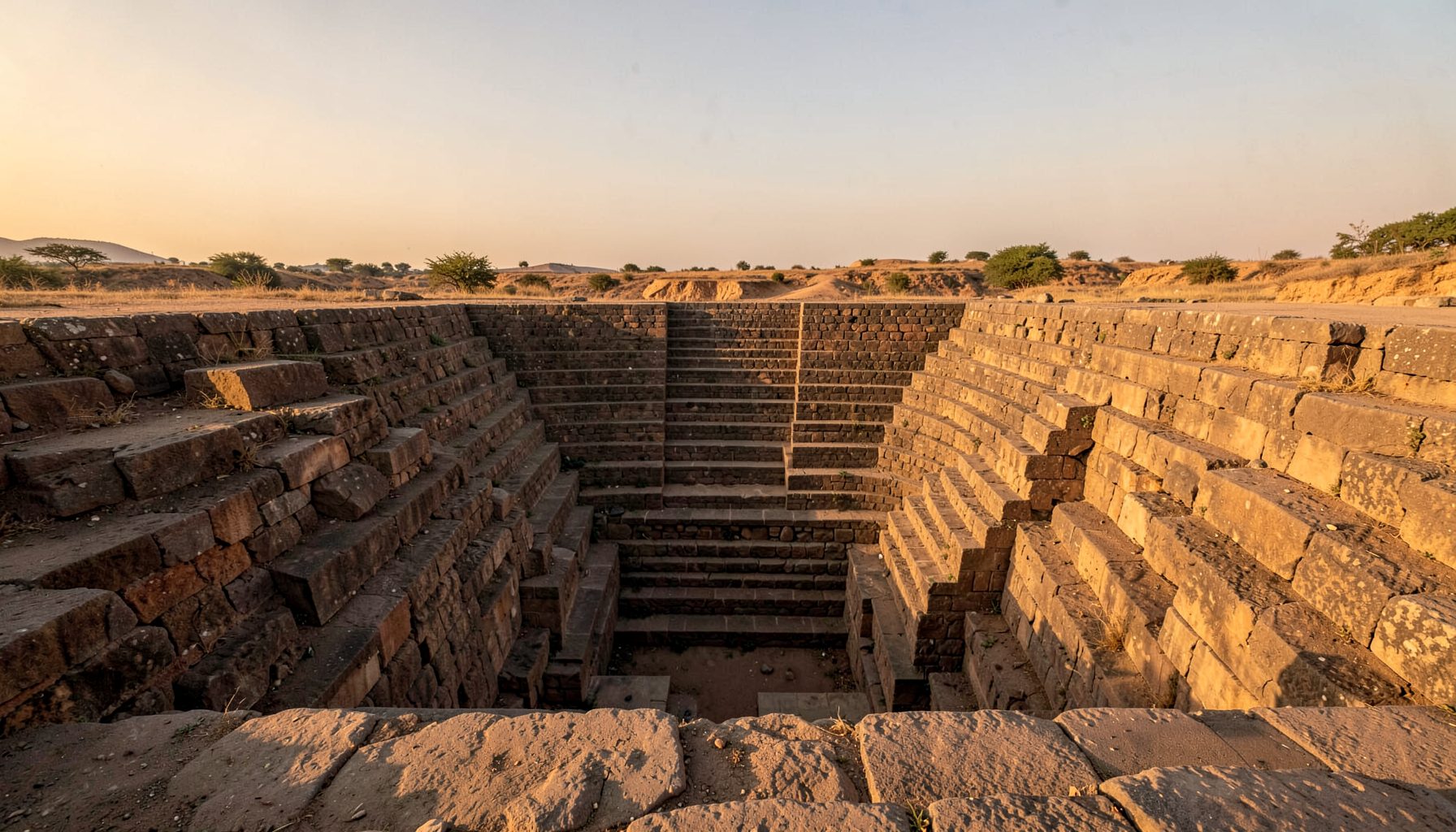
Walk past a quiet village square in Odisha and you might notice a sunken courtyard, framed by mossy stone and shaded by neem trees. These modest structures, scattered from the coastal plains of Cuttack to the forested highlands of Mayurbhanj, are the stepwells of Orissa — known locally as kuas, barabandhas, and a handful of regional dialects. While the ornate vavs of Gujarat and the towering baoris of Rajasthan dominate coffee-table books and travel films, the eastern equivalent remains largely overlooked in mainstream heritage discourse.
The obscurity is not for want of worth. Odisha's stepwells represent a distinct water-harvesting tradition that evolved far from the arid west. They speak of a wetter landscape, of maritime kingdoms that traded with Bali and Sumatra, of temple builders who set carved medallions into descending staircases, and of village communities that relied on these wells long after monsoon tanks were dry. Documenting them is a slow, painstaking exercise, and one that gains urgency with every passing season of neglect.
The forgotten water architecture of Odisha
The first written surveys of Odisha's subterranean waterworks were carried out by British administrators in the late nineteenth century, who catalogued several hundred structures under broad regional descriptions. Most were dismissed as utilitarian rather than monumental, which explains their later absence from art-history curricula. Modern researchers, working from archives in Bhubaneswar and field notes gathered in remote blocks, have begun to revise that picture.
These contemporary efforts echo international movements that link memory, civic engagement, and heritage at sites often ignored by mainstream historiography. The transnational work in memory and civic engagement built around lesser-known histories offers a useful comparative lens, treating neglected places as sites of conscience rather than footnotes.
Many of these stepwells cluster near medieval temple precincts, where pilgrims needed reliable water for ablutions and ritual bathing. The Padmakesvara temple complex at Banpur, for instance, sits within walking distance of at least three stepwell systems whose date stones stretch back to the twelfth century. Closer to the coast, salt-tolerant masonry techniques produced wells that remained usable through cyclonic surges, an engineering response to a maritime climate rather than a desert one.
Distinctive design features
The geometric vocabulary of eastern India differs in telling ways from its western counterparts. Most Odisha stepwells follow rectilinear or square plans rather than the multi-storey, octagonal forms seen in Ahmedabad or Bundi. The rationale lies partly in the local geology — softer laterite bedrock — and partly in the maritime aesthetic that prized horizontal symmetry. A close look at the geometry of stepwells shows why the regional builders favoured compact footprints over expansive flight-of-stairs facades.
What sets Odisha stepwells apart visually is the density of figural carving on the smallest surfaces. Lintels often carry miniature panels of river goddesses, dancing apsaras, and local deities rendered in a provincial style that influenced temple sculpture across the region. Floral motifs tend toward lotus and palmyra rather than the desert flora of Kutch, reflecting a wetter, more tropical worldview etched into stone.
Hallmarks of the eastern tradition:
- Square or rectangular plans adapted to laterite substrates
- Friezes of river goddesses, apsaras, and folk deities
- Lotus, palmyra, and aquatic flora dominating carved ornamentation
- Water collection designed for high water tables near the coast
- Stone-lined channels that doubled as ritual pathways during festivals
Community life and ritual use
A working stepwell was never a solitary monument. It functioned as a meeting place for women fetching water, a cooling retreat during long summer afternoons, and a stage for certain lifecycle rituals — a use not so different from the role of shady public gardens in Australian townships, where neighbours gather on a slow arvo to share news and watch the kids play cricket on the green. Some wells carried names linking them to founding patrons, others to the goddess they honoured. Names like Gopinath, Patitapabana, and Mangala recur across districts, anchoring each well within a network of named deities and seasonal festivals.
During Raja Sankranti and Kartik Purnima, certain wells were reopened for ritual descents. Worshippers bathed in layered pools, offered coconuts at the lowest landing, and ascended in procession. Theatrical troupes sometimes performed in the deepest chambers, where acoustic properties amplified voice and harp. These traditions now survive in a handful of villages — proof that the wells, when maintained by community hands, continue to serve ceremonial life. Loss of these rhythms would mean more than empty chambers; it would erode a calendar of shared practice that has carried meaning for generations.
Threats from neglect and rapid change
Rapid urban expansion around Bhubaneswar, Rourkela, and Cuttack has swallowed many of these wells in the last three decades. Land titles are contested, drainage from new housing colonies pours directly into the chambers, and silt accumulation follows unchecked. Climate shifts bring longer dry spells punctuated by flashier monsoons, a punishing rhythm for any masonry cistern. Comparable preservation difficulties at Rani ki Vav in Patan have drawn worldwide attention, but the eastern equivalents remain outside the conservation spotlight.
Encroachment is only part of the picture. Quarrying for laterite and granite has disfigured several clusters near Khurda and Jajpur. In some hamlets, the wells have been capped with concrete slabs to prevent accidental falls, a protective gesture that also breaks the airflow patterns that kept the water sweet. Local folklore is being lost in parallel, as the elders who could narrate a well's founding memory pass on without audiences willing to record them.
Pressures facing eastern stepwells:
- Untreated urban drainage entering well chambers
- Capping with concrete to prevent accidents, often altering microclimate
- Quarrying activity disturbing the surrounding hydrology
- Land disputes leaving wells without a clear legal custodian
- Lack of trained masons who can replicate traditional waterproofing
Documentation and the road ahead
A handful of independent projects have begun mapping what official surveys missed. Volunteer teams travel with measuring tapes, drone kits, and waterproof notebooks, recording every lintel, step, and inscription. The Maharashtra documentation campaign has set a useful template that researchers are now adapting to Odisha. Crowdfunded sketchbooks, oral histories, and 3D photogrammetry slowly build a public archive where previously there was only silence.
The challenge now is continuity. Funding tends to be seasonal, and trained personnel move on. Building durable local partnerships with village councils, district heritage committees, and university fieldwork programmes offers the most sustainable path. Photographs, sketches, and oral testimonies uploaded to freely accessible portals will outlast any individual researcher, building a layered record that future scholars, local schoolchildren, and returning diaspora families can examine alike.
Why Australian heritage lovers should care
For Australian readers, the connection runs deeper than casual curiosity. Several universities in Melbourne and Sydney run South Asian studies programmes that examine water systems across the Indian Ocean world. Diaspora communities from Odisha gather in suburbs from Harris Park to Footscray, where community halls host heritage talks that touch on wells as part of broader conversations about ancestral land. Travellers departing Perth on dry-season pilgrimages sometimes return with sketchbooks that feed directly into the documentation network.
Cultural institutions, from the Australian Museum's archives to the ABC's back-catalogue documentaries, have a part to play. Local sensibilities, including the casual Australian habit of greeting conservation challenges with a pragmatic "she'll be right" attitude, can mask how urgent the eastern Indian situation has become. Visiting a working stepwell in coastal Odisha, or sponsoring a season of fieldwork remotely, offers Australian heritage enthusiasts a tangible way to support a vanishing water landscape while deepening their own understanding of Indo-Australian cultural continuities.
Get in Touch
Have information about a stepwell that is not yet on our map? We would be glad to document it and give you full credit. Whether it is a Barav, Kund, Vihir, or any other form of stepwell, every contribution helps preserve India's water heritage.
Call or message us with details about the location, and we will follow up.
#9372496819
Send a Message
What People Say
"The Maharashtra Stepwells campaign has brought attention to structures that were nearly forgotten. The architectural documentation and drone photography are invaluable resources for researchers and students alike."
"Collaborating with the Indian Stepwells team gave our architecture students hands-on exposure to traditional water-harvesting structures. The presentations were insightful and inspiring."
"I shared details of a stepwell near my village that was not on any map. The team visited, documented it beautifully, and credited me. It felt wonderful to contribute."