 Explore Maharashtra
Conservation Challenges at Rani ki Vav, Patan
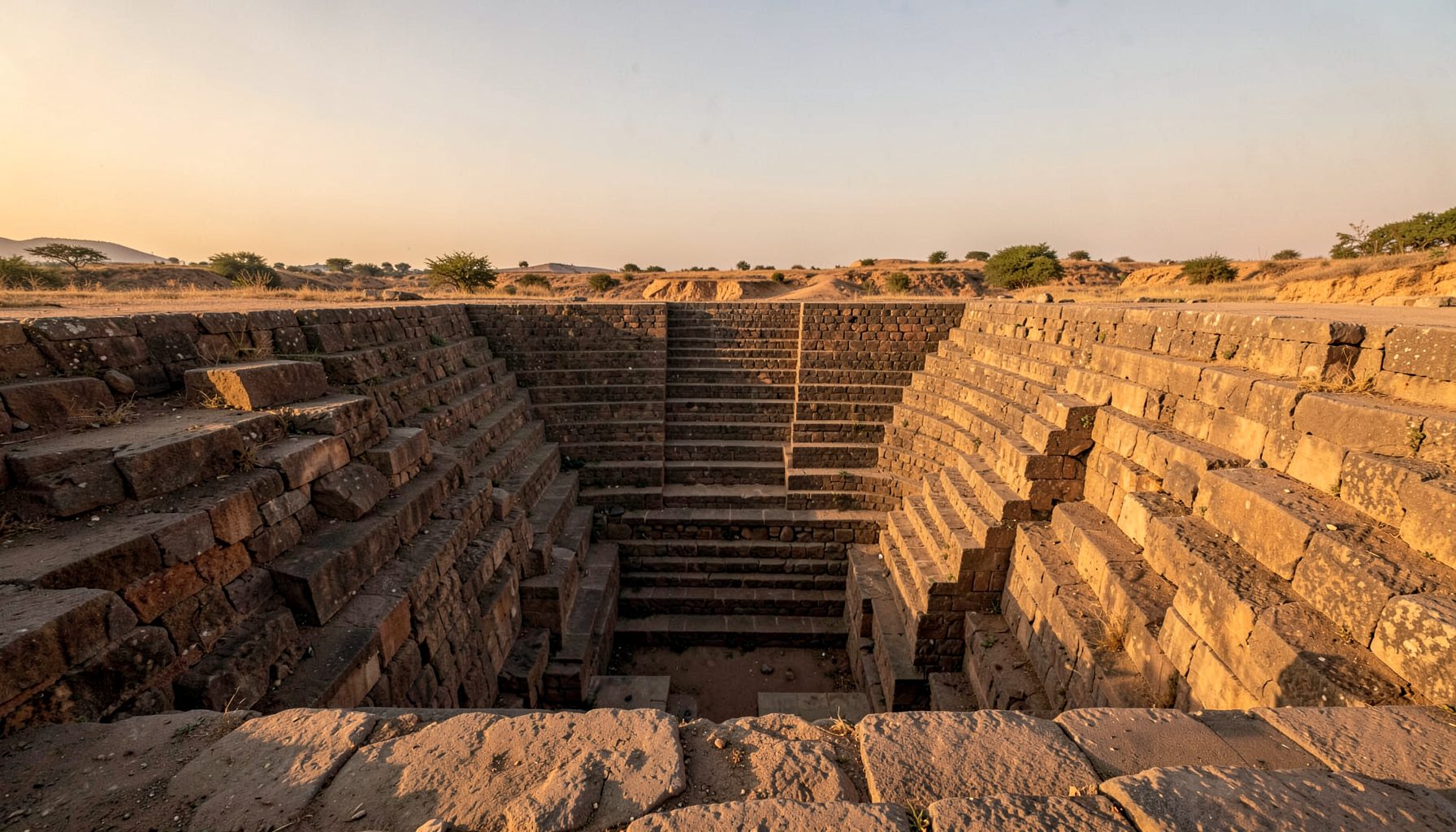
Rani ki Vav at Patan in Gujarat is one of India’s most accomplished water monuments. Built in the 11th century for King Bhimdev I by Queen Udayamati, the stepwell descends through a carefully ordered sequence of pavilions, pillars, galleries and sculpted niches. Its architecture turns water access into a ceremonial experience, while its carvings preserve an extraordinary visual record of Hindu religious traditions, courtly life and craftsmanship.
The monument was designed as more than a reservoir. Its deep underground spaces moderated heat, supported seasonal water storage and created a place for ritual and community use. The seven-level structure is especially vulnerable because its architectural meaning depends on the relationship between stone, groundwater, soil, shade and changing levels of the Saraswati river system.
Rani ki Vav became a UNESCO World Heritage Site in 2014, bringing international recognition and a larger flow of visitors to Patan. That status supports conservation, yet it also increases the need for careful management. Tourism, photography, drainage, visitor movement and environmental change all affect how the monument can be protected.
For Australian readers, the site offers a useful comparison with local efforts to protect historic places while keeping them accessible. Like a heritage water tank in Adelaide, a historic irrigation structure near Perth or a protected civic building in Melbourne, Rani ki Vav requires long-term maintenance rather than a single restoration project.
A Monument Shaped By Water And Stone
The stepwell’s most distinctive feature is its descending axis. Visitors move from the entrance towards the former water source through a series of increasingly enclosed spaces. Each level contains architectural details that must function together: load-bearing columns, retaining walls, carved brackets, stairways, platforms and sculptural panels.
This complexity makes conservation particularly demanding. A crack in a pillar, displaced stone or blocked drainage channel can affect several connected parts of the structure. Repairs must respect the original construction logic, including the use of locally appropriate stone, traditional proportions and the movement of moisture through underground masonry.
The carvings add another layer of responsibility. Figures of deities, apsaras, musicians and symbolic animals are exposed to dust, humidity changes, salts and physical contact. Even small interventions can alter the appearance of a sculpture or obscure evidence of the original tool marks. Conservation therefore depends on measured documentation before cleaning, replacement or structural work begins.
Environmental Pressures Below Ground
Water is central to the identity of a vav, yet it is also one of its greatest risks. Seasonal rainfall can saturate surrounding soil, while intense runoff may carry silt into lower areas. If drainage is poorly managed, water can remain against masonry and encourage biological growth, staining and the migration of soluble salts through the stone.
Salt crystallisation is particularly damaging. Dissolved salts enter pores in the sandstone and expand as they crystallise during drying. Repeated cycles can cause powdering, flaking and the loss of fine carved details. The visible surface may look stable while internal deterioration continues, which is why moisture monitoring and laboratory analysis are essential before treatment.
Climate variability adds uncertainty. Longer hot periods, sudden heavy rain and altered groundwater conditions can place new stress on a structure designed for a different hydrological rhythm. A conservation programme must consider the wider site, including surface drainage, nearby construction, vegetation, groundwater behaviour and the impact of changing rainfall patterns.
Key environmental and structural concerns include:
- Stormwater entering the monument or collecting beside retaining walls
- Salt deposits that weaken carved and load-bearing stone
- Soil movement affecting stairs, platforms and masonry joints
- Biological growth in shaded, damp or poorly ventilated areas
Managing Visitors Without Losing Meaning
Rani ki Vav’s fame brings educational and economic value to Patan, but visitor access must be balanced with physical protection. Repeated foot traffic can wear stair edges and floor surfaces, especially where people gather for photographs. Touching sculptures, leaning against carved panels and entering restricted spaces can cause gradual damage that is difficult to reverse.
Visitor circulation should be planned around the monument’s architectural sequence. Clear paths, discreet barriers and carefully located interpretation can reduce crowding without turning the stepwell into a heavily controlled exhibition. Shade, rest areas and photography points outside vulnerable zones can improve the experience while reducing pressure on fragile details.
Digital documentation is an important support. High-resolution photography, photogrammetry, measured drawings and drone imagery can record the monument’s condition and help researchers compare changes over time. Such records are valuable during emergencies, but they should complement direct conservation rather than encourage the idea that a digital copy can replace the historic fabric.
Practical visitor safeguards include:
- Keeping hands, bags and tripods away from sculptures and carved walls
- Using defined routes to protect worn stair edges and floor surfaces
- Limiting group sizes in narrow galleries and lower levels
- Updating condition records after busy seasons and major weather events
Lessons For Australian Heritage Practice
The site’s conservation questions will feel familiar in Australia, where heritage places must accommodate public use, climate pressures and limited maintenance budgets. In Sydney and Melbourne, heritage managers routinely weigh access, interpretation and building fabric; at Rani ki Vav, the same balance is complicated by a deep subterranean plan and a water system that is part of the monument’s original purpose.
Australian everyday habits also shape the comparison. Household rainwater tanks, water-sensitive gardens and public discussion about drought have made water conservation a visible part of life in many cities and regional towns. Rani ki Vav demonstrates that water infrastructure can carry cultural, religious and artistic meaning as well as practical value.
The local heritage market matters too. Visitors often seek authentic experiences, specialist photography and locally made crafts, while councils and tourism bodies want destinations that support regional economies. Responsible promotion should direct spending towards Patan’s guides, artisans, accommodation and cultural institutions without encouraging uncontrolled footfall or superficial commercial treatment of the monument.
Australia’s legal framework offers another useful point of comparison. The Environment Protection and Biodiversity Conservation Act 1999 protects matters of national environmental significance, while state and territory laws govern many heritage places through registers, approvals and conservation requirements. Rani ki Vav is protected through India’s heritage system and the Archaeological Survey of India, so any comparison must respect different legal structures rather than assume that an Australian model can be transferred directly.
Research into other Indian water monuments also broadens this discussion. The documentation of Maharashtra’s lesser-known structures in forgotten baravs shows why inventories are important: conservation cannot begin effectively when historic wells remain unmapped, undocumented or absent from public awareness.
Documentation, Materials And Skilled Care
A successful conservation strategy begins with evidence. Historic photographs, architectural surveys, stone assessments, drainage studies and visitor data can reveal whether a problem is new, seasonal or part of a much longer pattern. Recording individual sculptures and architectural members also helps distinguish original fabric from earlier repairs.
Material compatibility is critical. Cement-rich repairs, impermeable coatings or poorly matched replacement stone may create new moisture problems, trap salts or produce stresses at the junction between old and new work. Lime-based mortars and traditional techniques may be appropriate in some contexts, but each intervention requires testing, specialist advice and clear documentation.
Skilled craftspeople are central to this process. Stone carvers, masons, conservators, hydrologists, architects and archaeologists contribute different forms of knowledge. Training younger workers in carving traditions and repair methods can preserve practical expertise while creating employment connected to heritage rather than treating conservation as an occasional emergency response.
Photography has a strong role in public education when it shows details that visitors may miss: tool marks, drainage channels, weathered figures and the transition from open sunlight to underground shade. A photographic journey through Pune’s hidden stepwells demonstrates how careful visual documentation can bring attention to water structures that receive little formal recognition.
Community Stewardship And Long-Term Planning
Conservation cannot be separated from the people who live around a heritage site. Residents, guides, schools, researchers and local businesses hold knowledge about seasonal water, access routes, older repairs and changing use. Their participation can identify risks that a periodic technical inspection might overlook.
Interpretation should present Rani ki Vav as a living part of Patan’s cultural landscape rather than an isolated stone object. Information about water management, craftsmanship, religious symbolism and the history of excavation can help visitors understand why small acts of care matter. Local-language interpretation is especially important for broad community participation.
Long-term planning should include routine inspection, emergency procedures for heavy rain, monitoring of groundwater and salt movement, and transparent records of every intervention. Funding models also need continuity. Ticket income, government support, research partnerships and responsible tourism can contribute, but none should replace a stable conservation budget.
The wider lesson extends beyond Gujarat. Stepwells, bawdis, baolis, vavs, kunds and baravs are distributed across India, often in places where formal protection is limited. Recording undocumented structures, sharing field research and building public interest can help prevent neglect. Rani ki Vav’s international status gives it visibility, yet its future still depends on patient technical care, informed visitors and a community that recognises water heritage as part of its own history.
Get in Touch
Have information about a stepwell that is not yet on our map? We would be glad to document it and give you full credit. Whether it is a Barav, Kund, Vihir, or any other form of stepwell, every contribution helps preserve India's water heritage.
Call or message us with details about the location, and we will follow up.
#9372496819
Send a Message
What People Say
"The Maharashtra Stepwells campaign has brought attention to structures that were nearly forgotten. The architectural documentation and drone photography are invaluable resources for researchers and students alike."
"Collaborating with the Indian Stepwells team gave our architecture students hands-on exposure to traditional water-harvesting structures. The presentations were insightful and inspiring."
"I shared details of a stepwell near my village that was not on any map. The team visited, documented it beautifully, and credited me. It felt wonderful to contribute."