 Explore Maharashtra
Beneath Pune's Surface: A Photographic Journey Through Hidden Stepwells
Pune, a sprawling university city in western Maharashtra, holds more water heritage than its modern skyline suggests. Tucked behind apartment blocks, beneath banyan shade, and at the edges of older village belts, dozens of stone-cut stepwells wait quietly for anyone curious enough to look. Many have been dry for decades; some still gather seasonal rainwater; others sit half-swallowed by laterite developments.
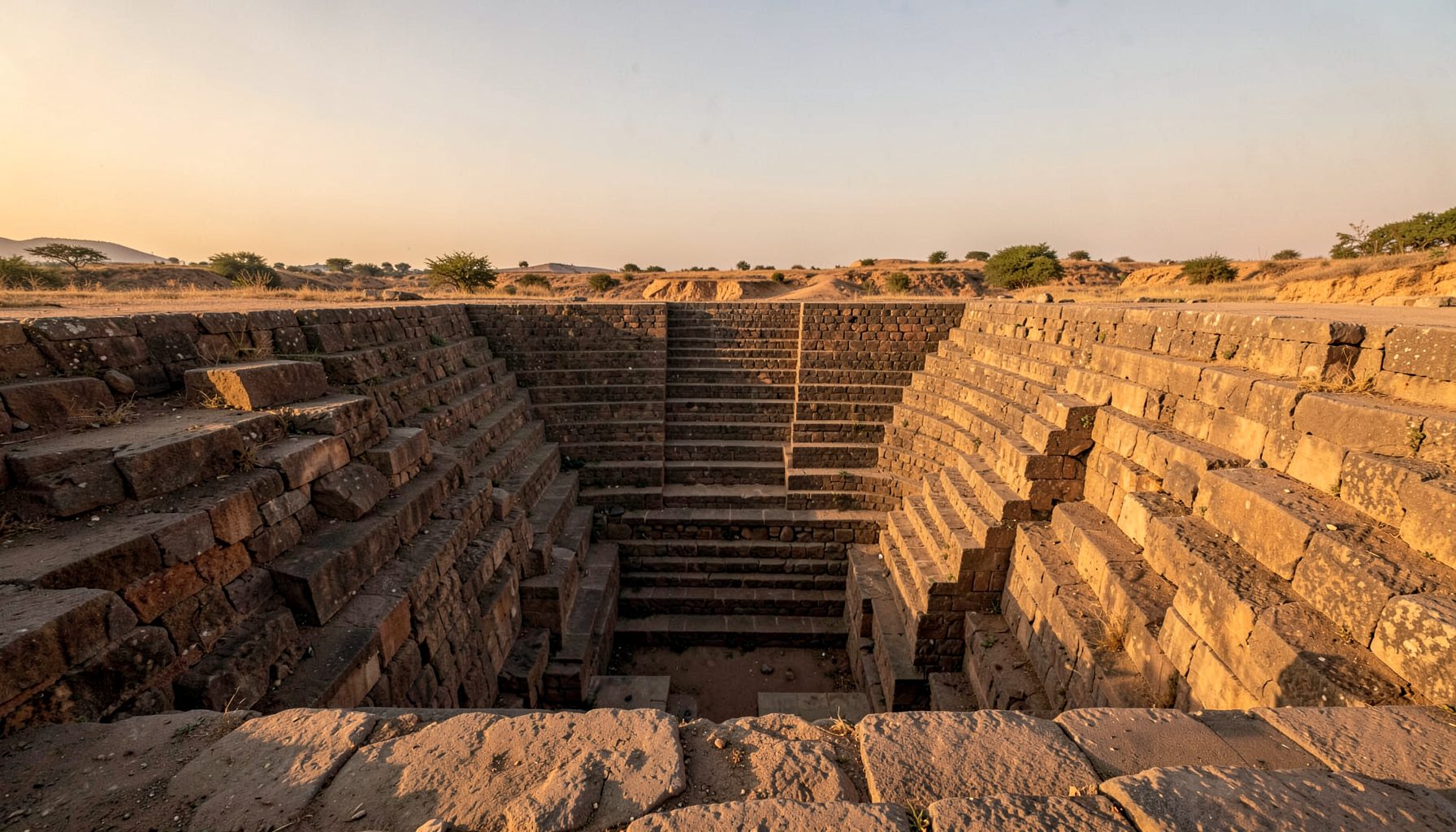
This photographic journey began as a small field survey and grew into something larger, a body of work that documents stepwells most guidebooks never mention. The images gathered here emphasise geometry, water-stained walls, and the everyday textures of structures that once sustained whole neighbourhoods. The goal is straightforward: to put a name and a face to each well before another monsoon erodes its identity.
The campaign sits within a broader documentation effort across Maharashtra, where hundreds of similar structures remain unmapped. For Australian readers, particularly those familiar with the parched pastoral zones of western New South Wales or the engineered catchments around Adelaide, the parallels are surprisingly close. Both regions learned, centuries apart, that surviving a hot season means working with water, not against it.
Why Pune's Stepwells Slipped Out of View
Modern Pune grew up around these wells and then grew over them. When municipal taps reached most households by the late twentieth century, the daily ritual of descending stone steps for water ended almost overnight. Without that daily footfall, the wells lost their loudest advocates. Families stopped maintaining them, developers stopped recognising them, and local councils stopped surveying them.
A similar quiet decline shaped Australia's own tank-and-dam networks across the inland, where many pastoral stock dams fell out of regular maintenance once bore pumps and pipeline schemes took over. In both cases, the shift from communal water infrastructure to reticulated supply left beautiful, functional architecture standing without purpose. Heritage listings in New South Wales and Victoria face the same problem: a structure without active use is often a structure without active care.
The Pune project began by mapping what remained. Researchers walked older peths and outer villages, asking locals about wells their grandparents had mentioned. Many answers pointed to features now hidden behind laterite walls or recently poured concrete. Cataloguing these became the first step toward photographing them properly, and forms part of the broader heritage effort led by a small group of photographers and field researchers.
Architectural Patterns Worth Photographing
Pune's stepwells come in several recurring forms. The most common is the rectangular, multi-storey type with symmetrically arranged flights descending from ground level. Others are circular kunds, open saucers cut into basalt bedrock with a single central drain. A rarer type, the double-flight vav, places two opposing staircases within a tall pillared pavilion, a layout that rewards careful wide-angle framing.
Decorative restraint is striking. Unlike the elaborate carvings at Adalaj or Rani ki Vav in Gujarat, Maharashtra's wells rely on plain dressed stone, corbelled brackets, and the rhythm of pillars and lintels. This austerity makes them difficult to photograph well; the eye needs help. Architectural sketches prepared before each shoot mapped pillar spacing, water levels, and the angles of seasonal light. Those sketches now sit alongside the photographs as part of the field record.
Australian photographers working on heritage projects often face similar restraint in subjects like the woolstores of Pyrmont or the stripped sandstone gaols of Darlinghurst, where surface decoration is modest and atmosphere does the heavy lifting. Both traditions ask the camera to do what plain masonry cannot: turn geometry into story.
Working in Low Light and Other Subterranean Conditions
A stepwell at midday is a study in harsh contrast: blazing stone above, blue-dark depths below. Most of the strongest frames in this body of work were taken in the hours after sunrise or before the morgue-light of dusk, when the upper rim catches warm light and the lower steps fall into blue shadow. Tripods were mandatory; ISO rarely dropped below 800.
Drone imagery added an unexpected layer. Looking straight down, a stepwell reveals itself as a planar diagram, a pattern cut into the earth that ground-level viewers never see. Several frames in the series are simply that: square or rectangular mandalas of staircases, walls, and shadow. Readers who follow the work of landscape photographers exhibiting at the Australian Centre for Photography in Sydney will recognise the appeal of viewing familiar terrain from an unfamiliar altitude.
Working inside required negotiation with more than light. Bats, bees, and seasonal spiders all treat these wells as home. A field kit always included a wide-angle zoom, a polariser, and enough patience to wait for an insect to move out of frame. Those small waits, sometimes twenty minutes long, often produced the calmest, most resolved images. The team worked in the plain, no-frills style favoured by regional heritage volunteers in places like Ballarat and Bendigo, where locals prefer short briefs and quick decisions over long consultations.
Camera Settings and Field Choices That Shaped the Project
- Two-second self-timer with mirror lock-up for the deepest interior frames
- 16–35mm zoom for tight pavilions, 24–70mm for the multi-storey wells
- Manual white balance matched to the basalt tint rather than auto
- Single tripod leg lowered where steps were uneven or slick
- RAW capture only, with a backup card swapped at every site
Sites That Earned Their Place in the Series
The series covers six principal wells across the Pune district, each chosen for a different reason. One, hidden inside a temple compound on the city's eastern edge, has a colonnade of slim black-stone pillars untouched by graffiti. Another, on the outskirts of a sugar-belt village, still fills ankle-deep during heavy monsoon, and was photographed twice, once dry and once wet, to capture the difference.
A third sits beside a busy market road and is easily missed, its entrance a narrow slit between two modern shops. Locals had warned the team that the steps were unsafe, so the visit required borrowed gumboots and a local guide willing to climb down first. The reward was a chamber whose ceiling had collapsed just enough to throw a single column of light onto the central platform, an image that became one of the campaign's signature frames.
Visitors from Australia may recognise something of the same spirit in how communities around Alice Springs or Tennant Creek speak about their own waterholes, places that are not picturesque in the postcard sense but are treated with quiet, considered respect. That tone, of functional beauty worth protecting, sits at the heart of this photographic work.
Stepwell Sites Featured in the Project
- A colonnaded well inside an eastern Pune temple compound
- A village-edge vav that fills seasonally with monsoon runoff
- A slit-entrance chamber beneath a market street
- A circular kund cut directly into basalt bedrock
- A multi-storey rectangular well with paired pavilions
The Team and the Maharashtra Campaign
The project is led by a small group of heritage photographers and researchers working under the broader Maharashtra campaign run through this site. Field sessions typically last three to four days, with travel between sites by hired vehicle and accommodation in modest district guesthouses. The work is unsponsored in the formal sense; prints and exhibition costs are covered through sales and limited edition releases.
Anyone interested in supporting or following the campaign can read more on the Maharashtra documentation page, where route notes, sketch downloads, and occasional open-call announcements appear. The page also lists upcoming field dates for volunteers able to travel.
Why These Images Matter for Preservation
Photographs are not preservation on their own, but they often open the door to it. Several Pune wells included in this series had no formal heritage listing before the project began. Once published online with location data and architectural notes, two received preliminary interest from local heritage bodies, and a third was referred to the state archaeology directorate.
The model is familiar in Australia. Photographic surveys by groups such as the National Trust have repeatedly preceded formal listings for sites like Maldon's nineteenth-century waterworks or pastoral homesteads across the Western Australian wheatbelt. Image-led documentation does not replace expert assessment, but it gives assessors something concrete to assess.
Looking ahead, the team plans a small travelling exhibition, a printed field guide for district schools, and an open dataset of well locations for academic use. Anyone with information about an undocumented well, in Pune or elsewhere in Maharashtra, is warmly invited to get in touch through the project's contact page. Every additional site shared strengthens the case that these stone water systems deserve the same care given to any other piece of living infrastructure.
Get in Touch
Have information about a stepwell that is not yet on our map? We would be glad to document it and give you full credit. Whether it is a Barav, Kund, Vihir, or any other form of stepwell, every contribution helps preserve India's water heritage.
Call or message us with details about the location, and we will follow up.
#9372496819
Send a Message
What People Say
"The Maharashtra Stepwells campaign has brought attention to structures that were nearly forgotten. The architectural documentation and drone photography are invaluable resources for researchers and students alike."
"Collaborating with the Indian Stepwells team gave our architecture students hands-on exposure to traditional water-harvesting structures. The presentations were insightful and inspiring."
"I shared details of a stepwell near my village that was not on any map. The team visited, documented it beautifully, and credited me. It felt wonderful to contribute."