 Explore Maharashtra
The stepwells of Kutch: survival in an arid landscape
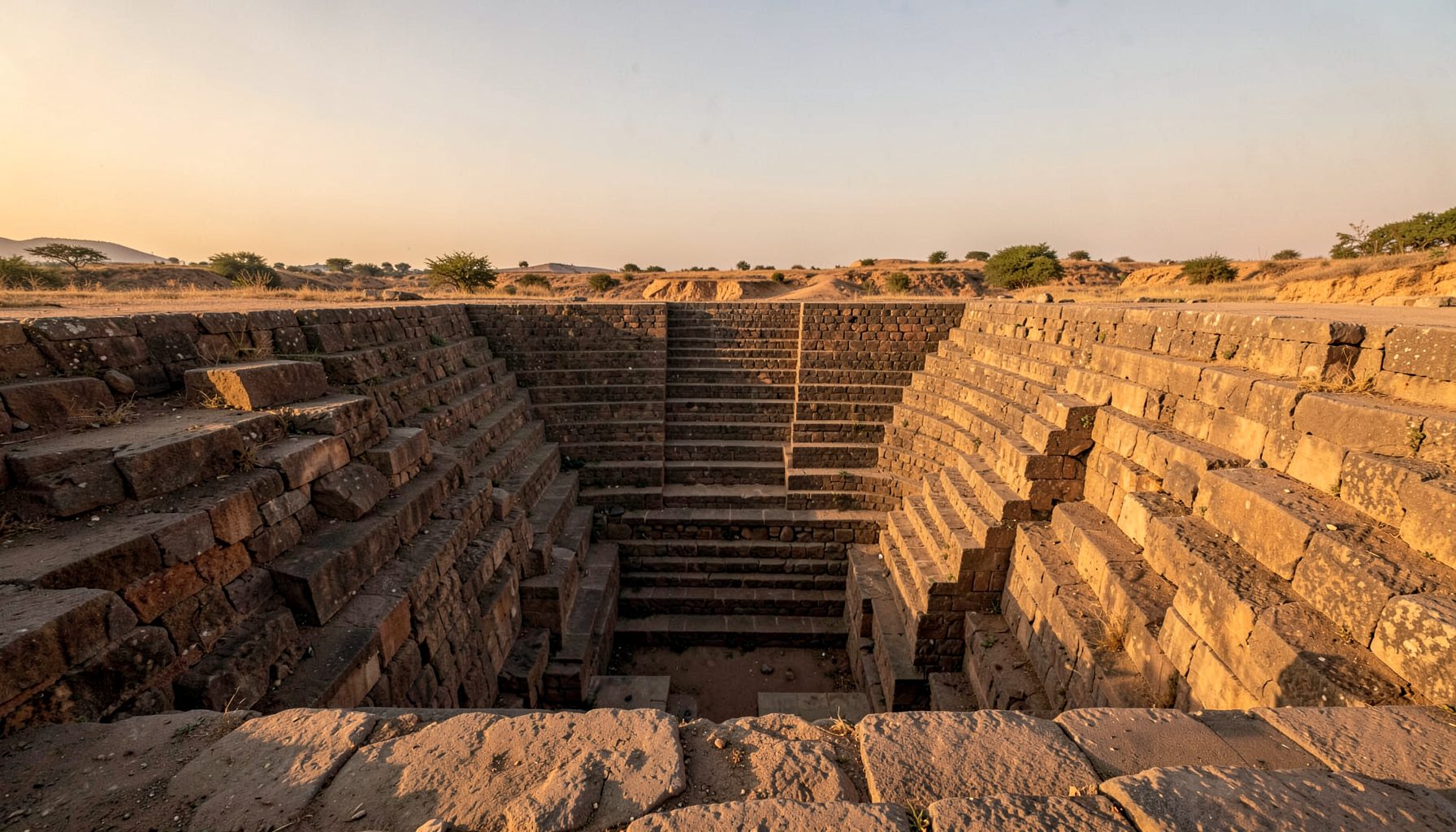
Across the western edge of Gujarat, Kutch is shaped by heat, salt, wind and irregular rain. Its historic wells and stepwells were built for conditions in which a short monsoon could determine whether a village had water for the rest of the year. Their descending stairs, shaded landings and carefully lined shafts represent a practical response to an unforgiving climate.
The stepwells of Kutch: survival in an arid landscape is also a story about memory. Some structures remain part of daily movement through villages, while others are hidden behind scrub, absorbed into newer buildings or damaged by neglect. Recording them requires architectural observation, local knowledge and an understanding of how water shaped settlement across the region.
A landscape governed by scarce water
Kutch is one of India’s most distinctive dryland regions. The Great Rann and Little Rann create vast seasonal salt marshes, while much of the mainland receives rainfall in brief and uncertain bursts. During the monsoon, water may collect quickly; during the long dry season, evaporation, saline soils and deep groundwater make access difficult.
A stepwell, known in different parts of western India as a vav, vaav, bawdi, baoli or barav, allowed people to reach water as its level fell. Steps made the descent gradual and usable, rather than forcing people to draw from a high, exposed rim. The structure also created a cooler environment where travellers, animals and villagers could pause.
This logic has a familiar resonance for Australian readers. Communities in Adelaide, Perth and regional New South Wales understand the importance of rainwater storage, bore management and water restrictions, even though the technologies and landscapes differ. A Kutch stepwell can therefore be read as both a historic monument and a sophisticated piece of dryland infrastructure.
Architecture below the surface
The visual drama of a stepwell comes from its descent. Flights of stairs lead towards a well shaft, sometimes passing through pavilions, platforms, retaining walls and carved pillars. These elements were not decorative additions separated from function. They stabilised the structure, provided shade and created places for people to gather while water was collected.
In Kutch, local building traditions reflect the wider architectural vocabulary of Gujarat while responding to regional materials and conditions. Stone masonry, deep foundations and shaded recesses helped manage heat. Ornament might include geometric patterns, floral forms, religious imagery or memorial inscriptions, yet the essential achievement remained the controlled movement from the bright surface into a cooler, protected depth.
The relationship between stepwells and other water monuments is important. Tank steps, temple kunds and reservoir ghats share ideas about approach, ritual and public access. A study of temple tank architecture shows how these forms influenced one another across India, rather than developing as isolated building types.
Places of work, worship and exchange
A well was rarely just a hole containing water. Its steps organised movement and made water collection visible. Women carrying vessels, herders bringing animals, travellers seeking shade and residents meeting on the way to the well all contributed to its social life. In a region where settlements could be widely separated, a water structure also became a landmark and a point of orientation.
Some wells held religious associations, while others were commissioned as acts of public generosity or remembrance. Inscriptions and oral traditions may preserve the names of patrons, communities or events connected with construction. These accounts need to be treated carefully: local stories can change over time, but they often preserve relationships that formal records omit.
The ethical dimension of recording heritage matters here. Researchers should acknowledge custodians, ask permission before entering private or sacred areas and avoid presenting local knowledge as an anonymous discovery. Approaches to heritage memory work offer a useful reminder that documentation is also an act of listening, especially when a site carries histories of loss, displacement or social change.
What threatens Kutch’s historic wells
Many stepwells have lost the water systems that made them useful. Borewells, piped supply, road construction and altered drainage patterns can leave a historic shaft dry or polluted. Where groundwater becomes saline, the original purpose may be impossible to restore without addressing the wider aquifer and catchment.
Physical damage is equally varied. Roots can dislodge masonry, rainwater can erode joints, rubbish can accumulate in the shaft and repairs made with incompatible cement may trap moisture or distort historic surfaces. Earthquakes are a serious consideration in Gujarat, and even small shifts can weaken stairs, retaining walls and carved structural members.
Key risks commonly found around neglected stepwells include:
- Broken steps and unstable parapets that make access dangerous
- Silt, plastic waste and vegetation blocking the water shaft
- Loss of inscriptions, carved stones and original construction details
- New buildings or roads interrupting historic drainage channels
- Falling groundwater levels that leave the well permanently dry
Conservation must therefore begin with diagnosis. Clearing a shaft without understanding its water source may expose masonry to greater damage, while rebuilding decorative elements without stabilising the structure can create a misleading appearance. The conservation lessons from Rani ki Vav at Patan demonstrate why engineering, archaeology, hydrology and site management need to work together.
Reading the sites through local knowledge
Official surveys are valuable, but they rarely tell the complete story of a village water structure. Residents may know an older name, a seasonal spring, a former route to the well or a festival that once took place nearby. Such details can reveal how a site functioned after its formal construction and may help identify structures missing from published inventories.
Fieldwork should combine measured drawings, photographs, drone imagery where appropriate, material notes and interviews. A simple plan can show the relationship between the entrance, stair flights, landings and well shaft. Photographs taken at different times of day can explain how shade moves through the building, while close images of joints and tool marks may help distinguish original work from later repair.
Researchers also need to recognise the limits of remote observation. Satellite images can locate depressions, masonry edges and abandoned settlement patterns, but they cannot confirm a local name or explain whether a site remains ritually significant. The most reliable record brings together mapping, architectural analysis and conversations conducted in the languages and social settings of the community.
For an Australian audience, the comparison with Aboriginal cultural heritage practice is useful when handled with care. A site may have values that are not visible in its fabric, and access may need to follow community protocols. The relevant lesson is not that Indian and Australian traditions are interchangeable, but that responsible heritage work respects living custodianship alongside physical evidence.
Keeping water heritage visible
Documentation can help a stepwell survive even before major restoration begins. A clear record supports heritage listing, educational material, grant applications and future monitoring. It also gives local schools, councils and community groups a way to explain why an apparently empty stone stairway matters.
Public presentation should avoid turning every site into a spectacle. Interpretive signs can describe construction, hydrology and social history without encouraging unsafe entry or treating sacred spaces as picturesque backgrounds. Digital archives, exhibitions and carefully captioned photography can reach people who may never travel to Kutch, including audiences in Australian cities looking for meaningful connections with South Asian heritage.
Practical community-based actions may include:
- Photographing the structure from fixed viewpoints each year
- Recording local names, stories and seasonal water conditions
- Marking unsafe areas without obscuring historic fabric
- Clearing rubbish through supervised, non-invasive work
- Linking the site to school lessons about water and climate
The work of Indian Stepwells demonstrates the value of combining original photography, sketches, field research and public education. Similar efforts in Kutch could build a growing register of documented wells, including modest village structures that lack the scale or fame of celebrated monuments.
For visitors from Australia, the most respectful approach is attentive rather than hurried. A stepwell is not simply a photogenic ruin to be added to a Gujarat itinerary between Bhuj and the coast. It is part of a water landscape shaped by labour, belief, engineering and adaptation. That perspective may feel familiar to anyone who has seen a community rally around a dry creek, an old tank or a local reservoir during a difficult summer.
The future of Kutch’s wells will depend on connecting heritage conservation with present water realities. Restoration can protect stone, but long-term care also requires functioning drainage, informed groundwater policy and local ownership of decisions. When documentation records both architecture and lived meaning, these descending pathways remain legible as more than remnants: they become evidence of how communities made life possible in an arid land.
Get in Touch
Have information about a stepwell that is not yet on our map? We would be glad to document it and give you full credit. Whether it is a Barav, Kund, Vihir, or any other form of stepwell, every contribution helps preserve India's water heritage.
Call or message us with details about the location, and we will follow up.
#9372496819
Send a Message
What People Say
"The Maharashtra Stepwells campaign has brought attention to structures that were nearly forgotten. The architectural documentation and drone photography are invaluable resources for researchers and students alike."
"Collaborating with the Indian Stepwells team gave our architecture students hands-on exposure to traditional water-harvesting structures. The presentations were insightful and inspiring."
"I shared details of a stepwell near my village that was not on any map. The team visited, documented it beautifully, and credited me. It felt wonderful to contribute."