 Explore Maharashtra
Stepwells as Living Heritage: Folk Traditions and Sacred Rituals
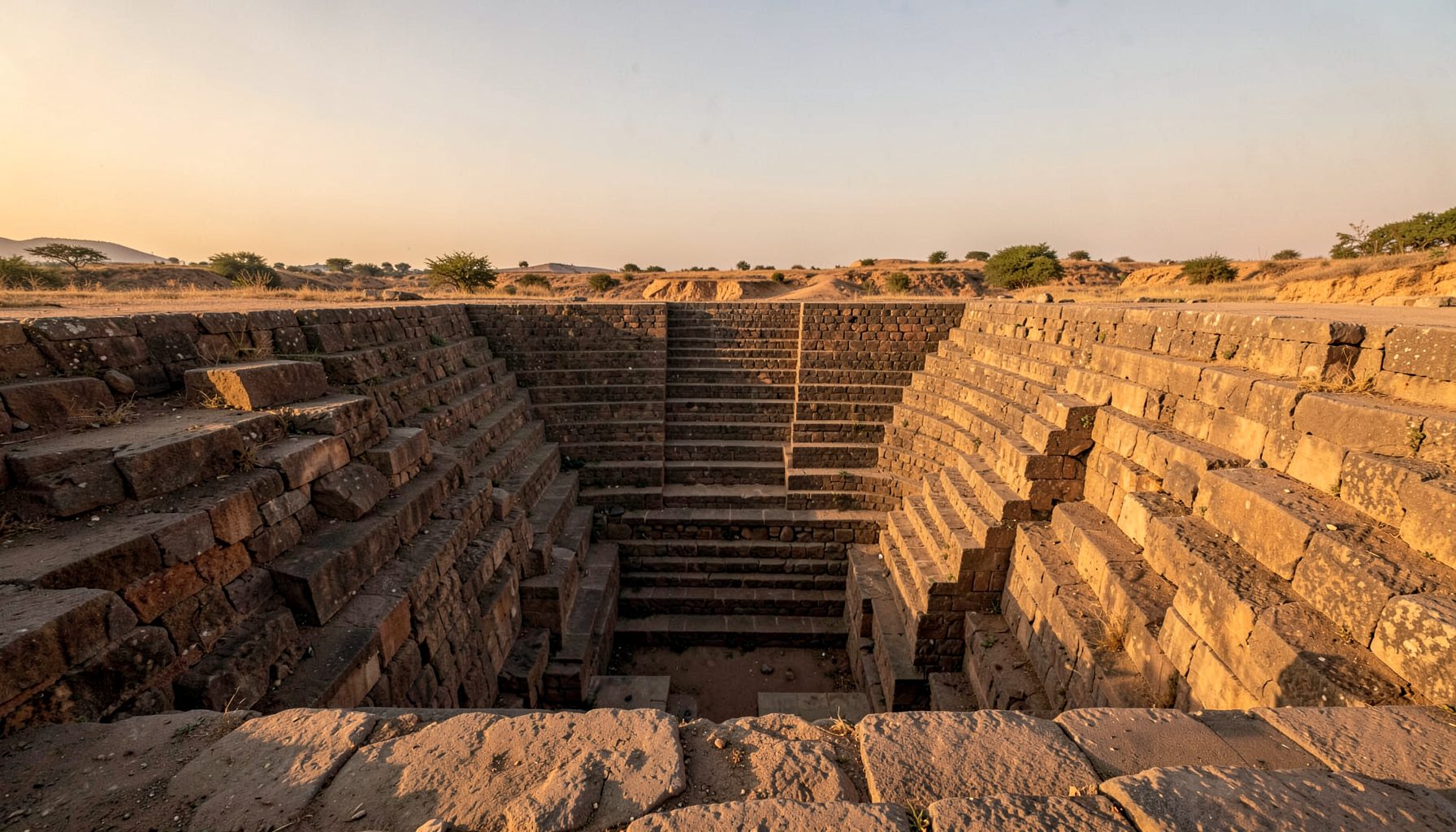
Stepwells occupy a singular place in the cultural imagination of the Indian subcontinent. Far more than utilitarian reservoirs, these subterranean structures served as gathering points where communities converged to draw water, share news, and perform rites. Across centuries, the rhythmic descent into a stepwell became a metaphor for spiritual immersion, with each level symbolising a deeper connection to the divine. The architecture reflects local craftsmanship, regional deities, and village beliefs, weaving practicality and sacred geometry into one form.
In rural Maharashtra and Gujarat, stepwells were often the only reliable source of drinking water during dry months, giving them an outsized role in social life. Women gathered at the well-head to exchange recipes while filling brass pots, and children learned the names of plants growing along the shaded walls. Travelling storytellers, mendicants, and musicians performed folk ballads that spread through neighbouring hamlets. These oral traditions, sometimes recorded by folklorists, continue to shape how communities remember ancestors and seasonal cycles.
For visitors arriving from Melbourne or Brisbane, the cultural landscape may feel distant, yet shared concerns about water resilience create unexpected bridges. Australians have watched their own cities grapple with prolonged dry spells, and Adelaide's pioneering wastewater recycling scheme has become a global reference point for sustainable water practice. Heritage bodies in New South Wales operate under legislation that recognises water sources as integral to Aboriginal cultural identity, an outlook that resonates with how Indian communities revered their wells.
Sacred origins of the water shrines
The earliest stepwells emerged in the arid west of India during the sixth century, conceived partly as acts of devotion. Patrons commissioned these deep, multi-storeyed structures as offerings to local deities, believing that providing water was equivalent to granting salvation. Inscriptions often mention donors and the spiritual merit they hoped to accrue, and the waters below were thought to wash away impurities as effectively as any river. Sacred texts describe holy tanks and wells as dwelling spots for protective spirits.
Architectural language reinforced these beliefs. Pillars flanking the descent carried motifs of lotus buds, makaras, and guardian figures such as Nagas. Pilgrims descending the steps passed through shaded pavilions designed to resemble temple mandapas, creating a sense of progression from the secular world above to the sacred waters below. Scholars studying the broader network of medieval water infrastructure often explore the medieval water management networks that supported agriculture and religious life in equal measure.
Ritual bathing at certain wells was timed to coincide with planetary alignments and lunar phases. Women would fast on specific Tuesdays and descend at dawn to pour oil lamps onto the water, an act believed to appease ancestral spirits. Wells near temples often attracted pilgrims during festivals, blending roles with temple tanks in ways that blurred boundaries between civic and sacred infrastructure.
Gathering places for daily rituals
Stepwells functioned as the heartbeat of village life, especially for women whose domestic responsibilities frequently brought them to the water's edge. The well was a place to exchange gossip, coordinate weddings, and settle minor disputes through community elders. For many families, a newborn's first outing included a visit to the stepwell, where water from the lowest level was sprinkled on the child as a blessing.
Religious observance mingled with these daily tasks. Devotees paused to smear vermillion on a niche shrine, light a small brass lamp, or whisper a prayer before drawing their first pot. Travellers about to embark on a long journey often stopped at a stepwell to toss a coin into the depths, seeking protection for the road ahead. These micro-rituals, rarely documented in formal histories, persisted because they were woven into the rhythms of work and care.
Wide steps encouraged communal gatherings, and certain wells became so closely identified with particular families that a daughter's wedding procession would pause at each significant stepwell en route to her new home, honouring ancestral ties through the act of drawing water.
Festival calendars and seasonal observances
Many stepwells hosted annual celebrations tied to the monsoon. The arrival of the first rains was marked with music, drumming, and offerings poured directly into the well, a gesture of gratitude for replenishment after months of scarcity. In Gujarat and Rajasthan, the festival of Navratri saw stepwells illuminated with rows of clay lamps, transforming the descent into a cascade of flickering light.
Harvest festivals brought different crowds. After the rabi crop was gathered, villagers gathered at the largest local stepwell for collective meals, storytelling, and folk dances. Performances of the rasiya tradition in Braj region stepwells celebrated the divine love of Radha and Krishna through songs that referenced the well as a metaphor for longing. These performances reinforced the stepwell's identity as a stage as much as a source of water.
Smaller, more personal observances also found their home in these spaces. Mothers mourning a child might sit quietly by the water for hours, believing the depths would carry their grief to the next world. Newly married couples sometimes circled the well three times before entering their new home, a gesture echoed in wedding rituals across many parts of South Asia.
Stories sung by the well's edge
Folk traditions gave stepwells starring roles in songs and stories passed down through generations. In Rajasthani ballads, heroines often meet their lovers at the well at twilight, and the structure becomes a threshold between safety and adventure. Gujarati garba compositions sometimes name specific wells in their lyrics, treating the structures almost as characters with their own personalities.
Storytellers, particularly the travelling bhat and charans communities, used stepwells as informal amphitheatres. Audiences seated on the wide steps listened to epic narratives while children splashed in shallow basins. The natural acoustics of the descending galleries amplified voices, making even small performances sound grand. Some narratives explicitly linked the founding of the well to a miracle or a saint's blessing, preserving local history within religious memory.
Oral traditions also encoded practical knowledge. Children learned which steps were safe after monsoon flooding, which niches sheltered snakes, and where the water stayed sweetest through summer. Much of this knowledge is now being gathered by cultural researchers who recognise that losing a stepwell means losing more than stonework.
Symbolism carved in stone
The decorative programmes of stepwells provide a visual lexicon of folk beliefs. Floral arabesques, geometric patterns, and figurative panels reference everything from agricultural fertility to astrological protection. Many carvings depict scenes from daily life: women carrying pots, musicians playing instruments, and processions of animals, embedding the world of the well within the broader social fabric.
Some motifs carry explicitly protective meaning. The swastika, an ancient symbol of well-being, appears at thresholds to ward off misfortune. Images of the makara, a crocodile-like creature associated with rivers and rain, guard entrances in several Gujarati and Maharashtrian wells. Carved depictions of yogis and meditating sages reinforce the spiritual purpose of the descent.
Stylistic variations across regions reveal how local communities adapted shared symbols to their own needs. The temple tank architectural connections become particularly visible when comparing stepwells to neighbouring temple tanks, where similar motifs appear but arranged around bathing ghats rather than descending steps.
Regional flavours across the subcontinent
Maharashtrian stepwells, known locally as baolis or baravs, tend to feature robust stone construction suited to the rocky Deccan plateau. Their folk traditions often revolve around goddess worship, with many baolis named after Mari or Yellamma, regional forms of the divine mother. Festivals at these sites blend Marathi folk songs with Hindustani classical ragas, reflecting the cultural crossroads of the region.
In Gujarat, the elaborate vavs of Adalaj and Champaner showcase the subcontinent's most ornate carvings. Here, folk tradition leans heavily on Vaishnava devotion, with Krishna and Rama narratives appearing prominently. Garba nights during Navratri draw thousands of devotees who descend the steps in coordinated dances, turning the well into a massive amphitheatre.
Rajasthan's arid climate produced stepwells that served as caravanserais for traders crossing the Thar desert. Folk traditions reflect the mix of Rajput, Jat, and Bhil communities, with songs that mention wells as places of both refuge and rivalry. In South India, equivalent structures called kalyani or pushkarini are often attached to temple complexes and used during ritual bathing festivals.
Safeguarding living traditions
Documentation projects have begun recording the intangible heritage surrounding stepwells, recognising that stone alone cannot preserve stories, songs, and rituals attached to these places. Field researchers interview elders and document oral histories that might otherwise disappear with the last generation to remember the wells in active use. Photographers capture the architecture, surrounding landscape, and seasonal changes that give each well its particular character.
Community involvement matters. Several initiatives invite villagers to share photographs, family stories, and memories of stepwells that have fallen off official heritage registers. This crowdsourced approach mirrors programs in the Brisbane Valley, where residents help map Indigenous heritage sites using shared digital tools. Bringing together formal scholarship with lived memory produces a richer record than either could achieve alone.
Sustainable preservation also requires addressing water security, since a stepwell without water loses much of its cultural resonance. Restoration projects in Maharashtra have reintroduced catchment systems that channel monsoon runoff into the wells, echoing historical practice. Such efforts align with Australian approaches in Perth, where stormwater harvesting supports groundwater replenishment under state-level guidelines designed to protect both quantity and quality.
Field research priorities:
- Record oral histories from elders who remember stepwells in active community use
- Map seasonal rituals and festival calendars specific to each well
- Catalogue folk songs, ballads, and stories that mention named stepwells
- Document carved symbols alongside the local meanings attributed to them
- Build regional networks connecting researchers, descendants, and worshippers
- Share findings through open-access platforms to widen public engagement
Get in Touch
Have information about a stepwell that is not yet on our map? We would be glad to document it and give you full credit. Whether it is a Barav, Kund, Vihir, or any other form of stepwell, every contribution helps preserve India's water heritage.
Call or message us with details about the location, and we will follow up.
#9372496819
Send a Message
What People Say
"The Maharashtra Stepwells campaign has brought attention to structures that were nearly forgotten. The architectural documentation and drone photography are invaluable resources for researchers and students alike."
"Collaborating with the Indian Stepwells team gave our architecture students hands-on exposure to traditional water-harvesting structures. The presentations were insightful and inspiring."
"I shared details of a stepwell near my village that was not on any map. The team visited, documented it beautifully, and credited me. It felt wonderful to contribute."