 Explore Maharashtra
Stepwells as Shelters for Migratory Birds
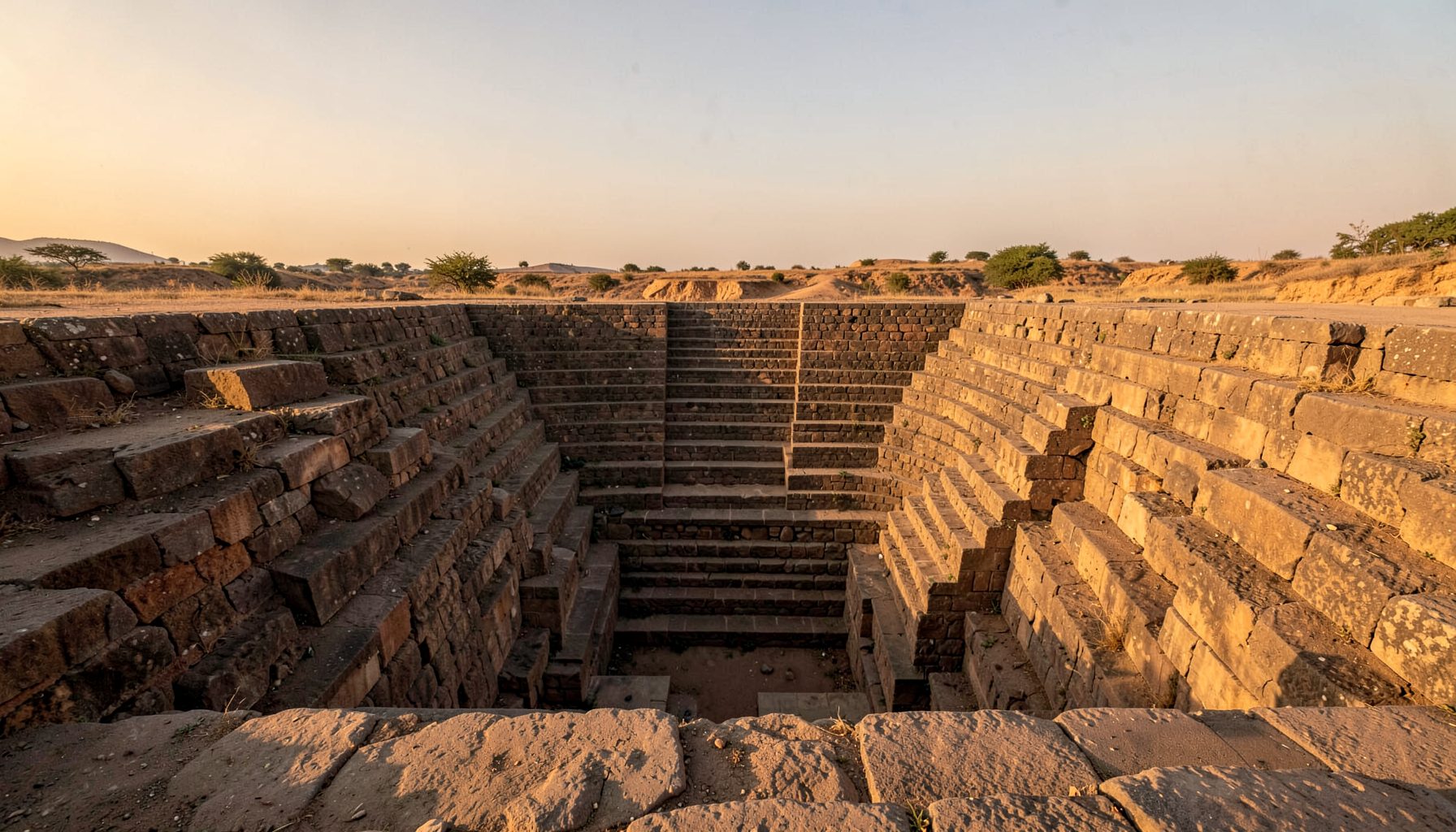
Stepwells are usually encountered as monumental water architecture: descending stairs, long flights of stone, carved pillars and cool chambers that once drew people and animals toward a well. Their value for wildlife is easily overlooked. For migratory birds, these structures can provide a sheltered stopover where water, shade, food and safe resting places are concentrated within an otherwise exposed landscape.
Across India, bawdis, baolis, vavs, kunds and baravs belong to this broad family of water-conserving structures. Their ecological importance depends on local hydrology, vegetation and human use, so not every stepwell functions as an avian refuge. Nevertheless, careful observation can reveal how birds use the space, turning familiar heritage sites into part of a much larger flyway network.
Stepwells Within a Wider Habitat
A stepwell’s bird value begins with its microclimate. Descending flights narrow the amount of sunlight reaching the lower levels, while thick masonry retains cool temperatures after sunset. Deep recesses, ledges and ventilation openings create sheltered niches. These qualities matter during migration, when birds need reliable places to rest, regain warmth and escape daytime heat without spending additional energy searching for cover.
No stepwell exists in isolation. It may be linked to a tank, irrigation channel, seasonal stream, courtyard or agricultural mosaic. For a wader or flycatcher, that connected landscape offers feeding opportunities as well as refuge. Early British survey histories of Indian waterworks often recorded water supplies and engineering details rather than birds, revealing how administrative priorities shaped the surviving documentary record.
The distinction between a stopover site and a permanent sanctuary is important. Migratory species may visit for several days, a season or only during unusual water conditions. Fish, insects, seeds and fallen fruit determine whether the structure supports more than a brief resting place. Pollution, noise, fishing activity and disturbance can also make an apparently secure refuge unsuitable.
Shelter, Perches and Nesting Niches
Stepwells contain architectural features that can resemble the cliff ledges and rock crevices used by many birds. Projecting brackets, stepped terraces, roofed galleries and perforated screens offer perches, shelter from rain and protected corners for nesting. Small cavities should not be assumed suitable: they may be too shallow, occupied by other animals or surrounded by fragile stonework.
A close reading of naga symbolism adds another layer to this habitat. Serpent and makara figures associated with water spouts may provide sculptural perches and visual landmarks. Their original religious purpose was not directed at birds, but their placement shows how water, auspicious imagery and the carved landscape were integrated.
Good field observation depends on patience and restraint. Dawn and dusk watches can reveal repeated flight lines, while repeated visits establish whether birds are merely passing through or returning to the same roost. Camera traps should be positioned away from active nest sites, and drones should not be flown near concentrated arrivals, when their noise and movement can cause an entire roost to lift suddenly.
Heritage Structures With Changing Ecological Roles
Many historic structures acquire new uses as communities and landscapes change. A stepwell might cease to be a principal source of domestic water while remaining a cool gathering place, a nesting site or a stopover for birds. The account of a Glasnevin merchant tomb illustrates how archaeology can preserve a building’s earlier purpose while revealing layers of later occupation and community memory.
Bird use must be understood alongside cultural practices. Pigeons, parakeets and other common birds may gather in the upper galleries, while migratory waders occupy damp lower levels. Sacred or commemorative areas may carry restrictions on entry or nesting. Conservation plans should therefore record both wildlife activity and local rules rather than treating the monument as either an empty ruin or an untouched natural site.
Heritage designation can protect a stepwell’s masonry while leaving its habitat unmanaged. Monitoring, water quality, vegetation and visitor circulation all affect whether birds continue to use it. The most useful records distinguish direct observations from assumptions, noting the date, water level, weather, species, behaviour and any physical disturbance visible in photographs or sketches.
Field Methods That Reveal Hidden Use
A structured survey can turn incidental sightings into reliable evidence. Counts should be repeated across seasons and times of day, ideally using fixed observation points and the same routes on each visit. Notes should connect bird numbers with water depth, shade, nearby feeding areas, human activity and weather. Sound recordings may help identify species that remain concealed, although they require interpretation by someone familiar with local calls.
Institutional archives can also preserve clues. A resource on military police history demonstrates the value of examining records created for purposes very different from wildlife study. Similarly, gazetteers, railway logs, irrigation files, hunting records and municipal accounts may mention seasonal birds or changing water conditions. Such sources are strongest when read critically, since their categories describe what officials considered important.
Local knowledge can fill many gaps in formal archives. Shepherds, fishers, gardeners, guides and residents may know which steps flood first, where birds gather and when access changes. Interviews should document those observations without extracting sensitive locations for the most vulnerable species. Local names for birds, seasonal winds and water conditions may also reveal ecological relationships missing from colonial surveys.
Practical Priorities for Monitoring and Stewardship
Australian birdwatchers already understand the value of connected wetland sites. The Coorong near Lake Alexandrina in South Australia supports migratory birds through coastal wetlands and freshwater inflows, while the managed wetlands of Werribee and the BOOL Car Sanctuary in Victoria attract waterbirds, photographers and visitors from across the country. Stepwells offer a different form of refuge, yet the need for shade, clean water and undisturbed resting places is familiar.
The language of Australian conservation also offers ways to frame this work. Birders may call a rare arrival a “tick” or “twitch,” while wildlife carers speak about a “rescue” and landholders about “management.” Guided tours, print sales and exhibitions can generate attention, although revenue reaches conservation only when directed through grants, stewardship agreements or legally recognised biodiversity-offset programs. On Country, Traditional Owners’ protocols and local knowledge should also guide access, recording and interpretation.
The first field checklist should capture evidence that can be repeated and compared:
- Species observed, with arrival and departure times
- Water level, weather and surrounding vegetation
- Whether birds are feeding, resting, bathing or nesting
- Disturbance from visitors, animals, noise or nearby construction
The second checklist should focus on conditions that protect birdlife without damaging the historic fabric:
- Maintain safe water quality without altering historic fabric
- Schedule maintenance outside peak migration and nesting periods
- Provide unobstructed sightlines and low-disturbance observation areas
- Record nesting evidence discreetly before changing site management
The Maharashtra campaign links community reporting with systematic documentation of undocumented stepwells. Applying that combination of resident knowledge, patient fieldwork and careful photography can reveal how migratory birds occupy India’s historic water architecture while strengthening the long-term case for protecting each site as both heritage and habitat.
Get in Touch
Have information about a stepwell that is not yet on our map? We would be glad to document it and give you full credit. Whether it is a Barav, Kund, Vihir, or any other form of stepwell, every contribution helps preserve India's water heritage.
Call or message us with details about the location, and we will follow up.
#9372496819
Send a Message
What People Say
"The Maharashtra Stepwells campaign has brought attention to structures that were nearly forgotten. The architectural documentation and drone photography are invaluable resources for researchers and students alike."
"Collaborating with the Indian Stepwells team gave our architecture students hands-on exposure to traditional water-harvesting structures. The presentations were insightful and inspiring."
"I shared details of a stepwell near my village that was not on any map. The team visited, documented it beautifully, and credited me. It felt wonderful to contribute."