 Explore Maharashtra
Stepwells, Spirits and the Stories Beneath the Water
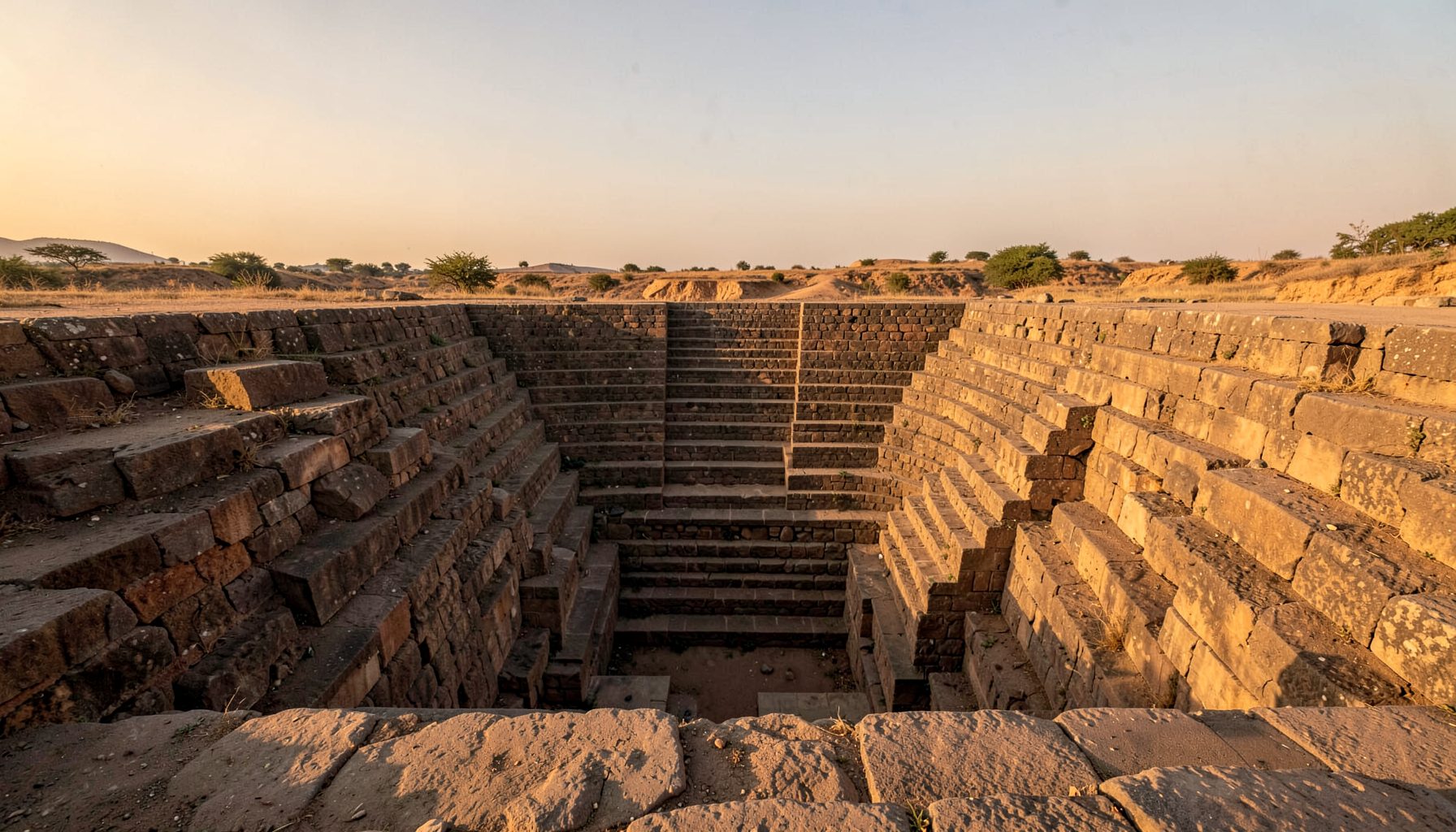
Stepwells are more than engineering work carved into dry ground. Their flights of steps, dark chambers and changing water levels have become settings for stories about serpents, protective spirits, curses, fertility and the dangers of the deep. Those tales give architectural features a human pulse: a carved snake may become a guardian, while an isolated step can carry a warning about where it is safe to bathe.
Much of this folklore lives in local memory rather than a single canonical text. It changes with the teller, the season and the use of the well. For Indian Stepwells, photography and field research therefore belong alongside conversation: records of what can be seen, where a belief is heard, and how a community chooses to share it.
A Landscape Built from Water and Story
India’s water heritage extends well beyond familiar monumental dams. In the Chola-era water structures, for example, access to water was integrated with sacred and civic life. This comparison should not flatten regional differences: the stepped reservoirs of Rajasthan and Gujarat, the deep baolis of the Deccan and the rock-cut vavs of Maharashtra developed through distinct materials, climates and building traditions.
Marathi-speaking districts use terms including baoli, bawdi, vav, kund and barav. Their boundaries overlap, and local usage can differ, so a name offers a clue rather than a definitive classification. What these places share is a close negotiation with groundwater: descending to collect water, sheltering from heat, meeting neighbours and, for many centuries, placing religious practice beside a source that could fail.
That dependence helps explain why water spirits are not peripheral embellishments. The well is infrastructure, neighbourhood and sacred landscape at once. A legend about a serpent guarding a tank can express both reverence and risk, while stories of a curse can mark the boundary between ordinary use and a place that requires extra care.
Serpents, Guardians and Offerings
Serpents in South Asian folklore can be worshipped, feared, depicted as royal or simply encountered as wild animals. At a water source, these meanings overlap. A coiled snake might suggest fertility and renewal, a naga or serpent king might inhabit deep water, and an untended well might become the dwelling place of a spirit whose intentions towards visitors are uncertain.
Offerings make these relationships visible. Flowers, milk, lamps, coconuts or coloured cloth may appear near a stepwell during a festival, including observances associated with Nag Panchami in parts of Maharashtra. Such signs should not be treated as proof that every nearby serpent carving represents the same deity. Iconography, ritual practice and oral story can belong to different layers of a site’s history.
The medieval water-management legacy shows why architecture and belief were closely tied: a reliable well required shared rules about access, upkeep and respect. Local rules might include bathing at certain hours, keeping a shrine clean, avoiding a particular landing or leaving an offering after drawing water. The rule carried a reason, even when later retellings disagreed about that reason.
Field Signs of Water Beliefs
A field record benefits from separating the visible remains from the stories attached to them. Original photographs, measured sketches and drone views can establish the physical context without deciding what the community believes.
- Carved creatures: Snakes, fish or composite figures on pillars, spouts and chamber walls.
- Ritual markers: Shrines, lamps, flags, offerings or worn paths beside the water.
- Access patterns: Gates, restricted levels, seasonal closures and routes still used by residents.
- Local names: Alternate spellings of a baoli or vav that reveal distinct histories or languages.
- Environmental change: Silt, repairs, contamination or a dry tank that alters how stories are retold.
Surrounding testimony adds another layer. Recurring motifs in the wider regional literature can guide questions, but they should never be assigned automatically to a particular well. The most useful notes distinguish a first-hand memory from a story heard elsewhere.
- Guardians: A serpent or water spirit protects a well when visitors observe local courtesies.
- Retributive spirits: Neglect, greed or forbidden entry is said to cause illness, drowning or misfortune.
- Serpent kings: A ruler of snakes inhabits the deep water and controls rain, fertility or treasure.
- Forbidden depths: Particular steps, chambers or times of day are described as unsafe or ritually restricted.
- Promises and warnings: Legends explain why an offering must be made, a gate kept shut or a pool approached with care.
None of these motifs identifies the age or origin of a well by itself. They become meaningful when several details cluster: a carving, an active shrine, consistent testimony and a practice visible on site. Variation is not an error to erase; it shows folklore responding to new generations, altered water supplies and changing patterns of public access.
Keeping Stories and Structures Alive
Conservation has two connected fronts: the physical structure and the knowledge that gives it meaning. Masonry, drainage and groundwater require long-term care, while oral histories need informed recording and permission. A spectacular new viewing platform can improve access yet disturb the very associations that make a stepwell worth visiting.
Modern interventions can also create practical hazards. Where a kund is enclosed by an iron gate, movable barrier or automated entrance, installers should check mounting, clearances and movement for common installation errors, just as the advice on garage opener safety checks illustrates the value of a careful site assessment. Heritage safety and mechanical safety belong in the same plan.
The best responses are usually modest: reversible fixings, compatible materials, clear drainage and interpretation shaped with local custodians. Drone imagery can map inaccessible masonry, but it cannot explain who placed a lamp on a particular step. That explanation belongs to residents, religious practitioners and historians working together.
Listening to Local Memory
Australian visitors often recognise the emotional life of a shared water source through their own landscapes. Rainwater tanks and groundwater bores speak to a dry summer, while billabongs and old swimming holes become places of memory, danger and belonging. On a summer arvo, “don’t swim after dark” can sound familiar while carrying a very different history from that of a Maharashtra kund.
Local historical societies and volunteer-run museums keep similar memories alive, while council heritage officers often shape how community sites are documented or altered. In northern Queensland, comparisons with Aboriginal water places must respect distinct responsibilities for Country rather than treating them and stepwells as interchangeable sacred sites. The focus remains on each place’s own custodians, stories and protocols.
Climate-aware planning adds another layer, particularly for remote sites where pumps, lighting and travel consume energy. Resources on regional climate energy guidance can help frame lower-impact choices, while local priorities determine how those choices are made. Indian Stepwells invites photographs, sketches, precise locations and memories of serpent stories, spirits, festivals or restrictions for future research. With permission and attribution, an informal recollection can become part of a lasting, shared heritage record.
Get in Touch
Have information about a stepwell that is not yet on our map? We would be glad to document it and give you full credit. Whether it is a Barav, Kund, Vihir, or any other form of stepwell, every contribution helps preserve India's water heritage.
Call or message us with details about the location, and we will follow up.
#9372496819
Send a Message
What People Say
"The Maharashtra Stepwells campaign has brought attention to structures that were nearly forgotten. The architectural documentation and drone photography are invaluable resources for researchers and students alike."
"Collaborating with the Indian Stepwells team gave our architecture students hands-on exposure to traditional water-harvesting structures. The presentations were insightful and inspiring."
"I shared details of a stepwell near my village that was not on any map. The team visited, documented it beautifully, and credited me. It felt wonderful to contribute."