 Explore Maharashtra
A Stepwell That Survived Urban Development In Mumbai
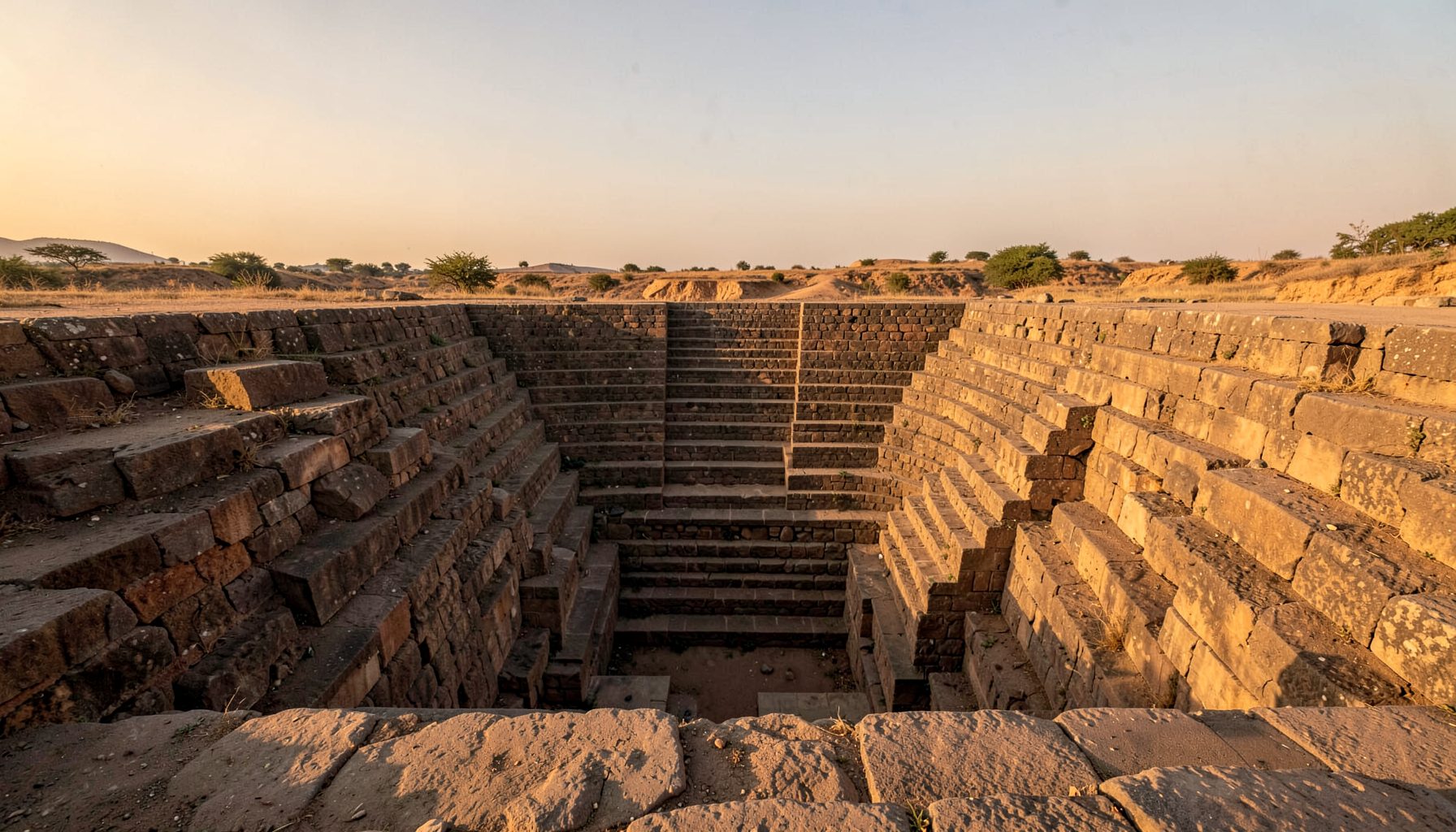
Mumbai is usually imagined through railway lines, reclaimed land, high-rise apartments and crowded roads. Yet within this intensely developed city, an older water landscape remains visible at Banganga Tank in Walkeshwar. Its broad stone steps descend towards a sacred pool, creating a place that resembles a stepwell while belonging to a related tradition of stepped tanks, temple reservoirs and kunds.
The distinction matters. A classic baoli or vav is generally a deep, linear structure designed to reach a fluctuating water table. Banganga is a spring-fed tank with ghats, shrines and a living ritual setting. Still, both forms use masonry steps to make water accessible, frame communal activity and transform a practical resource into an architectural landmark.
For Australian readers, the setting may feel familiar in one respect: water is never only a utility. In Melbourne, residents check dam levels during dry periods; in Brisbane, rainwater tanks are part of suburban life; and in Perth, water restrictions influence everyday gardening habits. Mumbai’s historic water structures reveal how earlier communities embedded water awareness into the design of the city itself.
This surviving site also offers a useful way to consider heritage in a rapidly changing metropolis. Its value lies in age, construction and religious associations, but also in the evidence it provides about springs, settlement patterns, maintenance and public memory. Photography and field documentation can help record these layers before future construction, pollution or neglect makes them harder to understand.
Banganga And Mumbai’s Stepped Water Tradition
Banganga Tank is located near the Walkeshwar Temple complex on Malabar Hill. Tradition connects the water source with Rama, while historical accounts associate the tank with the Shilahara period and later rebuilding. The present setting reflects centuries of repair, devotion and urban change rather than a single untouched medieval moment.
Stone steps lead down from the surrounding lanes to the water, and the tank is enclosed by temples, residential buildings and small shrines. This combination makes it different from the monumental vavs of Gujarat, which often extend underground through corridors and pillared halls. A comparison with Saurashtra’s stepwells shows how regional geology and rainfall shaped different solutions to the same fundamental need.
The site’s survival is especially striking because Malabar Hill has become one of Mumbai’s most valuable urban districts. Apartments, traffic, utility infrastructure and commercial pressures surround the tank, yet the stepped edge still communicates an older relationship between built form and water.
Why The Structure Matters In A Dense City
A historic water place can appear modest beside Mumbai’s towers, but its scale should not be mistaken for insignificance. The tank records a spring, a pilgrimage route, a neighbourhood and a system of shared care. Its steps have supported ritual bathing, religious gatherings, informal meetings and the daily movement of people through the temple precinct.
The survival of such a place also challenges the idea that heritage must be isolated from urban life. In Australia, heritage buildings are often managed through local planning schemes, state registers and conservation policies that seek a workable relationship between historic fabric and contemporary use. Mumbai faces a more intense version of that negotiation, where land values and infrastructure demands can put pressure on even highly valued sacred sites.
A conservation approach should therefore protect more than the visible stone. It should consider the spring, drainage routes, water quality, access paths, temple activity, views and the community networks that give Banganga meaning. Replacing worn masonry with visually similar materials may preserve appearance while losing evidence of workmanship and use.
Reading Water Technology In Stone
The steps at Banganga show how water architecture can operate as an environmental instrument. A stepped edge allows people to approach a changing water level, while the surrounding masonry stabilises the bank and defines a durable public space. The structure’s effectiveness depends on the source remaining active and on the catchment being treated with care.
Modern Mumbai has a complex water system supplied by distant reservoirs, treatment plants and extensive pipelines. That network makes urban life possible, but it can also make local water knowledge invisible. A spring or tank may survive physically while its hydrological connections are blocked by paving, construction debris or altered drainage.
Useful field records should include more than attractive images. Photographers and researchers can note the orientation of steps, repairs, water marks, vegetation, inlet points, nearby wells and changes between dry and wet seasons. Drone imagery can reveal the relationship between the tank, temples and dense development, while architectural sketches clarify details that a single photograph may overlook.
A Living Heritage Site
Banganga is not an archaeological ruin displayed behind a barrier. Worshippers, priests, residents, visitors and photographers all contribute to its current life. That living quality creates responsibilities: documentation must be respectful, and conservation must avoid turning a functioning sacred place into a stage set.
Heritage education can begin with children learning to identify stone types, water channels and local stories. It can connect architectural observation with practical discussions about drought, pollution and civic responsibility. Resources about resilient children, although created in a different context, point towards the broader value of helping young people build values and confidence amid social change.
For Australian audiences, the comparison is relevant to places such as Sydney’s Tank Stream, Adelaide’s historic water infrastructure or the irrigation heritage of regional towns. Each site shows that public understanding is part of preservation. A structure is more likely to receive care when people can explain why it matters and how it continues to serve the community.
Memory, Ritual And The Urban Landscape
Sacred water sites carry memories that are rarely captured by architectural measurements alone. Offerings, temple bells, annual festivals and family visits create a layered record of belonging. The tank’s physical form gives those memories a setting, while repeated use keeps the setting legible.
This relationship between place and remembrance can be compared with the Blasket Islanders’ graveyard, where landscape, community history and loss are closely connected. The comparison is not architectural; it is about how a specific site can hold collective memory when ordinary buildings and routines have changed.
Banganga’s urban surroundings make this especially important. A new tower may rise nearby, roads may be widened and property boundaries may shift, but the tank continues to anchor a particular story of Mumbai. Documenting voices from priests, residents, caretakers and local historians can preserve information that is absent from formal architectural surveys.
Images, Films And Public Imagination
Photography can bring attention to a stepwell or stepped tank, but images also influence how the public understands it. A dramatic view from above may emphasise geometry while omitting rubbish, repairs, worshippers or the surrounding traffic. Responsible documentation should include the ordinary conditions that make the site real.
Cinema has shaped popular ideas about Indian stepwells, sometimes presenting them as mysterious, abandoned or dangerous spaces. A careful reading of stepwells in Indian cinema helps separate visual drama from historical evidence. Banganga deserves a similar balance: it can be visually striking without being reduced to a picturesque relic.
Digital publishing also brings a problem of attention. Heritage pages compete with entertainment, advertising and unrelated search results, including material such as free spin games. Clear captions, accurate maps, consistent terminology and well-organised archives help serious field research remain discoverable in that crowded environment.
Recording A Future For The Site
The strongest documentation combines measured observation with local knowledge. It should record what can be seen, what has changed and what remains uncertain. In a city as large as Mumbai, residents may know of wells, kunds and stepped structures that have never appeared in a published survey.
Practical fieldwork can include:
- Photographing the tank from street level, the steps and surrounding roofscape
- Mapping entrances, shrines, drains, spring points and areas of repair
- Recording seasonal water levels without disturbing rituals or visitors
- Interviewing residents and caretakers about maintenance and past changes
- Comparing archival photographs with current conditions
Preservation also depends on careful governance. In Australia, the Environment Protection and Biodiversity Conservation Act 1999 provides a national framework for places of outstanding heritage value, while state heritage laws and council planning controls manage many local sites. Mumbai’s protection mechanisms differ, but the principle is comparable: listing alone is insufficient without maintenance, monitoring, funding and community participation.
A useful local conservation record should therefore include:
- The structure’s architectural condition and materials
- The health of its water source and drainage system
- The names and memories associated with the place
- The effect of nearby construction and traffic
- A realistic programme for cleaning and repair
Banganga Tank demonstrates how a water structure can survive urban development without remaining unchanged. Its stone steps, sacred associations and spring-fed pool have endured because people continue to recognise and use the place. The task now is to document that continuity honestly, protect its environmental setting and ensure that future development does not sever the relationships that have kept this piece of Mumbai’s water heritage alive.
Get in Touch
Have information about a stepwell that is not yet on our map? We would be glad to document it and give you full credit. Whether it is a Barav, Kund, Vihir, or any other form of stepwell, every contribution helps preserve India's water heritage.
Call or message us with details about the location, and we will follow up.
#9372496819
Send a Message
What People Say
"The Maharashtra Stepwells campaign has brought attention to structures that were nearly forgotten. The architectural documentation and drone photography are invaluable resources for researchers and students alike."
"Collaborating with the Indian Stepwells team gave our architecture students hands-on exposure to traditional water-harvesting structures. The presentations were insightful and inspiring."
"I shared details of a stepwell near my village that was not on any map. The team visited, documented it beautifully, and credited me. It felt wonderful to contribute."