 Explore Maharashtra
Stepwells in Indian cinema and the stories they reshape
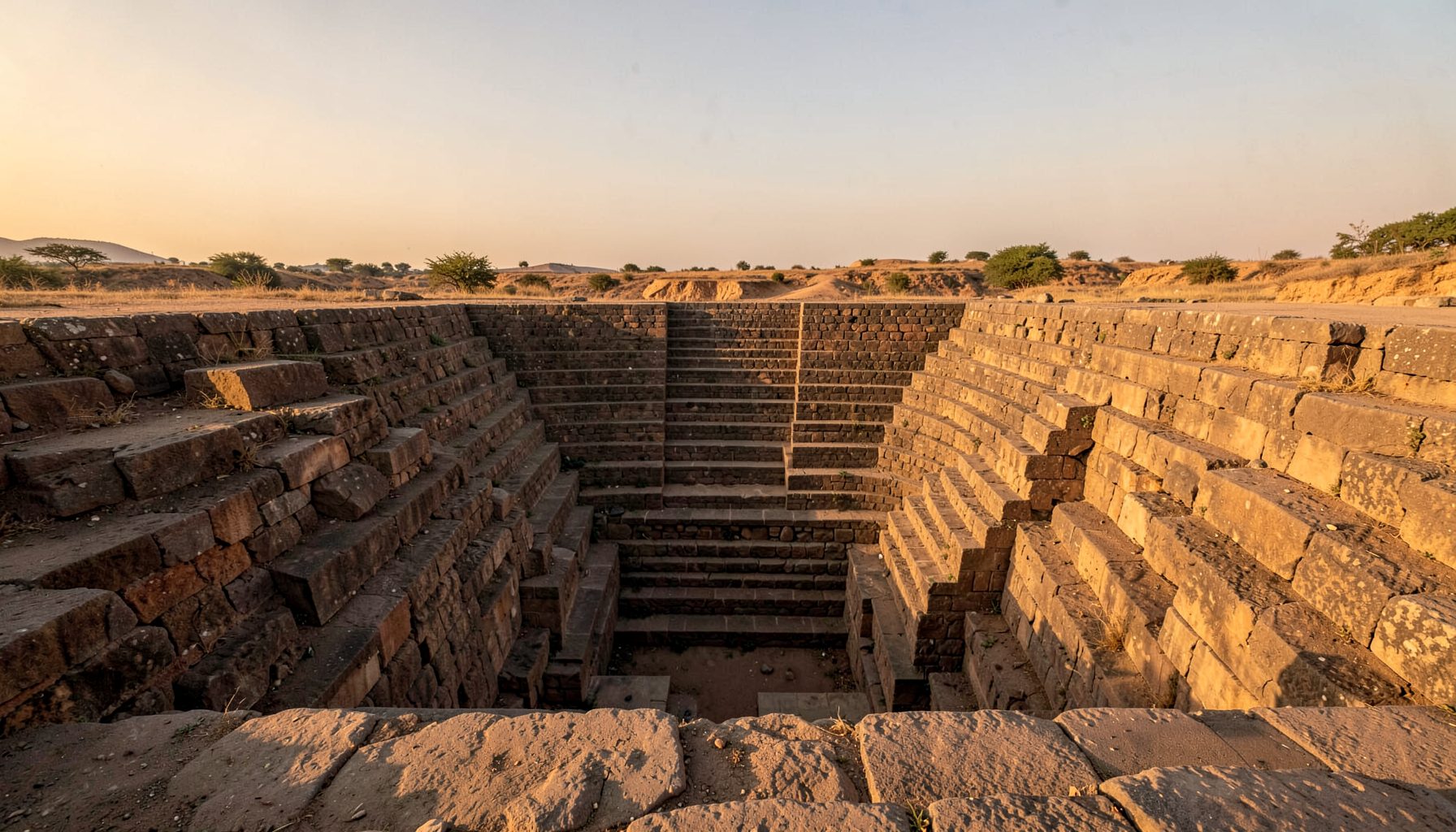
Stepwells are among India’s most visually distinctive heritage structures. Their descending flights, cool chambers, carved pillars and changing shadows seem made for cinema, where architecture can become a setting, a character or a symbol of hidden memory. Across Hindi, regional and international films, bawdis, baolis, vavs, kunds and baravs have appeared as romantic backdrops, mysterious spaces, historical landmarks and dramatic thresholds. Learn more about The Memorial To The Great Blasket Island Evacuation In Dunquin.
These images have helped audiences notice stepwell architecture far beyond the villages and towns where it survives. They have also created distortions. A working water structure may be presented as an abandoned palace, while a carefully engineered public resource becomes a generic “ancient Indian” ruin. Understanding the difference matters for viewers, filmmakers and heritage photographers, particularly as popular screen culture influences tourism and conservation priorities.
Why stepwells work so powerfully on screen
The geometry of a stepwell gives directors an unusually strong visual language. Repeated stairs create vanishing points, while the vertical movement from daylight to shadow can suggest descent into the past, a hidden world or an altered state of mind. Symmetry suits wide shots, and the enclosed architecture naturally produces suspense, intimacy and theatrical movement.
In films such as The Fall, the monumental Chand Baori has been valued for precisely this combination of scale and abstraction. Its hundreds of tightly arranged steps can look almost unreal on camera. Yet the visual drama may encourage audiences to read the structure as a puzzle or fantasy set rather than as an infrastructure designed to collect, store and provide access to water.
Cinema also compresses time. A film may show a stepwell as a single, unchanged monument, even though its appearance reflects centuries of repairs, silt, groundwater conditions, religious practice and local adaptation. The camera prefers a clean frame; heritage sites rarely offer one. Temporary barriers, electrical wiring, rubbish, vegetation and modern settlement are often removed from the image, reducing the connection between the monument and everyday life.
Romantic settings and manufactured mystery
Popular Indian cinema frequently uses historic architecture to intensify romance. A meeting beside a baoli can imply secrecy, social distance or emotional depth without lengthy dialogue. The descending route provides natural choreography: characters approach, disappear behind a wall, reappear at another level and occupy different planes within the same shot.
This approach is visually effective, but it can flatten the social history of water. Stepwells were not simply picturesque places for lovers or aristocrats. Many supported travellers, farmers, traders, animals and neighbourhoods. Some were commissioned by rulers or wealthy patrons, while others were tied to religious endowments and local communities. Access, gender, caste and labour shaped how these spaces were used, and those details are often left outside the frame.
A similar problem appears when cinema turns a stepwell into a haunted or cursed location. Atmospheric storytelling may borrow from genuine folklore, yet it can detach the site from its practical function. Australian viewers familiar with ghost stories attached to old gaols, cemeteries and abandoned homesteads may recognise the pattern: a place with layered history is made memorable by mystery, while ordinary maintenance and community memory receive less attention.
Historical detail versus visual shorthand
One of the most common misrepresentations is the treatment of all stepwells as interchangeable. A Gujarat vav, a Rajasthan baoli and a Maharashtra barav may share descending steps, but their plans, materials, climate responses and cultural settings can be very different. Some are axial and richly ornamented; others are compact, utilitarian and closely integrated with a temple, settlement or agricultural landscape.
Film productions may also combine elements from several sites. A close-up of carved stone, a wide shot of another monument and a digitally extended background can create a convincing fictional location. There is nothing inherently wrong with artistic reconstruction, but audiences should be told when a sequence is composite. Without that transparency, viewers may assume that an invented layout represents a real monument.
The distinction is especially important for restoration campaigns. A heavily photographed landmark can attract visitors and funding, while a less spectacular stepwell in Maharashtra remains undocumented. Field records, architectural sketches and drone imagery can reveal relationships that a dramatic film frame hides: catchment channels, overflow routes, settlement edges and the condition of masonry. The Indian Stepwells background explains this documentation approach and its focus on research, photography and public awareness.
Water infrastructure behind the spectacle
The cinematic image becomes richer when viewers understand the engineering beneath it. Steps allowed people to reach water as the level fell through the dry season. Platforms provided places for resting, drawing water, trading or gathering. Shade reduced heat, while thick masonry helped moderate temperature. In some regions, stepwells formed part of a wider hydrological network connected to rainfall, drainage and groundwater recharge.
That history connects strongly with present Australian concerns. Melbourne households have long considered rainwater tanks and water-sensitive gardens, while councils across Sydney promote stormwater management and urban cooling. Perth’s dry climate and groundwater pressures make water conservation an everyday policy issue, not merely an aesthetic theme. Modern systems do not replicate historic stepwells exactly, yet the underlying principle of slowing, storing and reusing water remains relevant.
A useful account of this relationship appears in rainwater harvesting history, which links traditional water architecture with contemporary conservation ideas. Cinema can help communicate that connection, but it should avoid implying that a monument was designed only as an ornamental underground room. The engineering is part of the story, even when it is less immediately spectacular than carved columns or a descending hero shot.
Photography, tourism and the ethics of looking
Screen exposure can bring welcome attention. Visitors may seek out a stepwell after seeing it in a film, and that interest can support local guides, conservation work and regional tourism. The risk is that a site becomes valued only for its resemblance to a film still. Visitors may stand in the most recognisable composition, overlook religious or community protocols and treat fragile surfaces as a backdrop for personal photography.
This issue is familiar in Australia, where heritage-listed buildings and landscapes can become popular locations for wedding shoots, Instagram portraits and commercial campaigns. A restored mid-century home in Perth’s Nedlands, for example, may be presented through its design image while its material history and neighbourhood setting remain less visible; the discussion of a Nedlands home makeover illustrates how renovation narratives shape what audiences notice. The same visual habits can affect Indian heritage sites.
A responsible film or photo project should identify the monument, acknowledge custodians and explain any restrictions on access. It should distinguish reconstructed scenery from surviving fabric and avoid staging actions that could damage steps, plaster, carvings or water channels. Documentation can then move beyond spectacle. At Indian Stepwells, field research and original imagery aim to record both celebrated monuments and lesser-known structures, including sites that local communities may still remember even when official records are incomplete.
Practical recommendations for viewing and filming
- Check the monument’s name, location, date and regional building tradition before accepting a film’s visual shorthand.
- Treat cinematic scenes as interpretations, and compare them with architectural surveys, field photographs and local accounts.
- Look for the water system around a stepwell, including catchments, drains, wells, tanks and seasonal channels.
- Follow local rules on footwear, photography, filming equipment, religious areas and access to lower levels.
- Support guides, researchers and conservation groups rather than treating heritage sites as free film sets.
- Record undocumented bawdis, baolis, vavs, kunds and baravs through reliable photographs, coordinates and community testimony.
- Share information about threatened or overlooked structures through the research contact page, especially when local knowledge can guide future documentation.
Get in Touch
Have information about a stepwell that is not yet on our map? We would be glad to document it and give you full credit. Whether it is a Barav, Kund, Vihir, or any other form of stepwell, every contribution helps preserve India's water heritage.
Call or message us with details about the location, and we will follow up.
#9372496819
Send a Message
What People Say
"The Maharashtra Stepwells campaign has brought attention to structures that were nearly forgotten. The architectural documentation and drone photography are invaluable resources for researchers and students alike."
"Collaborating with the Indian Stepwells team gave our architecture students hands-on exposure to traditional water-harvesting structures. The presentations were insightful and inspiring."
"I shared details of a stepwell near my village that was not on any map. The team visited, documented it beautifully, and credited me. It felt wonderful to contribute."