 Explore Maharashtra
Stepwells on screen: From Bollywood to documentaries
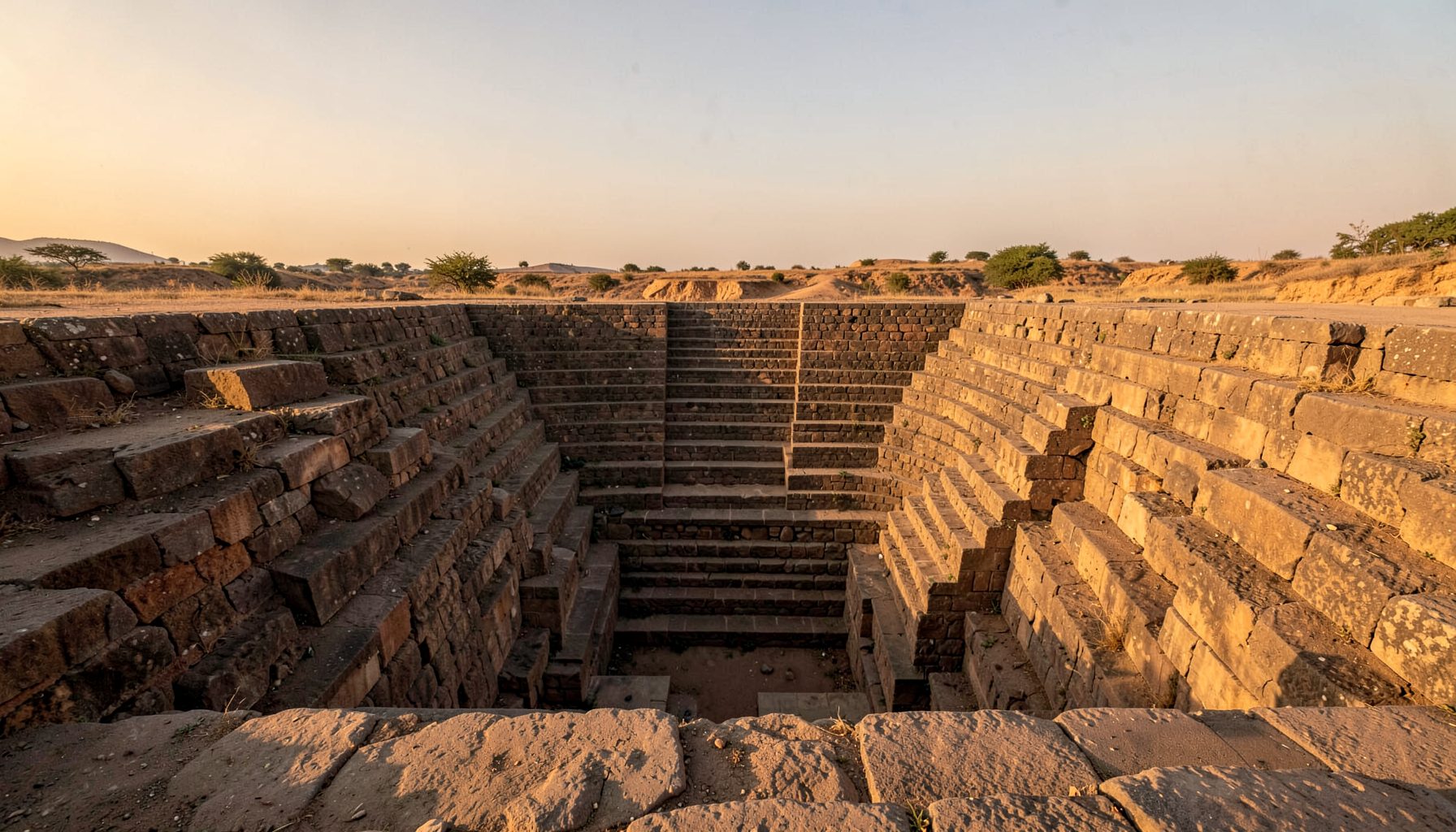
Stepwells used as film sets have moved from background architecture to memorable screen spaces. Their descending flights, shadowed galleries, water chambers and carved pillars give directors immediate visual drama, while songs and fights can exploit the shift from bright courtyards to darkness below. The same qualities suit documentaries that explain how communities collected, managed and contested water.
Original photography, architectural sketches, drone imagery and field research gathered by Indian Stepwells provide a strong starting point for anyone studying these structures. Its coverage of bawdis, baolis, vavs, kunds and baravs also shows why regional names matter: they locate particular building traditions, climates and water-management practices across India.
Why stepwells attract screen crews
A stepwell offers production designers a ready-made sequence of changing spaces. Sunlight falls from an open court onto broad steps, corridors become progressively cooler, and carved niches frame figures below. That movement gives a song a visual journey and gives an action scene vertical depth, while the hollow acoustics can make whispered dialogue feel unusually immediate.
For filmmakers, the attraction also combines romance and practical risk. A location may suggest a particular region and period, yet crews must establish whether water remains, which stairs can carry equipment and how visitors will be moved safely. The best location plans treat heritage as part of the design brief rather than as an interchangeable backdrop.
Bollywood locations and staged histories
Indian popular cinema uses these spaces because architecture can amplify spectacle. The song Aaj Ki Raat in Stree 2 used Rani ki Vav at Patan, Gujarat, with dancers, coloured light and a crowd transforming the stepwell’s geometry. The image is commanding, but its scale also shows the tension between a living monument and a highly controlled performance.
Tochiyaan from Bandish Bandars was filmed at a historic stepwell in Mandawa, Rajasthan, placing contemporary choreography within weathered stone. Such sequences may combine the real site with temporary sets, edited views or studio work. Crews then decide how much roughness, discolouration and irregularity to retain, since a spotless replica can look convincing while erasing the character that made the location worth choosing.
Research has to begin before that visual decision is made. An account of the Fatehpur Sikri baoli history traces how this baoli supplied water to a palace, connecting architecture with courtly life and water management. Close study helps filmmakers separate a site’s documented function from the fictional needs of a scene, and it gives local heritage staff a factual basis for discussions about filming.
Documentary attention shifts the lens
Documentary work often turns from performance towards systems. A camera can follow seasonal water levels, repair crews, ritual users and residents for whom a baoli remains part of daily geography rather than a picturesque ruin. Interviews with masons and community historians can reveal how the structure was funded, maintained, adapted or neglected, giving the screen a deeper sense of continuity.
Web distribution has widened the route from a location to an audience. Projects presented through Tazkra online features can act as gateways from a short film to further reading, photography or discussion. A specialist website can preserve context around the footage, allowing a stairway, pond or carved panel to be examined long after a dramatic scene ends.
Documentary teams face a different balance. Re-enactment may clarify an absent practice, yet too much staging can make ordinary history look invented. Transparent captions, recorded consent and space for disagreement help viewers judge what has been reconstructed. The strongest films also ask who now manages the water, who benefits from tourism and whether visible heritage can remain useful to nearby families.
Australian crews and the local screen economy
Australian screen production is concentrated in hubs such as Sydney and Melbourne, supported by agencies, casting networks, editors, visual-effects studios, location managers and specialist prop warehouses. Screen Australia supports domestic screen stories and skills development, while international partnerships give crews working in Maharashtra or Rajasthan access to Australian financing, safety systems and post-production expertise.
Southern-hemisphere seasons affect the way this work is organised. An Indian schedule built around the cooler months can overlap with Australian winter, yet Sydney and Melbourne crews still face a reversal when familiar summer practices meet hotter conditions on location. Production calendars therefore need local weather knowledge, not just the standard Indian shooting calendar.
Australian viewing habits create several routes to these films. Many viewers combine streaming at home with a Friday-night cinema visit, and festival audiences encounter Indian cinema through programmes such as the Indian Film Festival of Melbourne and Sydney Film Festival. Independent cinemas, cultural associations and architectural-photography exhibitions provide an additional local market, especially for documentaries paired with talks about water, craft and conservation.
Permissions, drones, and responsible filming
Every shoot needs a clear permission trail. On Indian sites that may involve a municipality, the owner or trust, a state archaeology department and, where a monument is protected, the Archaeological Survey of India. A filming licence does not erase heritage obligations. Crews should identify load limits, permitted access and filming hours in writing, while community custodians should be involved where rituals, water access or daily use could be affected.
For material shot in Australia, local law adds another layer. The City of Sydney and City of Melbourne require permits for filming in public places, and heritage overlays can bring planning conditions into play. The Environmental Protection and Biodiversity Conservation Act 1999 may require assessment if an action could significantly affect a listed place, species or ecological community. CASA rules govern drone registration and operation, although filming in India remains subject to Indian aviation requirements.
Responsible practice also depends on conditions on the ground. Heat, monsoon rain, slippery stone and confined staircases affect performers and equipment alike. Planners should check structural condition, current water quality, drainage and emergency routes, then brief cast and crew on what cannot be touched. Drone imagery can clarify a site’s plan, but it needs permission, privacy consideration and a plan that keeps people and fragile surfaces out of harm’s way.
Preserving the place behind the picture
A location becomes more valuable when filming leaves the community with a better record than it found. Research, condition photographs, corrected captions and public access to the finished work can support a site whose usual public exposure is limited.
Before and during production
- Confirm ownership, protected status, permit responsibilities and the local point of contact before the crew arrives.
- Scout at the intended season and time of day, checking light, water level, foot traffic and stone condition.
- Use reversible scenic treatments; avoid drilling, painting, adhesives or loads on fragile masonry.
- Plan for heat, rain, first aid, child safety, crowd control and restricted access around water.
Preservation also concerns the stories attached to material. The cemetery connection explored in Victorian mourning jewellery shows how objects can collect histories of grief, identity and place. A stepwell can gain a similarly layered record when oral histories, archival drawings, photographs and film footage are brought together with consent and clear attribution.
For communities and long-term care
- Pay local guides, craftspeople and technicians fairly, and credit their contributions on screen and in publicity.
- Share screening copies and accessible transcripts with custodians, communities and relevant researchers.
- Record conservation concerns such as erosion, seepage, dumping or structural movement without staging them for the camera.
- Maintain a contact list for heritage authorities, water testing, community updates and emergency response.
A filmed stepwell should gain cultural visibility without losing its everyday life. The strongest screen legacy is one that respects the water system, its makers and its present users, while giving audiences a reason to look beyond the spectacle and care about what happens after the lights fade.
Get in Touch
Have information about a stepwell that is not yet on our map? We would be glad to document it and give you full credit. Whether it is a Barav, Kund, Vihir, or any other form of stepwell, every contribution helps preserve India's water heritage.
Call or message us with details about the location, and we will follow up.
#9372496819
Send a Message
What People Say
"The Maharashtra Stepwells campaign has brought attention to structures that were nearly forgotten. The architectural documentation and drone photography are invaluable resources for researchers and students alike."
"Collaborating with the Indian Stepwells team gave our architecture students hands-on exposure to traditional water-harvesting structures. The presentations were insightful and inspiring."
"I shared details of a stepwell near my village that was not on any map. The team visited, documented it beautifully, and credited me. It felt wonderful to contribute."