 Explore Maharashtra
Stepwells in danger: urgent documentation of sites under threat
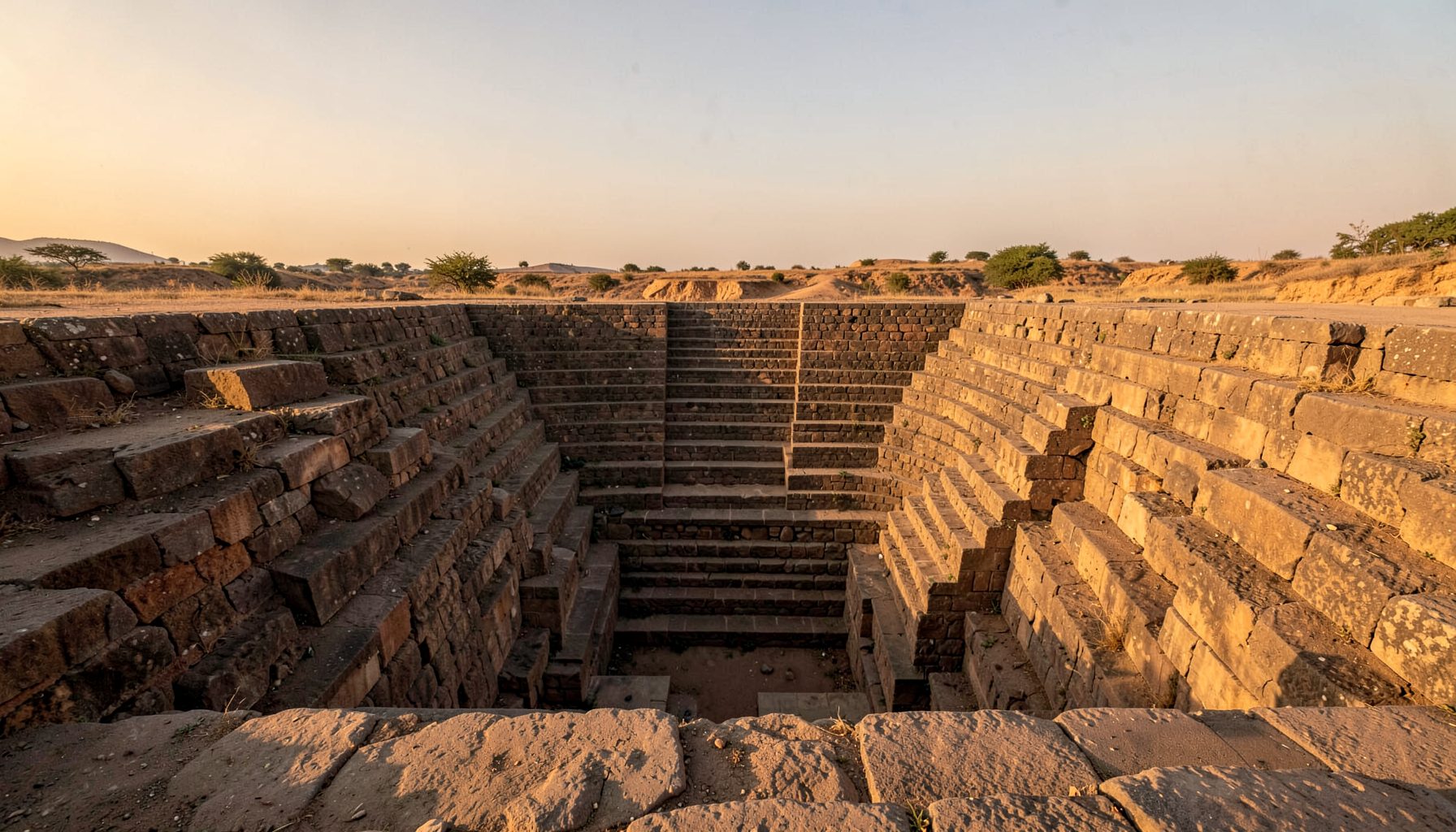
Across Maharashtra, historic stepwells are being damaged faster than they are being documented. Altered drainage, falling groundwater, urban expansion, road works, farm intensification and long-term neglect have damaged masonry, filled chambers or isolated wells from the communities that used them. Heat and increasingly intense monsoon weather now add further stress to vulnerable structures.
These water-harvesting monuments belong to a broad family known by names such as bawdi, baoli, vav, kund and barav. Their architecture records how people adapted to a seasonal climate, but their value also lies in living traditions, local knowledge and memories. Without a careful record, a lost stepwell can leave no reliable account of its design, condition, water sources or cultural role.
Why documentation cannot wait
Urgent documentation is an act of conservation rather than a preliminary stage of it. A dated photograph can show a blocked stairway; a measured sketch can reveal a wall displaced by groundwater or subsidence; a geotagged panorama can place the well within a road or settlement. Together, these records establish what exists now and provide a baseline against which change can be judged.
Time is especially important because damage is cumulative and can become irreversible. Excavation may expose buried masonry to new weathering, while unmanaged vegetation can prise apart joints and conceal illegal construction. A dry well can also be mistaken for an abandoned monument when its hydrology has merely shifted. Condition notes and local testimony help distinguish temporary change from long-term loss.
Heritage elsewhere shows why stories must be documented as carefully as fabric. Ireland’s Sleeping Warrior legend links a tomb, landscape and local memory, demonstrating how a single place can carry layers of meaning that physical records alone cannot preserve. Each threatened stepwell needs both an evidence-based history and an account of the associations held by nearby communities.
A field method built for pressure
A practical survey should be repeatable, not dependent on one visitor and one day of weather. The team needs a site identifier, coordinates, access conditions, a scaled plan, directional photographs and notes on nearby roads, drains, wells and development. Repeat visits should record the same viewpoints and details, making changes in water level, silt, vegetation, masonry and public use easier to detect.
Fieldwork also needs local guidance. Residents and site caretakers often know which routes are safe, which chambers still collect water and where unofficial dumping occurs. Participation should be voluntary, compensated where appropriate and respectful of religious restrictions. Images of people, offerings or sensitive interiors should not be published without consent.
- Record coordinates, dimensions, orientation, access and visible alterations under one unique site reference.
- Date every photograph and preserve original files, captions, viewpoints and scale information.
- Rate cracks, erosion, silt, vegetation, vandalism, encroachment and water conditions consistently.
- Log oral histories, seasonal uses and local names with consent, attribution and a right to correct details.
This standardised approach turns scattered observations into a usable archive. It also allows researchers, councils and conservation groups to compare sites, identify common failure patterns and direct scarce funds where they will protect the most evidence and living value.
Reading damage through water and stone
Careful looking can reveal why a stepwell is deteriorating. Stair geometry, drainage slots, niches and repair scars can point to former water paths and phases of use. Mineral deposits may mark past waterlines; modern concrete can block historic filtration; mismatched masonry can identify hurried repairs. None of these clues should be interpreted without local and archival research.
Drone imagery helps map the wider catchment and surrounding pressure, especially where access is restricted or structures lie within dense settlements. It cannot replace ground-level inspection. A clear overhead view may show a new road, earth mound or building edge while missing a cracked beam, loose stone or unsafe step beneath. Drone use should also follow local permissions and privacy safeguards.
A shared baseline can support triage. Sites with active groundwater movement, unstable masonry or encroachment may need immediate attention; less urgent sites might require monitoring, signage or controlled access. The open image and research archive maintained by Indian Stepwells demonstrates the value of consistent records. Prioritisation must remain evidence-led because visual drama alone does not reveal cultural importance, structural safety or the feasibility of lawful intervention.
Tradition, ritual and living stewardship
Stepwells have also served as social and sacred places, not just reservoirs. Their shaded corridors, courts and gathering spaces connect water supply with festivals, pilgrimage, storytelling and neighbourhood life. The role of stepwells in Indian folk traditions and rituals explains why architectural documentation should include contemporary uses without turning living practice into a museum display.
Careful recording can keep such knowledge available while communities decide what should remain public. Names may vary by language and caste, and a well’s use may change with season, gender, religion or water availability. Researchers should distinguish inherited custom from recent adaptation and avoid presenting one authoritative version when several local accounts coexist.
- Preserve local names, pronunciations and translations, including alternative spellings and changing usage.
- Separate observed evidence, community testimony, oral history and interpretation in the record.
- Record restricted or seasonal practices only with agreement, while noting sensitive locations appropriately.
- Share accessible copies with custodians and allow communities to correct errors or withdraw identifying details.
Community participation improves future monitoring. Local observers may notice changed access, blocked channels, new construction or altered ritual use long before a formal inspection. A living archive, with permissions and clear attribution, can treat those observations as early warning rather than treating local knowledge as secondary to official documentation.
Lessons from Australian communities
Australian cities offer a useful parallel without pretending the contexts are identical. Melbourne’s rapid infill, Sydney’s development pressure and the demolition of places that once seemed untouchable show how quickly a streetscape can erase an older layer. Here, councils administer heritage overlays and planning controls, while residents often speak plainly about whether a place has been “knocked down” or left to rot, raising concerns through local historical societies and council submissions.
Inland Australia adds a sharper water lesson. Drought and groundwater decline across parts of the Murray-Darling Basin have made every reliable water source politically and practically significant. Communities in regional towns understand scarcity through bores, dry tanks and long-distance supply. That experience can strengthen support for stepwell protection, but it must not reduce living heritage to a drought metaphor or imported tourism story.
Australian conservation is also community-driven in practical ways. Regional museums, Country Women’s Associations, Landcare groups and bushfire recovery volunteers routinely catalogue assets, host field days and keep local records. The same public appetite for provenance and skilled manufacture appears in design markets: a contemporary profile of Australian-made brass tapware shows how water-related objects gain value when material, maker and place are clearly documented.
From field record to lasting protection
Documentation becomes protective when it can trigger action. A credible dossier may support emergency shoring, drainage correction, visitor management, heritage listing or enforcement against encroachment. Conservation plans must address water and soil conditions as well as stone, and any reconstruction should distinguish new work from surviving material rather than making a damaged site look falsely complete.
The About Indian Stepwells page describes the project’s role in awareness, education, heritage photography, exhibitions and preservation. Local residents can also contribute location clues about undocumented stepwells, making the archive a collaborative rather than closed record. Measured drawings, field photographs and site histories then create a public resource that can be consulted before access routes change or a monument is forgotten.
The strongest future for these wells combines documentation with local authority and sustained public attention. Updated maps, exhibitions and community monitoring can direct researchers, while grants and conservation work can turn those records into safer sites. Every well documented in time can preserve not only masonry and water engineering, but also the knowledge that makes a place worth protecting.
Get in Touch
Have information about a stepwell that is not yet on our map? We would be glad to document it and give you full credit. Whether it is a Barav, Kund, Vihir, or any other form of stepwell, every contribution helps preserve India's water heritage.
Call or message us with details about the location, and we will follow up.
#9372496819
Send a Message
What People Say
"The Maharashtra Stepwells campaign has brought attention to structures that were nearly forgotten. The architectural documentation and drone photography are invaluable resources for researchers and students alike."
"Collaborating with the Indian Stepwells team gave our architecture students hands-on exposure to traditional water-harvesting structures. The presentations were insightful and inspiring."
"I shared details of a stepwell near my village that was not on any map. The team visited, documented it beautifully, and credited me. It felt wonderful to contribute."