 Explore Maharashtra
Stepwells as wildlife habitats: bats, birds and biodiversity
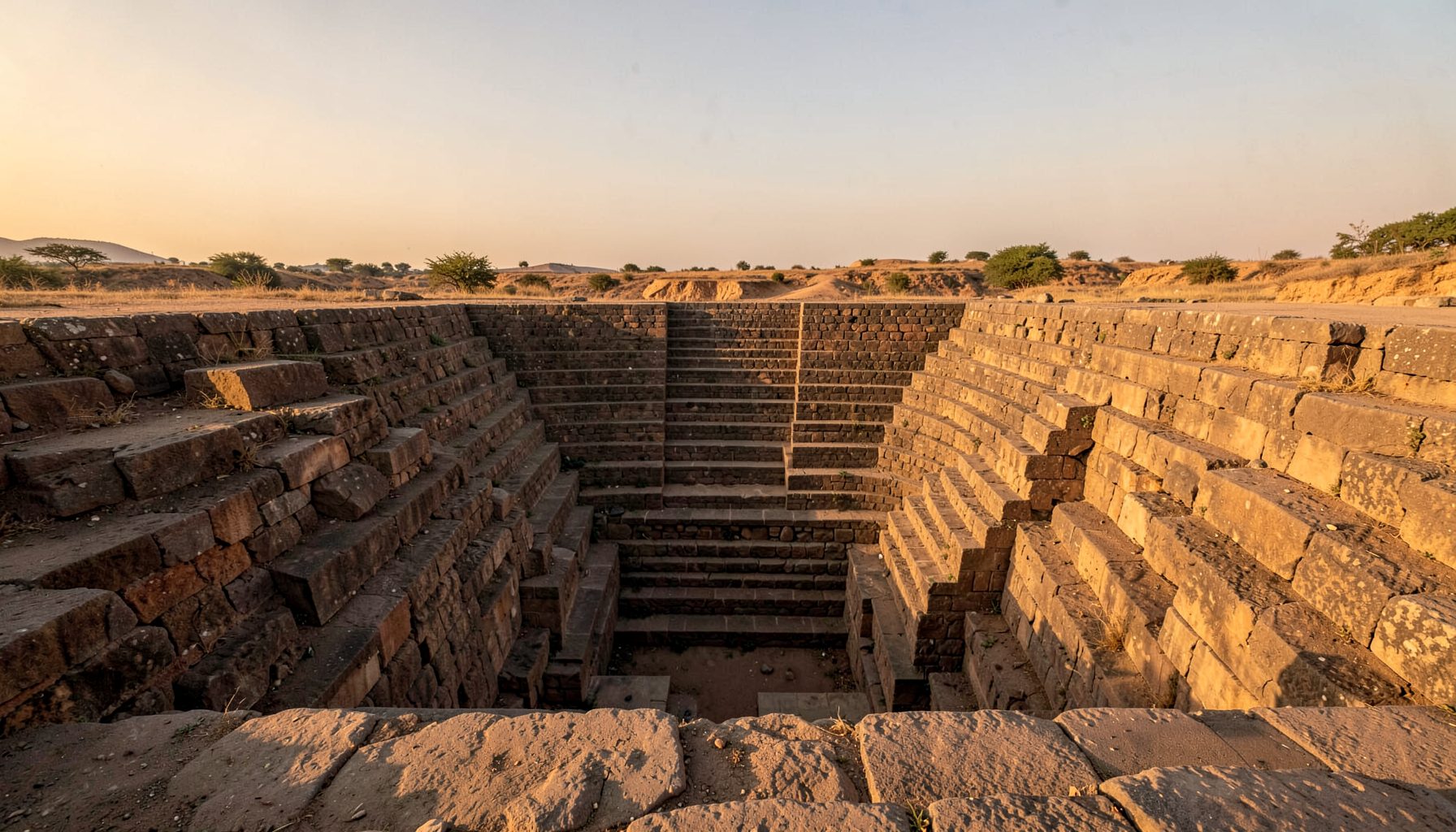
Across India, stepwells turn the descent to groundwater into public architecture. Their stepped corridors, landings and reservoirs create a sequence of cool, damp surfaces beneath streets and courtyards. The Indian Stepwells archive gathers the photographs, sketches and field records that make this hidden infrastructure visible, including many bawdis, baolis, vavs and kunds now threatened by neglect or altered water regimes.
That architecture also has an ecological dimension. A shaded ledge can shelter a resting bird; a high niche can become a bat roost; a wet wall can support algae, insects and small plants. These features matter because stepwells sit within dense human settlements, where surviving patches of water and vegetation can form compact refuges for wildlife with limited space elsewhere.
Water is never static in these places. Monsoon recharge, evaporation, silt, domestic use and restoration can produce very different conditions from one season to the next. A reservoir full of clear water, a nearly dry basin and a stone chamber used for storage are not interchangeable habitats, so careful observation is needed before species or conservation value is assigned.
For Australian readers, there are useful points of contact. Grey-headed flying foxes are a familiar sight around parts of Melbourne, while birders around Sydney’s coastal wetlands routinely use platforms such as eBird Australia to record visits. The comparison is not one of identical climates or building traditions; it is a way of looking closely at how architecture, public behaviour and wildlife overlap.
Water, shade and layered refuge
The strongest stepwell habitats are layered rather than spectacular. Deep chambers moderate daytime heat, projecting slabs create ledges, and hairline cracks retain moisture. Perforated screens and arched recesses add cover at different heights. When water remains below the upper terraces, these voids become cool refuges for invertebrates, reptiles and small mammals as well as birds and bats.
Waterbirds may use shallow margins for feeding or bathing, while terrestrial species forage among the steps. A puddle on a landing can attract a wagtail, whereas a damp crevice may hold insects for a bee-eater or swift. Depth, vegetation and water quality determine which species appear; a picturesque structure is not automatically a productive wetland.
Ecological interpretation also benefits from cultural memory. The Dead Ireland project offers a European cultural-landscape counterpoint, reinforcing that water structures record not only environmental change but also the many ways communities have adapted to heat, drought and uncertain rainfall.
Bats above the waterline
Some stepwells and their adjoining walls provide suitable cavities for large Pteropus bats or smaller insect-eating species. Bats select sheltered crevices for daytime roosting, then emerge around dusk to feed. Their presence contributes to a wider food web through insect consumption and seed dispersal, although different bat species make different use of a structure.
In Melbourne, residents and wildlife carers routinely talk about flying fox colonies rather than generic bat colonies, reflecting both familiarity and occasional conflict with trees, cables and heat. Grey-headed flying foxes are native, not invasive. Local councils and wildlife rescue groups offer a useful model for monitoring roosts without treating every colony as a nuisance to be removed.
A reliable survey should record roost height, surrounding vegetation, artificial light, nearby roads and the amount of human disturbance. Lighting can alter the routes bats use between roosts and foraging areas. Avoid chemical treatment of occupied cavities, and do not attempt close inspection of roosts during the period when females are giving birth or caring for young.
Birds, insects and the wider food web
Birds use stepwells for several purposes. Rock pigeons and house sparrows may occupy sheltered terraces, swifts may patrol open shafts, and kingfishers or bee-eaters may visit the water. Migratory and seasonal species can appear beside resident populations, particularly where a stepwell forms part of a connected chain of ponds, gardens, tanks and mature trees.
Around Sydney, local birders contribute observations through community recording projects, making it possible to compare a single visit with patterns across seasons. Adelaide’s hot, dry summers show a different reality: even small shaded pools can concentrate birds around scarce natural water, while saline or polluted basins support fewer species. Stepwells therefore need site-specific baselines rather than assumptions borrowed from another wetland.
Droppings, feathers and discarded food return nutrients to the terraces. Insects emerging from damp sediment and masonry become food for birds, while bats and swallows reduce some flying insects. This network can support seed dispersal and plant establishment around the basin. Heavy organic waste, however, may increase nutrients, smell and pathogen risk, so wildlife presence must be assessed alongside water quality.
Living heritage, changing human use
A documented adaptive reuse example from Rajasthan shows how a historic water structure can remain part of everyday civic life after its original hydraulic role changes. Continued use can protect a monument through public attachment, but altered floors, brighter lighting and heavy footfall may also change or eliminate the conditions required by bats, nesting birds and aquatic life.
In Australia, comparable public conservation is often financed through council biodiversity grants, Landcare partnerships, and state heritage or environment funds. These programs reward projects that combine community participation, measurable habitat outcomes and credible documentation. The lesson for stepwell projects is to include wildlife surveys within heritage plans rather than treating ecology as a later addition.
At an active stepwell, people may wash, collect water, perform religious practices, socialise or pass through to nearby buildings. These uses need not exclude wildlife, but swimming, soap, food waste, fishing and night lighting can alter the habitat. Local knowledge of where animals feed or roost should inform access routes, cleaning schedules and interpretive signs.
Field signs and low-impact checks
A fieldworker can begin with repeated observation rather than immediate intervention. The documentation approach used for Indian stepwells shows how consistent photographs, measured details and local testimony can reveal changes that a single visit would miss.
Signs that may indicate wildlife use
- Guano below overhangs, deep recesses or sheltered upper walls
- Feathers, down, pellets or nesting material on dry ledges
- Concentrated insect activity around lamps, wet masonry or dark cavities
- Frogs, skinks, dragonflies or aquatic plants where water persists
- Repeated landing points, scent-marked crevices or calls after dusk
Low-impact field practices
- Record the date, time, water level, weather and human activity on each visit
- Use a dim torch only where access rules allow, without shining into occupied roosts
- Keep a respectful distance and never handle bats, eggs, chicks or trapped animals
- Check site permissions and wildlife rules before using traps, acoustic recorders or drones
- Submit verified photographs and location records to an appropriate species platform
In Maharashtra, repeated visits can show whether use is resident, seasonal or occasional. A ledge used every evening may support a local bird population, while an isolated record might reflect a wandering individual. Recording negative observations is equally useful: absence during unsuitable weather or at the wrong hour should not be mistaken for confirmed absence.
A habitat-sensitive future for stepwells
A habitat-sensitive conservation plan treats water, wildlife and architecture as connected parts of the monument. It avoids sealing every joint, preserves natural drainage, monitors water quality, protects dark approach routes and retains sheltered ledges where they are not being eroded. The goal is not to turn every stepwell into a wildlife reserve; many support only seasonal or incidental species. It is to prevent avoidable harm while documenting the value that already exists.
Australian conservation and heritage markets already include guided nature walks, contract wildlife photography, museum exhibitions, print sales and licensed images for education. A commercially successful project can pair careful photography with accurate habitat context, community credit and a clear conservation purpose. Images should show animals within their architectural setting rather than separating charismatic species from the living system that supports them.
This approach is especially relevant in Maharashtra, where hundreds of stepwells remain incompletely documented. Water authorities, local councils, residents, architects and wildlife groups can contribute information that prevents restoration from erasing overlooked ecological relationships. Preserving stepwells as habitat-aware heritage keeps water visible as architecture, refuge and a shared civic resource.
Get in Touch
Have information about a stepwell that is not yet on our map? We would be glad to document it and give you full credit. Whether it is a Barav, Kund, Vihir, or any other form of stepwell, every contribution helps preserve India's water heritage.
Call or message us with details about the location, and we will follow up.
#9372496819
Send a Message
What People Say
"The Maharashtra Stepwells campaign has brought attention to structures that were nearly forgotten. The architectural documentation and drone photography are invaluable resources for researchers and students alike."
"Collaborating with the Indian Stepwells team gave our architecture students hands-on exposure to traditional water-harvesting structures. The presentations were insightful and inspiring."
"I shared details of a stepwell near my village that was not on any map. The team visited, documented it beautifully, and credited me. It felt wonderful to contribute."