 Explore Maharashtra
Photographing Stepwells in the Monsoon: Tips and Techniques
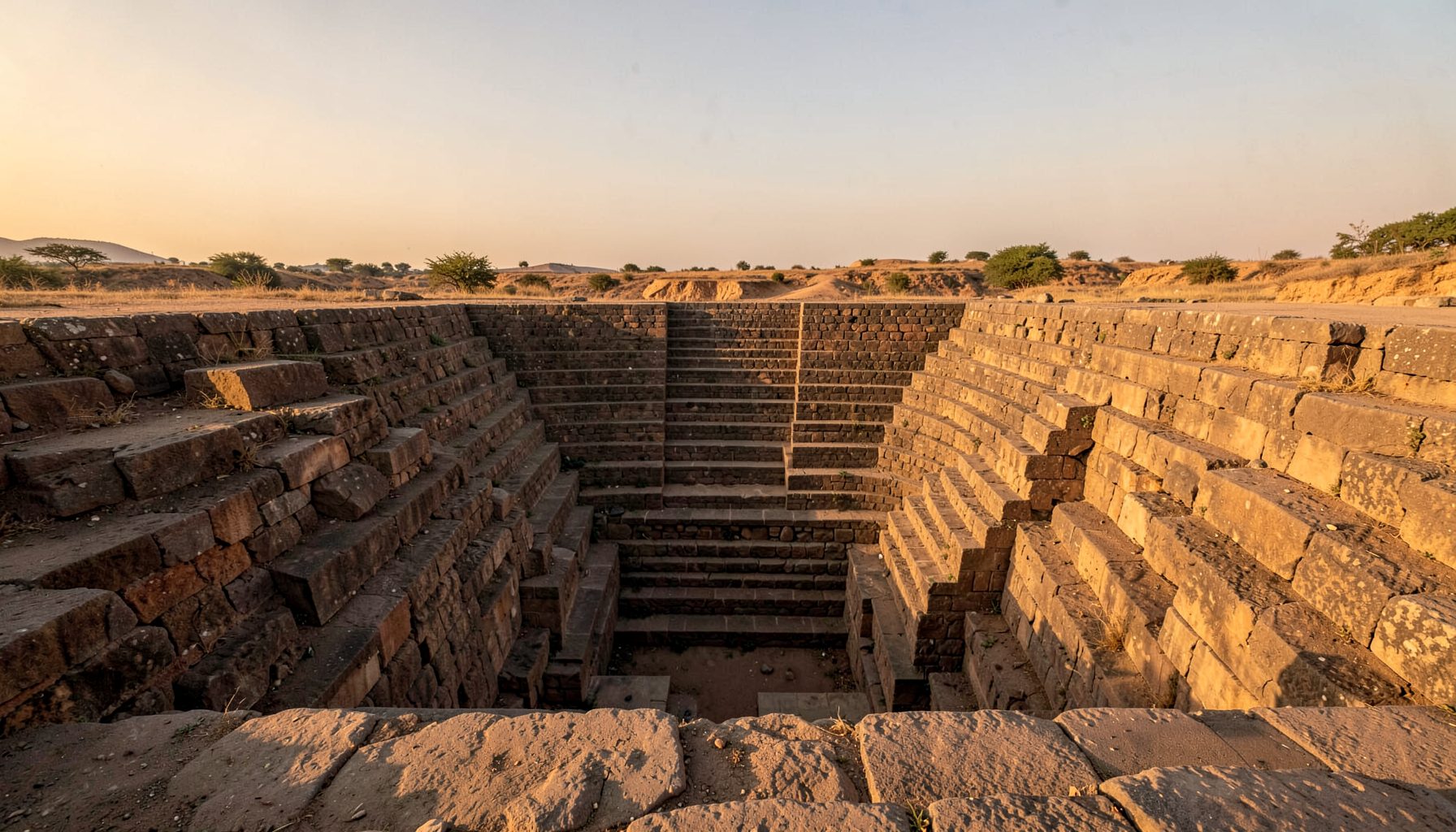
Monsoon rain changes a stepwell from a stone structure into a living landscape. Water gathers in the lowest chambers, darkens carved walls, sharpens the colour of moss and clay, and turns flights of stairs into reflective patterns. For photographers, these conditions reveal details that remain quiet and easily missed during the dry season.
Photographing stepwells in the monsoon calls for patience, careful movement and a practical approach to equipment. The strongest images may come during a brief pause between showers rather than in the heaviest downpour. With thoughtful planning, a camera can record both the architecture and the seasonal relationship between water, stone and local communities.
Plan Around Rain And Light
Begin with a weather check that goes beyond a simple forecast icon. India’s monsoon clouds can build rapidly, and a clear morning may become a stormy afternoon. Review radar, local warnings and recent rainfall before travelling. The best time for exterior photographs is often just after rain, when the sky remains dramatic but the stonework is still wet and reflective.
Australian photographers will recognise a similar rhythm in Brisbane’s sudden summer storms, Darwin’s wet season or the heavy showers that can sweep across the Daintree. The Bureau of Meteorology is a useful reference for broad conditions, but local advice remains essential. Ask a caretaker or resident whether a path becomes slippery, a chamber floods, or a nearby track turns impassable after a downpour.
For field planning, keep the site’s opening hours and access arrangements in mind. Some stepwells are attached to temples, private land or protected monuments where photography may be restricted. The Indian Stepwells project explains the wider purpose of documenting these structures and their cultural setting, which is a valuable starting point for respectful preparation.
Protect Cameras And Keep Moving
Rain covers, dry bags and several microfibre cloths are more useful than elaborate accessories. A simple cover should allow access to the camera controls while shielding the lens mount and battery compartment. Place spare batteries, memory cards and a small notebook inside separate waterproof pouches. Silica gel packets help reduce moisture inside a sealed equipment bag after a humid session.
Avoid opening the camera bag repeatedly in heavy rain. If condensation develops when moving between an air-conditioned vehicle and humid outdoor air, allow the equipment to acclimatise before changing lenses. A plastic bag can temporarily protect the camera during this transition. A sturdy lens hood also keeps raindrops away from the front element and reduces glare from wet stone.
Use a comfortable strap or harness, but keep both hands available when descending. Stepwells may have uneven treads, algae-covered edges and loose gravel. A compact tripod can be helpful in dim chambers, although it should never obstruct visitors or rest on fragile masonry. Wear footwear with reliable grip; thongs are a poor choice on wet steps, even if they are common beachwear in Australia.
Find Structure In Reflections
Rain creates visual layers that can strengthen a composition. Look for a reflection of a pavilion in a flooded landing, a broken line of steps mirrored in a pool, or clouds appearing between pillars. A polarising filter can control some glare, but rotate it carefully: removing every reflection may make the image less atmospheric and hide the presence of water.
A wide-angle lens records the scale of a baoli, vav or kund, yet it can make the steps appear stretched. Keep the camera level where possible and avoid placing the horizon too close to the frame edge. A moderate wide lens often gives a more truthful sense of proportion. For carved brackets, worn inscriptions and moss along a parapet, a short telephoto lens can isolate detail without requiring risky movement.
Rainy-day waiting can be part of the creative process. While reviewing frames under shelter, some photographers use a brief break for unrelated entertainment, such as exploring bingo and keno games, before returning to the site. The important photographic decision is to watch the light: a few seconds of brightness under a broken cloud can transform a dark stairwell.
Balance People, Scale And Privacy
A person on the steps gives an architectural photograph scale, but people should never be treated as decorative props without permission. Ask before making a recognisable portrait, especially when photographing residents, pilgrims, workers or children. If communication is difficult, use gestures respectfully and accept a refusal. A distant figure, shown without identifiable detail, can often provide scale without interrupting anyone’s privacy.
Local guardians frequently hold knowledge that cannot be read from an architectural survey. They may know which landing remains dry, where a historic water channel enters the structure, or how the stepwell is used during a festival. An interview with a local guardian shows why these voices matter alongside photographs and measurements.
For Australian audiences, this approach will feel familiar from working with Traditional Owners, community museums and local historical societies. Documentation is stronger when names, permissions and cultural context are recorded accurately. A caption should identify the place and date without claiming certainty about a story that has not been verified.
Work With Exposure And Colour
Wet stone is usually darker than the camera expects, while pale skies can become overexposed. Check the histogram rather than trusting the brightness of the rear screen. Slightly protect highlights in the sky, then lift shadow detail during processing. Bracketing several exposures is useful in a deep chamber where the entrance, steps and reflected water fall into very different brightness ranges.
Shoot in RAW so that subtle colour and tonal information can be adjusted later. Monsoon light can produce green reflections from vegetation, warm brown tones in sandstone and blue-grey shadows under clouds. Resist applying a heavy preset that makes every image look dramatically saturated. Accurate colour is especially important when the photographs are intended for exhibitions, research records or conservation proposals.
A low ISO and slower shutter speed may produce the cleanest files, but movement in rain and passing visitors can introduce blur. Stabilise the camera against a pillar only where the surface is safe and appropriate. A small tripod or image stabilisation can help, while a fast shutter is preferable for capturing droplets, ripples and sudden changes in the water surface.
Edit For Memory And Preservation
A strong monsoon series should include more than picturesque reflections. Photograph the approach road, surrounding vegetation, drainage channels, damaged edges, rubbish accumulation and signs of active use. Include wide views that show the setting, medium views that explain the architecture and close details that record materials and weathering. This sequence turns an attractive collection into useful heritage documentation.
Keep original files, location data and field notes together. Record the date, approximate weather, camera settings, access conditions and names of people who provided information. Back up files in two locations as soon as possible. Australian photographers travelling with laptops should consider power availability, unreliable mobile coverage and the need for an Indian plug adaptor, especially outside major cities.
Images gain meaning when placed beside comparable heritage research. A short historical reading about the Tomb of the Wild Geese can offer a useful reminder that monuments are shaped by memory, landscape and local interpretation, even when their histories are very different. The comparison should clarify context rather than flatten distinct traditions into a single heritage story.
When selecting photographs for a website, exhibition or local presentation, retain captions that explain the season and conditions. Include the local name—bawdi, baoli, vav, kund or barav—where appropriate, along with alternate spellings used in records. Monsoon photographs can then serve two purposes: they show the beauty of water returning to an old structure, and they create a careful record that supports future awareness and preservation.
Get in Touch
Have information about a stepwell that is not yet on our map? We would be glad to document it and give you full credit. Whether it is a Barav, Kund, Vihir, or any other form of stepwell, every contribution helps preserve India's water heritage.
Call or message us with details about the location, and we will follow up.
#9372496819
Send a Message
What People Say
"The Maharashtra Stepwells campaign has brought attention to structures that were nearly forgotten. The architectural documentation and drone photography are invaluable resources for researchers and students alike."
"Collaborating with the Indian Stepwells team gave our architecture students hands-on exposure to traditional water-harvesting structures. The presentations were insightful and inspiring."
"I shared details of a stepwell near my village that was not on any map. The team visited, documented it beautifully, and credited me. It felt wonderful to contribute."