 Explore Maharashtra
Wells of Light in Indian Miniature Painting
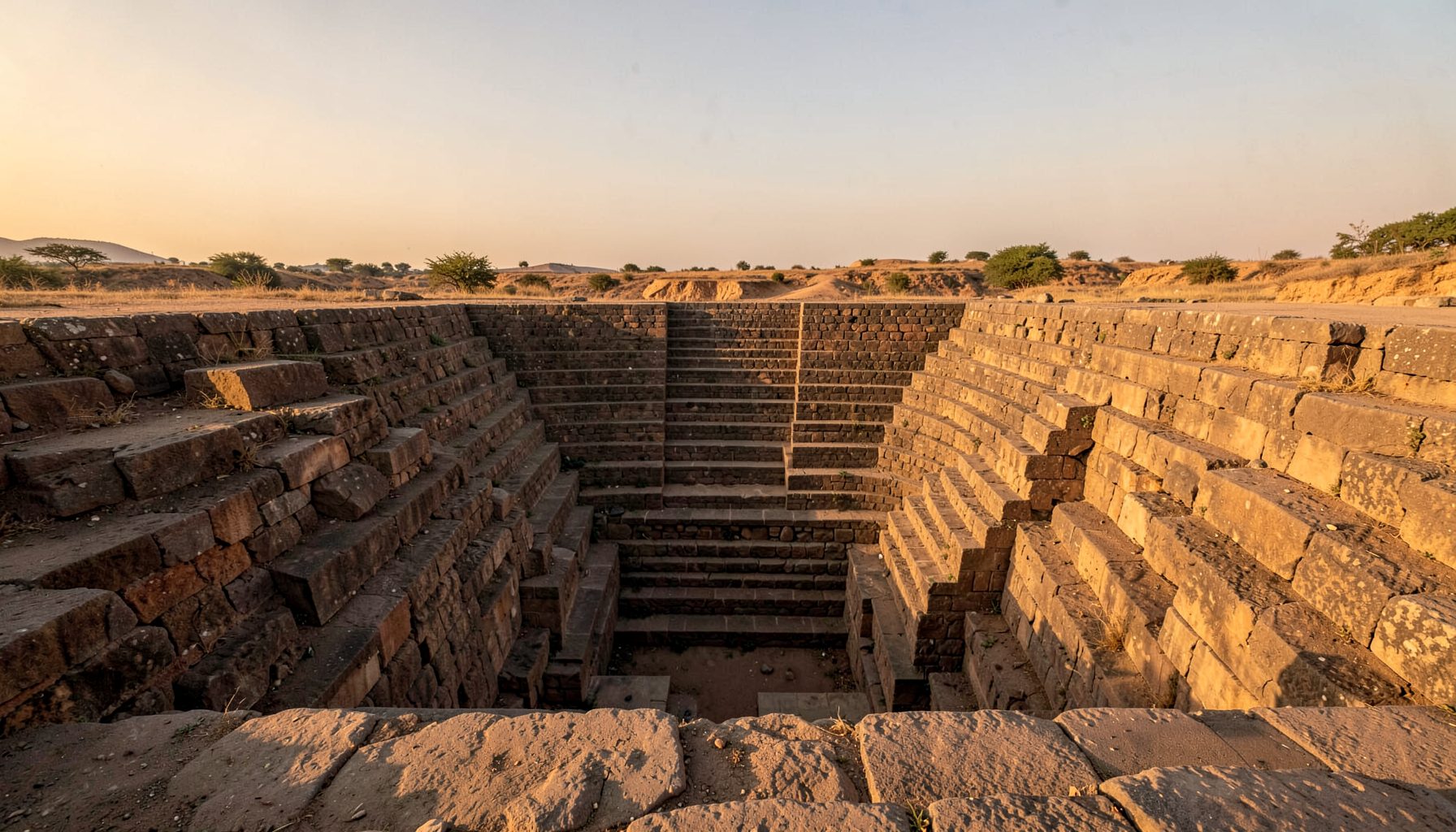
Stepwells appear in Indian miniature painting as far more than practical water sources. They become carefully staged worlds of shade, movement, architecture and social exchange. A descending flight of stairs may lead the eye into a dark, geometric centre, while women carrying vessels, travellers resting in the cool air and musicians gathered beneath pavilions give the scene human scale.
The paintings are especially valuable because they preserve visual ideas that stone alone cannot show. A surviving baoli, vav, bawdi, kund or barav can reveal its masonry, columns and levels, but a miniature may suggest how the structure was used at different hours, during festivals or across changing seasons. It can also combine observation with poetic imagination, so every detail needs to be read with care.
For Australian viewers, these images offer an interesting connection with familiar water-conscious landscapes. The shade of a Melbourne arcade, the communal feel of a weekend market or the practical importance of rainwater tanks in regional towns can help explain why a stepwell was both infrastructure and a social setting. In a hot climate, descent itself created a changing experience of temperature, light and privacy.
The finest examples reward slow looking. Their tiny figures, repeated arches, patterned textiles and distant horizons are arranged with deliberate rhythm. Rather than treating the well as a decorative backdrop, it is more useful to see it as an architectural protagonist: a place where devotion, labour, courtly leisure and environmental knowledge meet.
The Architecture Of Descent
Miniature painters often present a stepwell through strong diagonals. Stairways cut downwards from the foreground, leading towards a lower platform, a pool or a shadowed pavilion. This arrangement creates depth on a small sheet of paper without relying on European-style perspective. Repetition does the work: flights of steps, rows of pillars and stacked balconies guide the viewer through the image.
The well may be shown in an elevated or partly cutaway view, allowing several levels to remain visible at once. In reality, a visitor standing at the entrance could not see every terrace and column so clearly. The painted view is therefore selective, combining different viewpoints to communicate the structure’s organisation. It is an intellectual map as much as a literal scene.
Architectural details can identify regional traditions. Gujarat’s vavs may appear as elaborate subterranean galleries, while stepwells in Rajasthan or Maharashtra may be represented with more restrained pavilions, broad staircases or open courtyards. Artists sometimes simplify the building, yet the relationship between water, shade and descent remains central.
Figures, Clothing And Everyday Use
Human activity gives the painted stepwell its emotional character. Women carrying brass or earthen pots may descend in groups, their garments forming flashes of red, saffron, green and indigo against pale stone. Their posture can indicate effort, conversation or ceremony. A water carrier bending beside the pool makes the scale of the architecture immediately legible.
Other figures broaden the social setting. Courtiers may arrive on horseback, ascetics sit in meditation, lovers meet in secluded corners and attendants gather beneath a canopy. Such scenes reflect the themes valued by the painting’s intended audience, particularly in Rajput, Mughal and Deccani traditions. The same structure could therefore function as a realistic water source in one image and an idealised setting for romance in another.
Animals also contribute to the visual story. Elephants, camels, horses and birds bring movement into the ordered geometry of the masonry. A peacock on a parapet may signal a lush monsoon landscape, while a thin crescent moon and deep blue sky shift the mood towards intimacy. These details should not be treated as documentary evidence in isolation, but they reveal how artists connected water architecture with seasonal and emotional states.
Light, Landscape And Sacred Association
Light is one of the most important subjects in these paintings. The upper ground may be rendered in warm ochres, while lower galleries are filled with cool greens, greys or blue-black shadows. This contrast expresses the bodily experience of descending from glare into relief. It also gives the well a mysterious, almost subterranean presence.
Vegetation helps locate the structure within a broader landscape. Neem, date palms, flowering shrubs and carefully placed grasses may frame the entrance. Sometimes the surrounding terrain is sparse, making the water source appear especially precious. At other times, gardens and pools transform the site into a cultivated retreat. The image can thus express both scarcity and abundance.
Stepwells are frequently connected visually with temples, shrines and ritual bathing. Their relationship to temple tanks is explored in this account of water architecture links, which helps explain why a painted water structure may carry sacred associations even when no major shrine dominates the composition. A pavilion, niche or small figure in prayer can indicate that water was understood through both practical and devotional meanings.
The symbolism is rarely fixed. Darkness may suggest coolness, protection or the unknown; still water may represent reflection, fertility or spiritual concentration. This layered language resembles the way viewers interpret memorial symbols elsewhere, including the visual meanings discussed in gravestone symbolism. Context, placement and cultural convention matter more than any single motif.
A Practical Method For Reading Miniatures
A useful first step is to separate what the painting shows from what it implies. Identify the physical features: stairs, landings, columns, pool, parapets and surrounding ground. Then consider the figures, their activities and their relationships. This approach prevents an attractive courtly scene from obscuring the engineering intelligence of the structure.
The following visual cues can help establish how a miniature constructs meaning:
- Descending lines draw attention towards water, shade or a meeting point.
- Repeated pillars and arches express depth, order and architectural rhythm.
- Bright clothing contrasts with stone to emphasise human activity.
- Birds, clouds and vegetation suggest season, fertility or changing weather.
- Small shrines and gestures of prayer connect water with ritual practice.
Scale is equally revealing. A person painted very small may demonstrate the monument’s grandeur, while a larger figure near the foreground can turn the image into a social narrative. A woman with a vessel may be more important to the composition than the water itself, particularly when the artist is focusing on domestic labour or community life.
When comparing paintings with surviving sites, researchers can look for recurring patterns rather than exact copies. Useful points of comparison include:
- The number and direction of visible stair flights.
- The position of pavilions, galleries and resting platforms.
- Whether water is shown as a deep pool, a narrow channel or a reflective surface.
- The balance between open sky and enclosed underground space.
- Evidence of gardens, shrines, markets or ceremonial gatherings.
This method suits both specialist study and casual viewing in an Australian gallery. A visitor to the National Gallery of Victoria, the Art Gallery of New South Wales or a regional exhibition can begin with structure, then move towards symbolism and historical context. It is also a productive way to compare painting with photographs, measured drawings and drone imagery.
From Painted Memory To Heritage Care
Miniature paintings can influence how modern audiences imagine stepwells, but they should not replace field research. Artists often compressed architecture, combined viewpoints or inserted idealised gardens. Contemporary documentation adds information about materials, erosion, groundwater conditions and surrounding development. Together, the sources create a richer record than any one medium can provide.
That combined record matters as climate pressures reshape discussions of water and shade. Australian households may monitor water use during dry summers, keep rainwater tanks for gardens or follow local restrictions on outdoor watering. In cities such as Adelaide and Perth, water security is part of everyday public conversation. The passive cooling principles suggested by stepwell architecture also resonate with wider climate design work, including climate-focused research.
Heritage protection requires attention to legal as well as visual frameworks. In Australia, the Heritage Act 2017 in New South Wales and the Heritage Act 2017 in Victoria provide statutory systems for protecting significant places, while local planning controls often affect buildings and landscapes of community value. These frameworks do not directly govern Indian stepwells, but they offer useful comparisons for understanding why documentation, conservation advice and public access need to work together.
For Indian sites, local knowledge remains essential. Residents may know seasonal water behaviour, former access routes, ritual uses or names that do not appear in official records. Photographers, students and community historians can help expand the archive by recording condition without disturbing fragile masonry. People with information about undocumented structures can share site details, helping connect scattered memories with future research and preservation.
Seen through miniature painting, the stepwell becomes a meeting place between engineering and imagination. Its stairs organise the image, its shadows create atmosphere and its people reveal patterns of work, worship and leisure. The paintings also remind us that water heritage is lived heritage: a structure gains meaning through the communities that approach it, use it, remember it and care for it.
Get in Touch
Have information about a stepwell that is not yet on our map? We would be glad to document it and give you full credit. Whether it is a Barav, Kund, Vihir, or any other form of stepwell, every contribution helps preserve India's water heritage.
Call or message us with details about the location, and we will follow up.
#9372496819
Send a Message
What People Say
"The Maharashtra Stepwells campaign has brought attention to structures that were nearly forgotten. The architectural documentation and drone photography are invaluable resources for researchers and students alike."
"Collaborating with the Indian Stepwells team gave our architecture students hands-on exposure to traditional water-harvesting structures. The presentations were insightful and inspiring."
"I shared details of a stepwell near my village that was not on any map. The team visited, documented it beautifully, and credited me. It felt wonderful to contribute."