 Explore Maharashtra
Seventeen Levels Beneath Ahmedabad’s Historic Streets
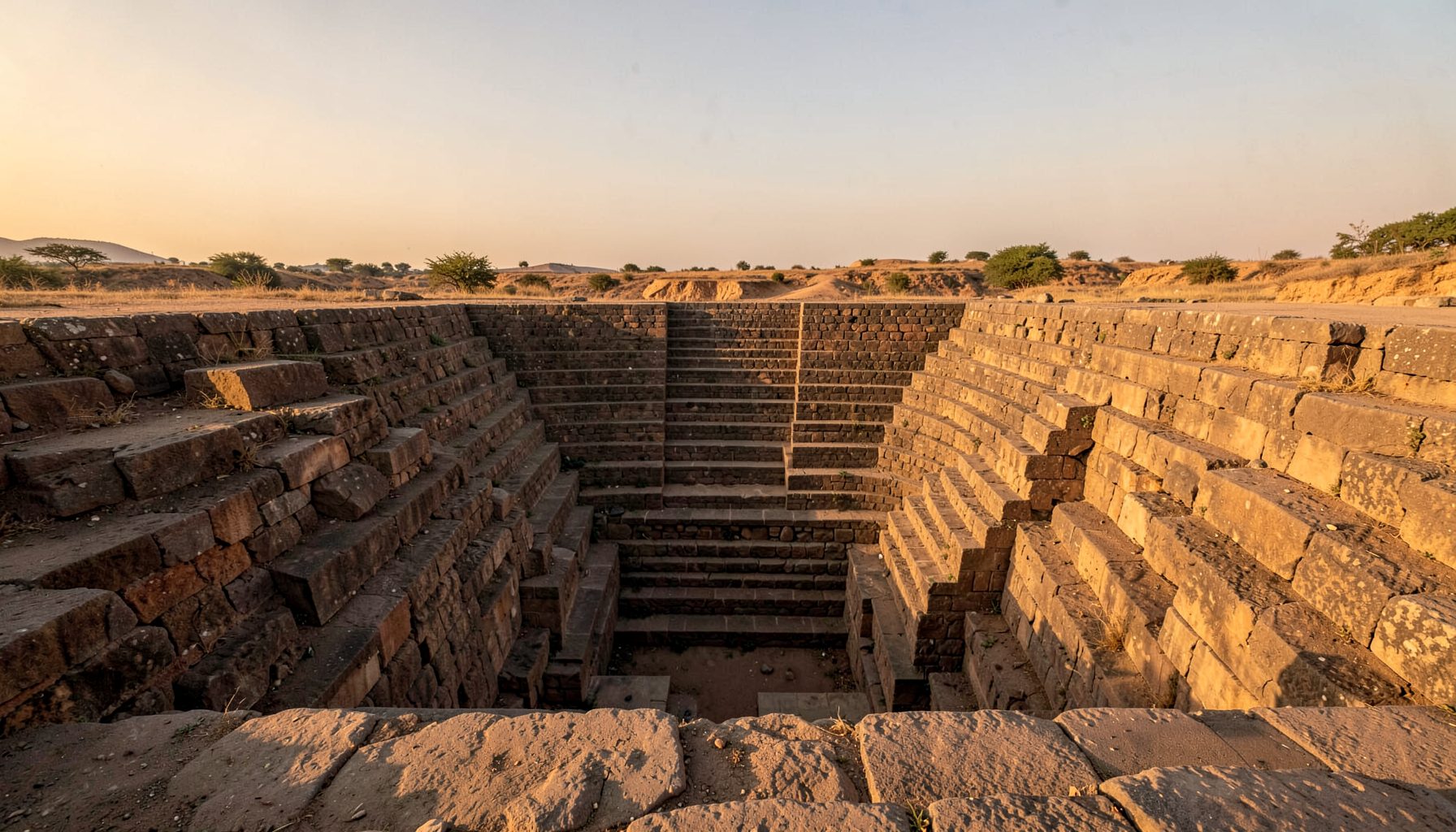
In the heart of Ahmedabad, a descending sequence of stone steps leads away from traffic, heat and the compressed rhythm of urban life. The structure associated with this remarkable vertical journey is often described as a stepwell with seventeen levels, although descriptions vary according to whether they count flights of stairs, platforms, galleries or architectural storeys. That difference is part of the site’s story: a baoli or vav is both a practical water structure and a layered piece of cultural memory.
Ahmedabad’s historic wells reveal how architecture once responded to climate, groundwater and community life at the same time. Their shaded corridors offered relief during Gujarat’s hot seasons, while carved columns and recessed chambers transformed a utilitarian reservoir into a ceremonial and social space. For visitors from Australia, where drought, water security and heritage conservation remain familiar public concerns, the stepwell offers a vivid example of infrastructure designed with environmental intelligence.
A Vertical Landmark in Ahmedabad
The idea of seventeen levels should not be treated as a simple count of storeys in a modern building. Stepwells are organised through repeated landings, stair flights, pavilions and subterranean galleries. Depending on the source, an account may count each change in level, each principal platform or the visible tiers of the descent. The phrase therefore conveys the extraordinary depth and rhythm of the monument, even when architectural surveys use a different numerical description.
This ambiguity is common in heritage documentation. Local names, oral histories, tourist literature and technical records often preserve different details about the same structure. A careful record compares these accounts with measured drawings, photographs and site observations rather than selecting the most dramatic figure without explanation. For an independent documentation project, that process matters because the value of a stepwell lies in its full evidence: masonry, inscriptions, water conditions, surrounding development and community memory.
The site’s position within Ahmedabad is equally important. It is not an isolated ruin in a remote landscape, but part of a dense city shaped by historic neighbourhoods, religious buildings, markets and changing transport routes. The sound of engines and street commerce may now surround it, yet the descending axis creates a sudden shift in atmosphere. Stone absorbs the glare, the air becomes cooler, and the city is experienced through a series of framed views.
Engineering for Heat and Water
A stepwell functions through a simple but sophisticated relationship between surface runoff, groundwater and human access. Steps allow people to follow the water downward as its level changes through the year. Retaining walls stabilise the excavation, while colonnades and pavilions provide shade and help distribute the pressure of the surrounding earth. The deeper chambers could remain markedly cooler than the exposed streets above.
This passive cooling principle has particular resonance in Australia. Residents of Adelaide, Perth and western Sydney understand how quickly exposed paving and masonry can intensify summer heat, while households in Melbourne and regional towns have become accustomed to thinking about water-saving habits during dry periods. A stepwell does not offer a direct template for contemporary reservoirs, but it demonstrates how climate-responsive design can combine public utility with comfort and beauty.
The structure also reflects an older understanding of water as a shared civic resource. People came to collect water, rest, meet others and carry out religious or social activities. Its design placed daily life around a fluctuating natural supply rather than hiding water entirely behind infrastructure. Modern Australian water systems are governed by treatment standards, catchment rules and public utilities, yet the same basic principle remains relevant: reliable water management depends on both engineering and community trust.
Stone, Light and Repeated Space
The descent is best understood as a sequence of changing spatial experiences. At the upper edge, sunlight exposes the geometry of the entrance and the wear caused by generations of feet. Further down, projecting balconies, carved brackets and heavy columns interrupt the view. The eye begins to notice alignments: one landing opening towards another, a shaft of light striking a wall, or a shadow marking the movement of the sun.
Gujarati stepwells are often discussed through their ornament, but their architecture is equally powerful when read as structure. Columns carry the load of the upper terraces, beams create horizontal order, and recessed surfaces protect the inner passage from heat. Floral carving, geometric motifs and figurative details enrich this framework without overwhelming it. Every decorative element operates within a building designed to endure moisture, pressure and seasonal change.
Photography can reveal these relationships when it avoids treating the monument as a collection of isolated details. A wide image records the full descent, while a closer view shows tool marks, erosion, repairs and the texture of local stone. Drone imagery can place the stepwell within Ahmedabad’s urban pattern, although it should be used responsibly around residential areas and protected structures. Architectural sketches remain valuable too, especially where a photograph cannot explain how the levels connect.
Conservation in a Living City
Preserving a historic vav requires more than clearing rubbish or repairing a broken stair. Conservation teams must understand drainage, groundwater behaviour, salt damage, vegetation, visitor pressure and the impact of nearby construction. Cement repairs that appear neat at first can trap moisture or behave differently from traditional masonry. A successful project therefore balances safety with the retention of original material and evidence of age.
The experience of Bhuj offers a useful regional comparison. The city and surrounding Kutch region suffered severe damage in the 2001 earthquake, and heritage restoration has had to negotiate structural risk, altered urban conditions and the meaning of reconstruction. A discussion of these issues appears in Bhuj restoration efforts, showing why repair decisions should be documented rather than reduced to a simple before-and-after image.
Australian heritage practice faces comparable questions, even when the materials and hazards differ. In Victoria, the Heritage Act 2017 can protect places of state significance, while local heritage overlays regulate many buildings and sites through planning schemes. Conservation work may also intersect with Indigenous cultural heritage responsibilities, environmental approvals and accessibility requirements. These frameworks remind us that a historic structure belongs to a living legal and social landscape, not merely to the past.
Connecting Ahmedabad with Wider Water Heritage
The Ahmedabad stepwell belongs to a broad family of Indian water structures known as bawdis, baolis, vavs, kunds and baravs. Their forms vary across regions, but they share a concern with seasonal water, descent, shade and collective use. Comparing them helps researchers understand local building traditions while avoiding the assumption that every stepwell was designed in the same way.
Documentation in Maharashtra, for example, brings attention to structures that remain overlooked beside better-known monuments. Field photography can record abandoned wells, altered entrances and fragments hidden within expanding towns. The Maharashtra documentation campaign reflects this wider effort to locate and study water architecture before its details disappear through neglect or redevelopment.
Digital audiences can also encounter heritage through unexpected pathways. Websites devoted to online entertainment, such as digital play platforms, illustrate how people now move between specialised interests through search, mobile browsing and visual media. For heritage organisations, that changing media environment creates an opportunity: carefully researched photographs, measured drawings and short field reports can reach people well beyond the monument’s immediate neighbourhood.
The seventeen-level description ultimately works as an invitation to look more closely, not as a substitute for survey. Whether the count refers to landings, stair sequences or perceived tiers, the descent expresses a sophisticated relationship between architecture and water. In Ahmedabad, the stepwell remains a reminder that conservation can begin with attention: recording what survives, listening to local knowledge and recognising the intelligence embedded in structures built for everyday life.
Get in Touch
Have information about a stepwell that is not yet on our map? We would be glad to document it and give you full credit. Whether it is a Barav, Kund, Vihir, or any other form of stepwell, every contribution helps preserve India's water heritage.
Call or message us with details about the location, and we will follow up.
#9372496819
Send a Message
What People Say
"The Maharashtra Stepwells campaign has brought attention to structures that were nearly forgotten. The architectural documentation and drone photography are invaluable resources for researchers and students alike."
"Collaborating with the Indian Stepwells team gave our architecture students hands-on exposure to traditional water-harvesting structures. The presentations were insightful and inspiring."
"I shared details of a stepwell near my village that was not on any map. The team visited, documented it beautifully, and credited me. It felt wonderful to contribute."