 Explore Maharashtra
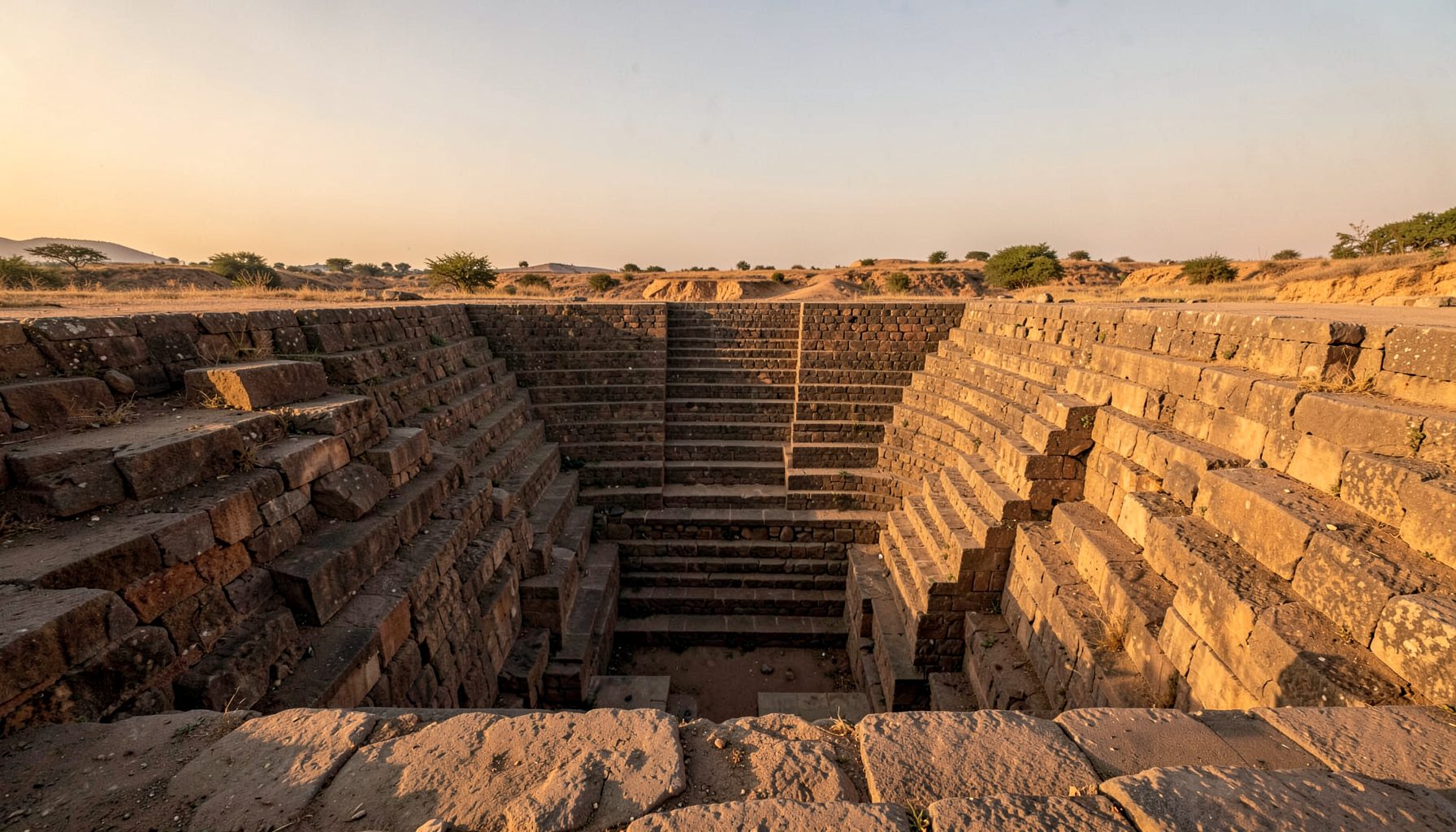
A stepwell restored by local volunteers near Nashik
In a village on the Nashik side of Maharashtra, an old stone stepwell has become a meeting point again. For years, its steps were hidden beneath silt, weeds and household rubbish. Local residents knew the structure existed, yet few people could see more than a broken edge of masonry and a dark hollow in the ground.
The restoration began with practical work rather than a grand tourism project. Farmers, shopkeepers, students and older residents cleared the approach path, removed accumulated debris and recorded family memories connected with the water structure. Their effort shows how a baoli, bawdi, vav, kund or barav can return to community life through patient local care.
The site is important because stepwells were designed as working public architecture. They stored monsoon water, offered cooler spaces during hot weather and created a dependable place for people to meet. The descending flight of stairs also made the changing water level visible across the seasons.
For readers in Australia, the story has a familiar point of contact. Communities around Adelaide, regional New South Wales and Melbourne’s outer suburbs increasingly understand that water infrastructure can carry cultural meaning as well as practical value. A restored stepwell near Nashik makes that relationship visible in stone.
A forgotten water structure in the village landscape
The stepwell sits within an agricultural landscape shaped by the monsoon. During heavy rains, runoff once travelled towards the well, while the deep chamber allowed water to remain available after surrounding surfaces had dried. Its architecture was therefore tied to local soils, slopes and settlement patterns rather than designed as an isolated monument.
Before the volunteer work, vegetation had entered the joints between stones. Fallen earth covered several steps, and plastic waste collected near the upper landing. A damaged parapet made access unsafe. The structure did not need to be reinvented; it needed to be understood, cleaned carefully and protected from further damage.
That distinction matters in heritage conservation. The Indian Stepwells about page presents stepwells through photography, sketches and field research, an approach that helps viewers recognise details often missed from a distance. Tool marks, changes in masonry, drainage channels and reused stones can reveal how a structure developed over time.
How local volunteers approached the restoration
The first stage was collective documentation. Volunteers photographed each wall, counted visible steps and marked areas where stones had shifted. Older residents described when the well was last used regularly, which families maintained it and how people approached the water during dry months. These accounts gave the physical work a social record.
Cleaning was carried out by hand in small areas. Volunteers removed rubbish and shallow vegetation without stripping away every plant around the site. Loose soil was lifted with simple tools, while larger stones were left in place until someone with masonry knowledge could assess them. This slower process reduced the risk of damaging original surfaces.
The group also focused on the landscape around the well. They cleared a narrow access route, redirected minor runoff away from unstable masonry and installed modest signs explaining the structure’s local name and purpose. There was no glossy redevelopment, tiled plaza or intrusive lighting scheme. The aim was to make the stepwell legible and safe while retaining its village character.
This kind of work can be understood by Australian community groups familiar with working bees. A Saturday morning spent clearing a creek reserve near Ballarat or maintaining a historic site outside Hobart follows a similar rhythm: shared tools, local knowledge, small tasks and a strong sense of ownership. The Nashik example adds the special complexity of conserving a water system that still responds to seasonal rainfall.
Stepwells as places of refuge and memory
A stepwell was never simply a tank. Its shaded steps offered relief from heat, and its lower levels could become social spaces when the surface was harsh and dry. Women collecting water, travellers resting along a route and children accompanying family members all contributed to the everyday life of the structure.
In periods of scarcity, such places could support wider forms of survival. The history of stepwells during famines shows how water architecture could become associated with refuge, movement and communal support. The restored well near Nashik should therefore be read through both its construction and the memories attached to it.
Local volunteers preserved these memories by speaking with residents before older accounts disappeared. One person remembered waiting on the upper steps while animals were watered; another recalled seasonal cleaning before the monsoon. Such stories may not appear in official records, yet they explain why a damaged well still matters to a village.
This relationship between structure and memory has parallels in Australia. A disused tank, stock route water point or public bath in the dry interior can appear ordinary until residents explain who used it and when. In areas affected by drought, bushfires or changing farming practices, preserving those stories can be as significant as repairing the physical fabric.
Conservation without erasing the past
The restoration team faced a familiar temptation: make the site look new. Fresh cement could have filled every gap, bright paint could have attracted visitors and concrete paving could have simplified access. Instead, the volunteers chose restrained repairs that allowed old and new work to remain distinguishable.
Stone steps were stabilised where necessary, but irregular surfaces were retained. The water chamber was cleared without promising that it would immediately become a reliable drinking-water source. This is an important boundary. Heritage restoration can protect a structure’s meaning without returning it to a use that may be unsafe or impractical today.
The wider lesson is that community heritage depends on careful interpretation. A structure can be valued for engineering, ritual, ecology and social history at the same time. Even the preservation of modest objects can reveal this principle; for comparison, the record of wooden grave markers shows how ordinary materials can carry identity across generations.
For an Australian audience, this approach fits the way many local museums and historical societies work. A heritage-listed building in Fremantle or a former water facility near Bendigo may retain patched walls, faded signs and evidence of adaptation rather than receiving a complete visual makeover. Authenticity often lies in the marks of use.
Practical lessons for community-led care
The village restoration offers a useful model for undocumented stepwells across Maharashtra and for local heritage projects elsewhere. It combines research, maintenance and public education without depending entirely on a large institution. The work also creates a record that can guide future funding applications, school visits and conservation decisions.
Community action is most effective when responsibilities are clear. A small group can monitor vegetation, report new dumping, photograph the water level after the monsoon and keep contact with conservation specialists. Digital archives and independent research networks, including this community heritage resource, can help connect local observations with wider audiences when used carefully and transparently.
- Begin with measured photographs, sketches and a simple site map before moving stones or vegetation.
- Record oral histories from elders, farmers, religious leaders and people who used the well in their childhood.
- Remove rubbish and invasive growth by hand where possible, avoiding harsh cleaning that damages masonry.
- Keep new repairs visually modest and clearly separate from original stonework.
- Improve safe access without turning the setting into a generic paved attraction.
- Monitor drainage, seasonal water levels and fresh cracking after each monsoon.
- Share the site’s story through schools, local signs and properly credited heritage photography.
The Nashik-area stepwell now stands as a reminder that preservation can begin with ordinary people noticing what remains. Its future will depend on continued care, accurate documentation and respect for local knowledge. By restoring access, recording memory and protecting the old masonry, the volunteers have returned more than a water structure to the village: they have restored a shared point of reference.
Get in Touch
Have information about a stepwell that is not yet on our map? We would be glad to document it and give you full credit. Whether it is a Barav, Kund, Vihir, or any other form of stepwell, every contribution helps preserve India's water heritage.
Call or message us with details about the location, and we will follow up.
#9372496819
Send a Message
What People Say
"The Maharashtra Stepwells campaign has brought attention to structures that were nearly forgotten. The architectural documentation and drone photography are invaluable resources for researchers and students alike."
"Collaborating with the Indian Stepwells team gave our architecture students hands-on exposure to traditional water-harvesting structures. The presentations were insightful and inspiring."
"I shared details of a stepwell near my village that was not on any map. The team visited, documented it beautifully, and credited me. It felt wonderful to contribute."