 Explore Maharashtra
A Stepwell Reimagined as a Community Garden in Delhi
Delhi’s baolis are often encountered as shadows beneath busy streets: flights of stone steps descend towards water, while arched galleries hold the cooler air of the afternoon. Built through successive monsoon and Mughal eras, these structures gathered rainfall, replenished groundwater and gave neighbourhoods places to rest, worship and exchange. Their architecture makes climate visible, turning a seasonal shortage into a precise civic system.
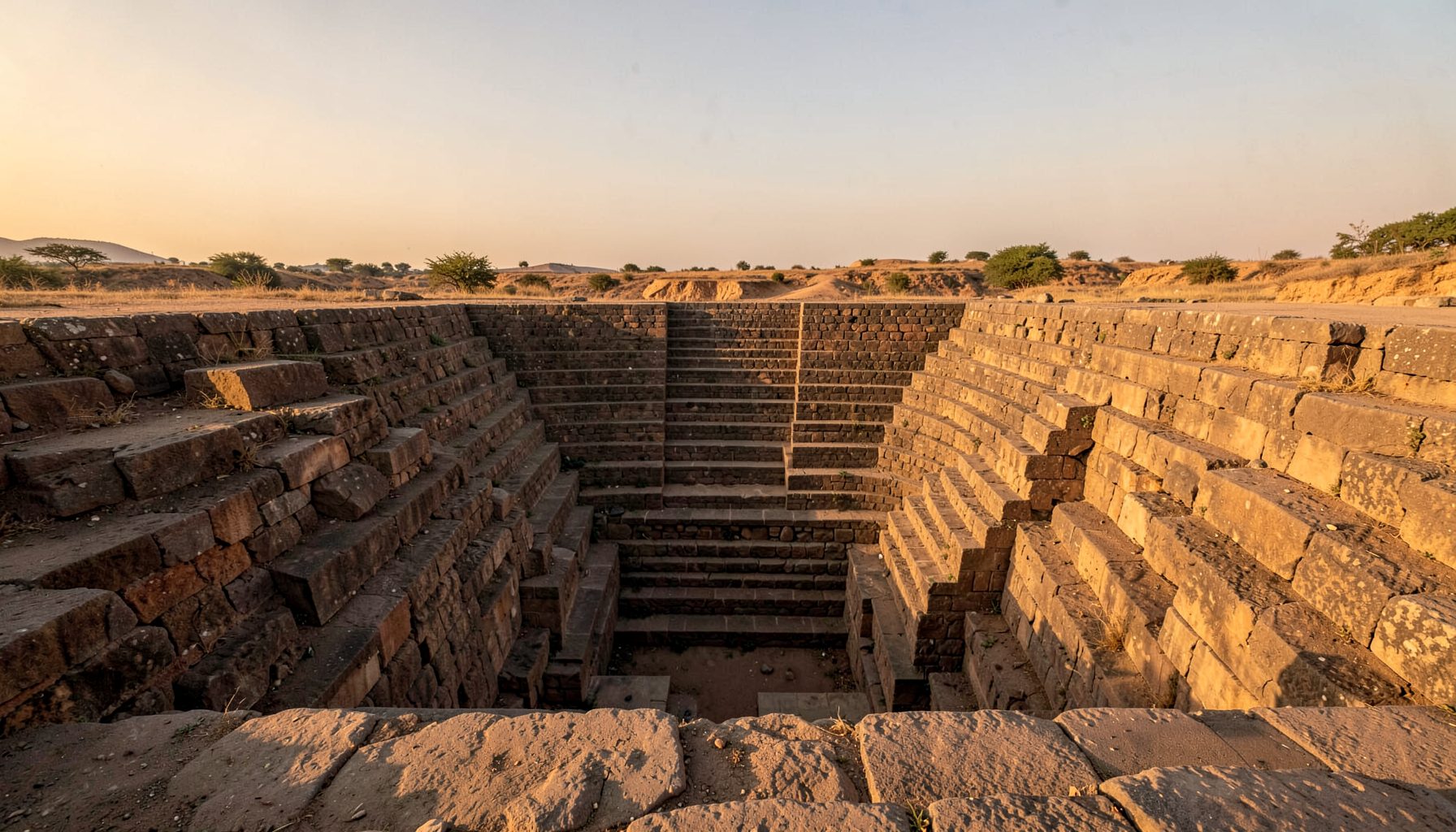
This Delhi proposal treats a neglected stepwell as living environmental infrastructure rather than a sealed monument. A garden occupies the upper terrain, while the stepped chamber below remains central to water management, interpretation and shade. The result is a shared growing space that links food, stormwater care and heritage conservation, inviting residents to participate in a place long associated with collective survival.
A monsoon inheritance in the city
A stepwell’s first lesson is that water belongs to a cycle rather than a tap. Monsoon runoff enters through channels, passes down stairways and settles in a reservoir designed for slow percolation. Delhi’s baoli traditions varied in plan, but names such as bawdi, vav, kund and barav describe related regional forms. The proposal begins by reading the existing catchment, including roof runoff, paved surfaces and nearby drains, before deciding where plants can safely grow.
The mission set out by Indian Stepwells is directly relevant because careful observation comes before intervention. Documentation, original photography and field research can reveal how a baoli is entered, where its stone has failed and which routes residents already use. Those details become design evidence rather than assumptions.
Reuse should not mean sterilising the site into a decorative landscape. A modest garden can sit above the historic structure, leaving the stepped water chamber legible and accessible. This preserves the baoli’s civic role while adding a new layer of use that can change with the seasons, available plants and community priorities.
Architecture below, garden above
The design begins at street level, where a narrow threshold announces a change in pace. Stairs descend towards the historic chamber, framed by planted edges and small seating pockets. Above ground, the garden is organised by height: low herbs near walkways, fruit trees in deeper beds and lightweight trellises around the perimeter. The descending route remains the primary axis, making the old water system easy to understand.
Structural work requires restraint. Independent frames or carefully calculated lightweight fill can create usable soil depth without loading vulnerable vaults or blocking archaeological deposits. Fixings should avoid historic masonry wherever possible, and new interventions should remain visibly distinct enough to be reversible. A garden can frame the baoli without pretending to be original to it.
The upper level would accommodate raised beds, shaded benches, composting areas and space for workshops or seed exchanges. A small pavilion could provide shelter during Delhi’s intense summers, while openings in the planting allow glimpses towards the water below. The result is less a conventional park than a sequence of rooms: street, garden, stair and reservoir.
Water, soil and microclimate
Water management gives the project its practical discipline. Only harvested rainwater or a safely tested supply should be used for irrigation, and stored water must be covered against mosquitoes and debris. Runoff from the garden can pass through planted swales before reaching the stepwell’s historic channels. Periodic desilting and monitoring will keep the system clear, protect groundwater and ensure that the garden does not become an accidental source of stagnant water.
Indian Stepwells’ account of rooftop greenery in baolis offers a close precedent for this layered approach. The relationship between roof, reservoir and vegetation is especially valuable in a semi-arid climate, where shade, evaporation and soil moisture affect one another. It also suggests that a rooftop garden can become part of the stepwell’s water story rather than a separate decorative layer.
Soil will need to be stable, porous and rich enough for food crops without burying archaeological remains. A blend of local compost, leaf mould and appropriately tested growing media would reduce the need for long-distance transport. Seasonal shade from trees and trellises can lower evaporation, while the baoli’s masonry offers a cooler microclimate that extends the usable hours of the garden.
Community stewardship changes the site
A shared garden requires more than a maintenance contract. Residents, gardeners, nearby shopkeepers, school groups and religious or civic organisations should help determine what is grown, how the site opens each day and who has a formal role in decisions. Rotating working groups can welcome new volunteers while preserving continuity. Reserved participation places, accessible paths and suitable gathering areas are essential if the project is to serve people beyond those already comfortable in the neighbourhood.
The garden can also support a small local economy. Herbs, salad leaves, seasonal fruit and flowers could be sold through weekly produce stalls or neighbourhood delivery groups. Seed saving, plant exchanges and nursery sales would turn the site into a modest marketplace without turning it into a commercial development. Local craftspeople could make planters, shade screens and signs, keeping the visual identity close to the surrounding community.
Stewardship should be recognised as skilled work. Paid garden coordinators can train residents in irrigation, composting, plant care and heritage etiquette. Water use, soil conditions, crop yields and visitor numbers can be recorded in simple shared logs. This evidence would help the team adjust the garden while giving the wider city a clear picture of its value.
An Australian parallel
Adelaide offers a useful climate parallel. Its hot, dry summers and irregular winter rainfall make careful water accounting familiar to many households, especially those maintaining kitchen gardens through summer. An Adelaide-based community grower might ask how much water is actually saved, whether greywater rules apply and how the garden remains productive during restrictions. Those practical questions translate readily into Delhi, where rainfall is concentrated but intense.
Melbourne’s network of small community plots and laneway gardens provides another reference. Many sites are operated by councils or local associations, with annual memberships, plot allocation and waiting lists. Gardeners often discuss crop rotation, compost and water-wise planting in an informal, practical register. A “fair dinkum” project would need to deliver daily usefulness, not merely attractive photographs, and shared produce or a weekly stall could be its measure.
For a visual reference outside architecture, Dead Ireland offers a reminder that weathered structures can retain emotional force even after their original function fades. Photography and personal memory can reveal details that an official inventory misses. The same approach could document how Delhi residents remember particular baolis, which entrances feel safe and where informal shortcuts have developed over decades.
Heritage, access and everyday life
Any intervention near a historic stepwell needs archaeological and structural assessment before design work proceeds. Relevant heritage authorities and municipal agencies should identify protected elements, groundwater conditions and permissible levels of change. The garden must not conceal deterioration, while the baoli must remain safe during wet weather. Conservation plans, maintenance schedules and emergency access should be agreed upon before planting begins.
Access should extend beyond the physical entrance. Interpretation can be provided through simple signs, tactile models, guided walks and audio descriptions, while quiet areas support older visitors and children. The steps themselves need careful conservation and non-slip treatment. Open hours should balance security with neighbourhood use, since a garden that closes when people need it most would fail the social purpose of the project.
Documentation should continue after opening. Seasonal photographs, drone images and measured drawings can record plant growth, water movement and changing patterns of use. These records support conservation, provide material for exhibitions and invite residents to contribute histories of undocumented features. Local knowledge becomes part of the site’s archive, enriching the wider documentation of India’s water heritage.
A repeatable model for other neighbourhoods
The project can begin with a small pilot: survey the baoli and catchment, test the garden’s structural approach, consult nearby residents and monitor one full planting cycle. Temporary beds and movable furniture would reveal how the space is used before permanent construction. Early decisions about access, water and maintenance can then be incorporated into a more durable design.
Funding could combine municipal support, heritage grants, institutional sponsorship and income from garden activities. Public oversight would help prevent the site from becoming exclusive or excessively commercial. Revenue from stalls or memberships might cover soil, plants, water testing and coordinator time, reducing reliance on unpaid labour. A transparent budget would also make the model easier for other neighbourhoods to understand.
Success would be visible in ordinary rather than spectacular terms: a well-used stair, healthy seasonal crops, cooler paving, reduced runoff and residents able to enter without permission or payment. The most persuasive outcome would be a place that preserves Delhi’s water architecture while making its social purpose visible again. Each baoli adapted in this way could become both a working garden and a living piece of the city’s environmental memory.
Get in Touch
Have information about a stepwell that is not yet on our map? We would be glad to document it and give you full credit. Whether it is a Barav, Kund, Vihir, or any other form of stepwell, every contribution helps preserve India's water heritage.
Call or message us with details about the location, and we will follow up.
#9372496819
Send a Message
What People Say
"The Maharashtra Stepwells campaign has brought attention to structures that were nearly forgotten. The architectural documentation and drone photography are invaluable resources for researchers and students alike."
"Collaborating with the Indian Stepwells team gave our architecture students hands-on exposure to traditional water-harvesting structures. The presentations were insightful and inspiring."
"I shared details of a stepwell near my village that was not on any map. The team visited, documented it beautifully, and credited me. It felt wonderful to contribute."