 Explore Maharashtra
Stepwells in Mughal-era gardens: reading Shalimar Bagh
Shalimar Bagh in Srinagar is usually understood as a Mughal pleasure garden rather than a stepwell site. Its terraces, water channels, pools and pavilions create a carefully staged relationship between architecture, landscape and flowing water. A close study therefore benefits from asking how stepwell principles illuminate the garden, while respecting the differences between a baoli, a vav, a kund and a Kashmiri chahar bagh.
The garden was commissioned by Emperor Jahangir for Nur Jahan in 1619 and later enlarged under Shah Jahan. Set beside Dal Lake, it uses a sloping site to make water move through successive levels. The experience is one of cooling shade, sound, reflection and controlled movement, rather than a deep descent into an underground reservoir.
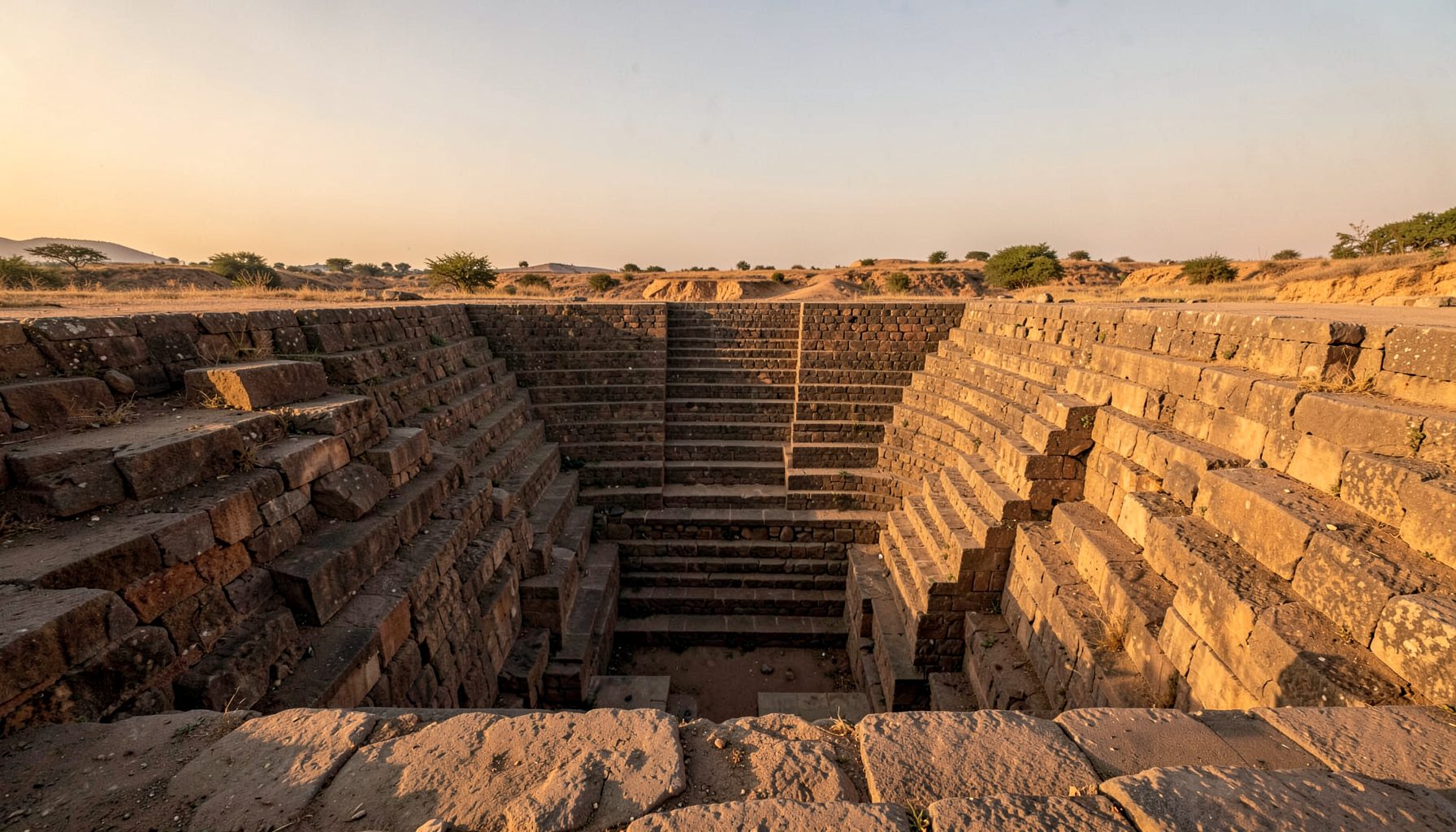
This distinction matters to heritage documentation. An image of a stair, pool or sunken court can resemble a stepwell at first glance, yet its function may be ceremonial, hydraulic, domestic or recreational. Indian Stepwells approaches these structures through photography, drawings and field research, a method that helps place Shalimar Bagh within a wider history of Indian water architecture.
For Australian readers, the garden also offers a useful way to think about water in public space. People who check restrictions during a dry summer, refill a bottle before a long tram ride or visit a market garden on the weekend can recognise the practical and social value of water. Shalimar Bagh turns that value into an imperial landscape, while stepwells make it visible through stone, depth and repeated descent.
Water architecture beyond a single type
A stepwell is designed around vertical access to stored groundwater. Its flights of stairs lead down to a changing water level, allowing users to reach the reservoir across seasons. Gujarat’s vavs, Rajasthan’s baolis and Maharashtra’s baravs often combine engineering with gathering places, shrines, carved galleries and shaded resting areas. Their architecture responds to scarcity, heat and fluctuating monsoon supply.
Shalimar Bagh works through a different hydraulic logic. Water is brought into the garden and guided along a central axis through channels, cascades and basins. The terraces make gravity an organising force, but visitors remain above the water for most of the experience. The garden is therefore best read as a managed flow system, not as a conventional subterranean well.
That comparison still reveals a shared Mughal-era interest in water as an instrument of order. In both forms, water is measured, framed and distributed. A baoli concentrates attention downward; Shalimar Bagh directs the eye forward through a sequence of thresholds. Each arrangement turns infrastructure into an encounter with power, beauty and climate.
The terraces and sensory sequence of Shalimar Bagh
Shalimar Bagh is commonly associated with the chahar bagh tradition, although its steep site produces a more layered composition than a flat four-part garden. The garden rises in terraces from the lake, with a broad watercourse connecting levels. Stone channels, fountains, pools and planted avenues create a rhythm that can be followed physically and visually.
The public garden, Diwan-i-Aam and private areas establish different degrees of access. The upper terraces offered privacy and status, while lower spaces accommodated formal reception and public movement. This zoning resembles the social complexity found in major stepwells, where a practical water source could also contain platforms, chambers and areas for pause.
Materials and details sharpen the comparison. Dark stone, running water, clipped planting, chinar trees and the sound of cascades create a cooler microclimate in a region of hot summers and cold winters. For an Australian visitor accustomed to shaded verandas, evaporative cooling or a botanic garden pond, the sensory design is legible even when the historical setting is unfamiliar.
The garden’s meaning is also carried by maintenance. A blocked channel, damaged paving or altered planting can break the sequence that makes the place intelligible. Documentation must therefore record movement, water levels, views and sound, rather than treating each pavilion as an isolated monument.
Reading descent, shade and social use
Stepwells are often described as monumental wells, but that phrase can hide their social life. Their stairs provided access to water, yet landings also supported conversation, trade, ritual activity and rest. Deep shade could make a baoli more comfortable than the street above, especially during the hottest hours of the day.
Shalimar Bagh reverses the vertical experience without abandoning the idea of changing atmosphere. Visitors move through shaded corridors of trees, beside water at different elevations, and towards pavilions that control views across the garden and lake. Its terraces create pauses comparable to the landings of a stepwell, though their purposes are tied more closely to courtly movement and display.
A useful field study should ask who used each part of the garden, when, and under whose authority. It should distinguish imperial ceremony from ordinary maintenance, public access from restricted space, and visual beauty from the labour needed to keep the hydraulic system operating. These questions prevent romantic images of Mughal gardens from obscuring workers, water managers and local communities.
Contemporary leisure offers an unexpected comparison. The formal pleasure of watching a ball game, following a patterned sequence or pausing in a designed setting can still shape public culture, although the setting is now very different; even discussions of Australian blackjack show how rules, rhythm and spatial attention influence leisure. The comparison is about structured experience, not historical equivalence.
What to record during heritage fieldwork
Photographs should establish both the overall composition and the small evidence of use. A drone view can show the terraces and central axis, while close images can record joints, channels, water stains, repairs and plant growth. Architectural sketches are especially valuable where trees or changing light obscure the relationship between levels.
A field record for Shalimar Bagh should combine visual, environmental and oral information. Measurements may reveal gradients and alignments, while interviews can identify seasonal changes, maintenance practices and local names. Such work complements official conservation records without replacing archaeological or architectural assessment.
Useful observations include:
- The direction and speed of water through channels, cascades and pools
- The relationship between terraces, pavilions, trees and views towards Dal Lake
- Repairs, erosion, blocked outlets, altered stonework and modern services
- Visitor routes, restricted areas, maintenance activity and seasonal differences
- Oral histories about flooding, drought, festivals, access and garden care
The same method can be applied to undocumented kunds, wells and baravs in Maharashtra. Comparing measured drawings with photographs helps identify whether a sunken structure is a true stepwell, a tank reached by stairs, a temple reservoir or a later adaptation. Careful naming is part of preservation because inaccurate labels can distort both history and future conservation priorities.
Conservation lessons for Australia and India
Australia provides a productive context for discussing water heritage. In Melbourne, Sydney and Adelaide, householders may follow seasonal restrictions, install rainwater tanks or choose drought-tolerant plants. Public gardens also depend on complex irrigation systems, even when visitors experience them as relaxed green spaces. Shalimar Bagh makes that hidden infrastructure visible and aesthetic.
Heritage protection operates through different jurisdictions. In New South Wales, the Heritage Act 1977 can protect significant places, while Victoria works under the Heritage Act 2017; nationally significant matters may involve the Environment Protection and Biodiversity Conservation Act 1999. These laws do not create a direct legal model for Kashmir, yet they demonstrate why documentation, significance assessments and clear management responsibilities matter.
Australian audiences may encounter Mughal water heritage through Indian communities, university programs, exhibitions and weekend cultural markets in cities such as Melbourne and Sydney. This creates an opportunity to connect architectural history with living cultural exchange rather than presenting stepwells as distant curiosities. It also supports ethical photography, accurate interpretation and respect for local custodianship.
The commercial heritage market needs care. Reproductions, tourism images and decorative objects can spread interest, but they can also simplify complex structures into exotic motifs. A responsible exhibition should identify the site, explain its water system, credit photographers and researchers, and distinguish documented evidence from imaginative reconstruction. For broader visual research on designed environments and contemporary digital culture, Baremore’s visual resources can sit alongside, rather than substitute for, primary heritage documentation.
- Map channels, terraces, pools, wells and drainage connections before repairs begin
- Monitor seasonal water flow, plant growth, stone erosion and visitor pressure
- Record local terminology and community knowledge alongside archival sources
- Use reversible conservation methods wherever original fabric remains stable
- Explain the difference between a stepwell, garden tank, canal and ornamental basin
- Share photographs, drawings and findings through accessible public archives
Shalimar Bagh demonstrates that water heritage is more expansive than the familiar image of a staircase descending into darkness. Its channels and terraces belong to a different design tradition, yet they raise related questions about supply, climate, labour, access and memory. Reading the garden beside India’s bawdis, vavs, kunds and baravs creates a richer account of how societies have made water visible.
For future comparative research, documentation can move between imperial gardens, village reservoirs and urban heritage sites. In Maharashtra, an overlooked barav may retain evidence that formal records have missed; in Kashmir, a repaired channel may reveal how a celebrated garden survives in practice. The strongest record joins measured observation with historical context and the testimony of people who still live with these places.
The value of Shalimar Bagh lies in its ability to connect engineering and experience. Water is channelled through stone, but it also organises shade, movement, status and remembrance. That combination makes the garden an important case study for anyone interested in stepwell architecture, Mughal landscape design and the preservation of water-conscious heritage.
Get in Touch
Have information about a stepwell that is not yet on our map? We would be glad to document it and give you full credit. Whether it is a Barav, Kund, Vihir, or any other form of stepwell, every contribution helps preserve India's water heritage.
Call or message us with details about the location, and we will follow up.
#9372496819
Send a Message
What People Say
"The Maharashtra Stepwells campaign has brought attention to structures that were nearly forgotten. The architectural documentation and drone photography are invaluable resources for researchers and students alike."
"Collaborating with the Indian Stepwells team gave our architecture students hands-on exposure to traditional water-harvesting structures. The presentations were insightful and inspiring."
"I shared details of a stepwell near my village that was not on any map. The team visited, documented it beautifully, and credited me. It felt wonderful to contribute."